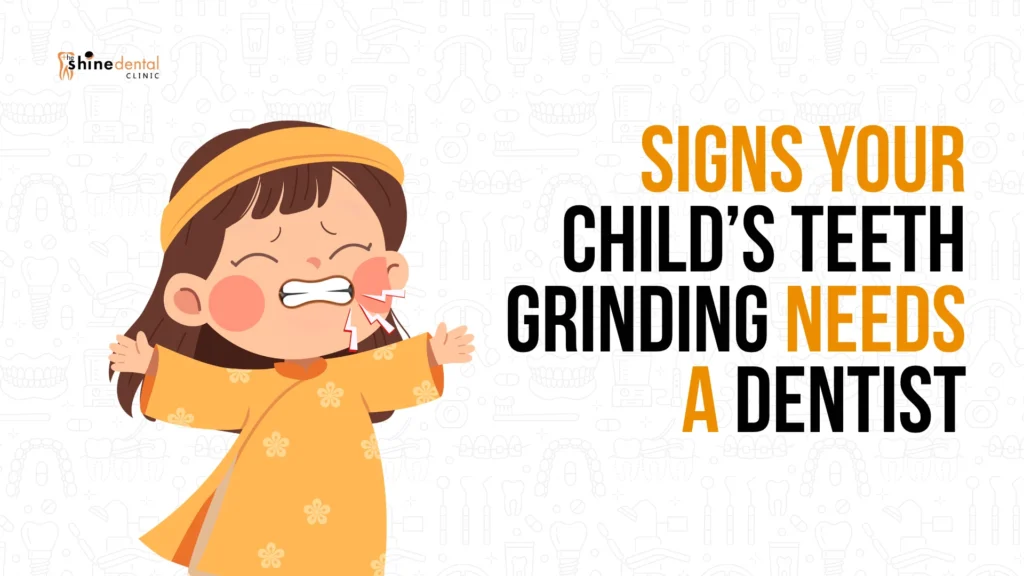
Quick answer: Most childhood teeth grinding is harmless and doesn’t need treatment. It’s worth booking a dental visit if you notice flattened, chipped, or visibly worn teeth, if your child complains of jaw or facial soreness in the morning, if headaches become frequent, if the grinding happens constantly rather than in short bursts, or if it continues well past age 6. A dentist can usually confirm what’s going on with a simple exam, even without ever hearing the grinding themselves.
Nearly every parent of a young child has, at some point, heard that unmistakable grinding sound coming from the next room. In most cases, it’s nothing to lose sleep over. But it’s a fair question to ask: at what point does child’s teeth grinding stop being “just a phase” and start being something a dentist should actually look at?
This guide walks through the specific signs worth watching for, what a dental visit for grinding actually involves, and what treatment, if any, usually follows.
Is Some Teeth Grinding Normal in Children?
Yes, and it’s genuinely common. According to Nemours KidsHealth, bruxism affects a large share of children at some point, most often between the toddler years and around age 6, and it typically resolves on its own without any lasting effect on the teeth.
If your toddler’s grinding lines up with a new tooth coming in, our guide on toddler teeth grinding and teething explains why that particular pattern is rarely a concern, and our teething timeline and signs of teething guides can help you check whether the timing actually lines up. And if you’re trying to work out what’s actually driving the habit in the first place, our broader piece on why children grind their teeth at night covers every common cause, from teething to stress to sleep issues.
The short version: occasional, age-appropriate grinding is normal, and it doesn’t necessarily mean anything is wrong with your child’s teeth, jaw, or general health. The signs below are what actually separate ordinary grinding from grinding that’s worth a professional opinion, so you can stop guessing based on how loud or unsettling it sounds at 2am.
When Should You Worry About Your Child’s Teeth Grinding?
A handful of specific signs shift grinding from “keep an eye on it” to “worth a check-up.” None of them are cause for panic on their own, but any of them is a good reason to book a visit rather than wait it out.
- Visible wear on the teeth. Flattened edges, shiny worn spots, or small chips are the clearest physical evidence that grinding is affecting the tooth structure itself.
- Morning jaw or facial soreness. A child who wakes up rubbing their jaw or complaining their face feels tight or sore has likely been clenching harder than usual overnight.
- Frequent headaches. The American Academy of Pediatric Dentistry lists headaches, alongside dental wear and soreness of the chewing muscles, among the recognized complications of ongoing bruxism.
- Constant grinding with no clear pattern. Grinding tied to a specific tooth coming in or a stressful week is different from grinding that seems to happen every single night with no obvious trigger.
- Grinding that continues well past age 6. Most bruxism fades out by this age as the permanent teeth settle in, so grinding that persists beyond it is worth a closer look.
- Trouble chewing or unusual tooth sensitivity. This can point to wear that’s already affecting the enamel.
If several of these apply, it’s genuinely worth a check-up rather than assuming your child will simply grow out of it.
What Does the American Academy of Pediatrics Say About Grinding and Sleep?
Beyond the physical signs, it’s worth paying attention to how your child sleeps. The American Academy of Pediatrics notes that loud grinding paired with poor-quality sleep can sometimes point to a sleep study being useful, since disrupted breathing during sleep is one of the factors associated with bruxism. If your child snores regularly, seems to breathe through their mouth at night, or is unusually tired during the day, it’s worth mentioning both the grinding and the sleep pattern to your dentist or pediatrician at the same visit, rather than treating them as separate issues.
What Happens at a Dental Visit for Teeth Grinding?
If you book a visit specifically because of grinding, there’s no need to feel like you’re overreacting. Here’s roughly what to expect:
- A visual and physical exam. The dentist checks for flattened or worn spots, cracks, and signs of jaw tenderness. According to Mayo Clinic, dentists can often identify bruxism from tooth wear alone, even in children whose parents have never actually heard them grind.
- A few simple questions. Expect to be asked about sleep habits, any recent stress or changes at home or school, and whether the grinding happens every night or comes and goes.
- A conversation about next steps. In the majority of cases, this just means monitoring the wear at future check-ups. If the grinding is more severe or persistent, the dentist may discuss a custom night guard or look into whether an irregular bite is contributing.
For anything more urgent, such as a cracked tooth or sudden severe pain, our guide to children’s dental emergencies explains what genuinely needs same-day attention rather than a routine appointment.
What Treatment Options Exist for Persistent Child’s Teeth Grinding?
Most children never need active treatment, since the habit resolves on its own. When it doesn’t, familydoctor.org outlines a few common approaches dentists may recommend, depending on the likely cause:
- A custom-fitted night guard, to protect the teeth from further wear while the habit runs its course
- Simple monitoring, with wear checked at each regular check-up, when the grinding is mild
- Addressing an underlying cause, such as correcting an irregular bite or working with a doctor if a sleep issue is suspected
- Behavioral strategies, particularly for school-age children where stress appears to be the main driver
According to Cleveland Clinic, treatment is generally reserved for cases where grinding is causing real damage or discomfort, rather than applied automatically the moment grinding is noticed. In other words, a dentist confirming that your child grinds their teeth is not, on its own, a diagnosis that requires immediate action. Left unmanaged for years, though, dental wear and other untreated issues can affect more than just the teeth, which we cover in our piece on how poor oral health can affect your child’s overall health.
Frequently Asked Questions
What are the warning signs my child’s teeth grinding needs a dentist?
Visible flattening or chipping of the teeth, morning jaw or facial soreness, frequent headaches, grinding that happens constantly rather than in short bursts, and grinding that continues well past the toddler years are all reasons to book a check-up.
At what age is teeth grinding no longer considered normal?
Most bruxism resolves by around age 6. Grinding that continues well into the school-age years, especially alongside tooth wear or jaw pain, is worth a dental evaluation rather than waiting it out.
Can a dentist tell if my child is grinding their teeth just from a check-up?
Yes. Dentists can usually spot the early signs of grinding, such as flattened or shiny wear spots on the teeth, during a routine exam, even if you have never actually heard your child grind.
What will the dentist do if they confirm my child is grinding their teeth?
In most cases the dentist will simply monitor the wear at future visits. For more persistent or damaging grinding, they may recommend a custom night guard or look into an underlying cause such as an irregular bite or a sleep issue.
Is teeth grinding in children ever an emergency?
Grinding itself is rarely an emergency. However, a cracked or broken tooth, or sudden severe jaw pain, should be treated as a dental emergency rather than something to monitor.
The Bottom Line
Most childhood teeth grinding is a passing habit, not a problem, and the majority of children grow out of it without ever needing treatment. The signs above exist to help you tell the difference between ordinary grinding and grinding that deserves a professional look, so you’re not left guessing based on the sound alone. Our complete guide to teeth grinding in children brings together everything in this cluster if you’d like the full picture in one place.
Medically reviewed by the pediatric dentists at Shine Dental Clinic, Lalitpur, Nepal.
Noticed any of these signs in your child, or simply want a professional opinion? The team at The Shine Dental Clinic offers gentle, child-focused check-ups in a calm environment built for little ones. Book an appointment on WhatsApp and we’ll take a look together.