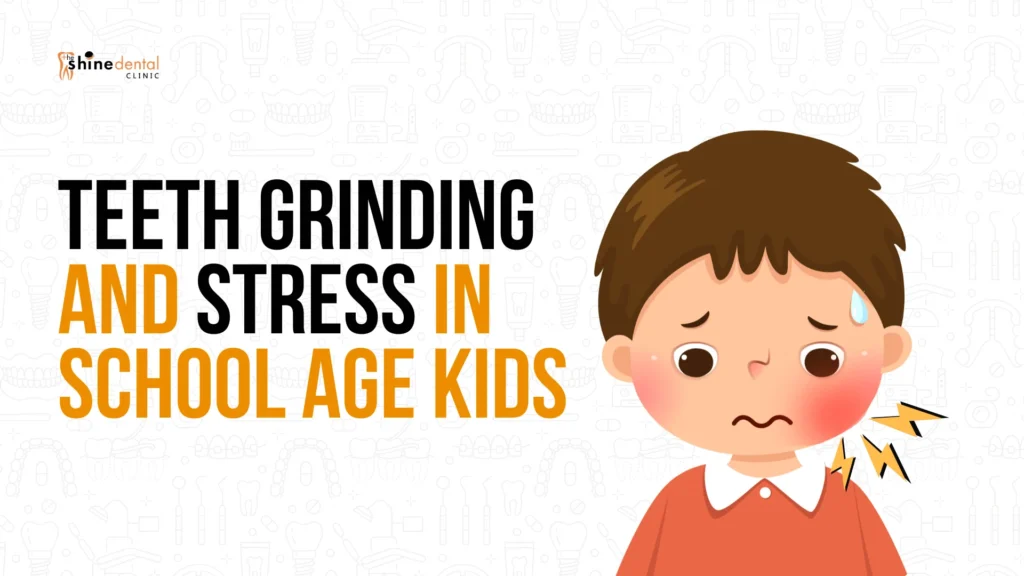
Quick answer: In school-age children, teeth grinding and stress are inter linked rather than teething. Triggers like a new school year, exams, friendship troubles, or changes at home can show up physically as nighttime grinding, even when a child seems fine during the day. A calm bedtime routine, open conversations about what’s on their mind, and regular physical activity usually help. It’s still worth a dental check to rule out tooth wear, especially if the grinding is frequent or intense.
Teething explains most toddler grinding. But once a child reaches school age, the picture usually changes. If your 7 or 10-year-old has started grinding their teeth at night, teething almost certainly isn’t the cause anymore. Stress very often is.
This can be an unsettling thing to realize as a parent, especially if your child hasn’t said a word about feeling worried or overwhelmed. Kids this age often don’t have the vocabulary to name what they’re feeling, so it comes out through their body instead. Here’s what that connection actually looks like, and what genuinely helps.
Why Does Stress Show Up as Teeth Grinding in School-Age Kids?
Grinding is largely an unconscious, physical release valve. When a child is carrying tension, whether from school, friendships, or home life, that tension has to go somewhere. For many children, it shows up in the jaw muscles overnight, when the rest of the body is at rest but the nervous system is still processing the day. Mayo Clinic lists stress and anxiety among the recognized causes of bruxism at any age, alongside factors like an irregular bite.
This is different from toddler grinding, which is almost always tied to the physical pressure of a new tooth coming in, as covered in our guide to toddler teeth grinding and teething. Our broader piece on why children grind their teeth at night walks through the full range of causes across ages, of which stress is just one, though it becomes the more common explanation as children get older. Nemours KidsHealth notes that older children are more likely than toddlers to grind for psychological reasons rather than purely physical ones.
What Kinds of Stress Trigger Teeth Grinding in School-Age Kids?
According to HealthyChildren.org, even everyday events can register as genuinely stressful to a child, depending on their age and temperament. Common triggers at this age include:
- Academic pressure, including exams, homework load, or a difficult subject
- Social and friendship stress, such as conflict with peers, feeling left out, or bullying
- Changes at home, like a new sibling, a move, or a parent’s illness
- A new school year or new teacher, especially early in the term
- Overscheduling, when after-school activities leave little downtime
- Disrupted sleep, which can both cause and worsen stress in a cycle
A child doesn’t need a single dramatic event to start grinding. Often it’s a combination of smaller pressures building up over a stretch of weeks.
How Is Stress-Related Grinding Different From Teething-Related Grinding?
The two patterns tend to look quite different once you know what to compare. Teething-related grinding fades once a tooth fully erupts and rarely lasts more than a couple of weeks at a time. Stress-related grinding, on the other hand, tends to track with specific periods, ramping up during exam week or a rough patch with friends, and easing off once that period passes.
If your child is younger and the grinding doesn’t seem to line up with any obvious stressor, it’s worth checking our teething timeline to rule that out first, since the two causes can occasionally overlap in children who are teething later than average.
Signs Your Child May Be Stressed, Beyond the Grinding
Teeth grinding is often just one part of a bigger picture. HealthyChildren.org notes that children frequently express stress through behavior rather than words, since they haven’t yet developed the language to describe what they’re feeling. Watch for:
- Increased irritability or a shorter temper than usual
- Clinginess, or reluctance to be away from you
- Trouble falling or staying asleep, beyond just the grinding
- Stomachaches or headaches with no clear physical cause
- Changes in appetite
- Acting out, or behavior that seems out of character
If several of these show up around the same time as the grinding, stress is a reasonable explanation worth exploring with your child.
How Can I Help My Child Relax and Reduce Nighttime Grinding?
A few consistent habits tend to make a real difference for most children:
- Keep bedtime calm and predictable. A consistent wind-down routine signals to the body that it’s safe to relax, which can reduce nighttime tension.
- Talk about what’s on their mind, without pressing too hard. Simple, open questions like “what was the best and hardest part of your day” often work better than a direct “are you stressed.”
- Build in real downtime. According to the American Psychological Association, children need unstructured time to relax and play, which is easy to lose when schedules are packed with activities.
- Encourage regular physical activity. Movement during the day is one of the most reliable ways to help a child’s body release built-up tension before bedtime.
- Model calm coping yourself. Children pick up on a parent’s stress level, so managing your own stress visibly can help theirs too.
When Should I Worry About My Child’s Stress?
Ordinary stress is a normal part of childhood, and most of it resolves with time and support at home. The American Psychological Association notes that stress becomes more concerning when it’s chronic and unrelenting rather than tied to a passing event, since long-term stress can affect both physical and mental health over time. If your child’s grinding, irritability, or other signs continue for weeks without improvement, or seem to be getting worse, it’s worth talking to your pediatrician rather than waiting it out.
Should I Still See a Dentist If It’s Stress-Related?
Yes. Even when stress is clearly the underlying cause, the grinding itself can still wear down your child’s teeth, and a dentist can check for that regardless of what’s driving it. Our guide on signs your child’s teeth grinding needs a dentist covers exactly what to look for, and if the grinding is frequent or intense, our piece on night guards for kids explains when that’s actually worth considering.
It’s also worth ruling out a sleep-related cause if snoring or restless sleep is part of the picture, which we cover in our guide on the link between teeth grinding and sleep apnea. The American Academy of Pediatric Dentistry treats stress-related bruxism the same way it treats other forms, with monitoring for wear and a protective appliance if genuinely needed.
Frequently Asked Questions
Can stress really make a school-age child grind their teeth?
Yes. Ordinary stressors like starting a new school year, exams, friendship troubles, or changes at home can show up physically as teeth grinding, even in children who don’t seem outwardly anxious during the day.
How is stress-related teeth grinding different from teething-related grinding?
Teething-related grinding is most common in toddlers and tracks closely with new teeth coming in. Stress-related grinding tends to appear in older, school-age children and often lines up with specific stressful periods rather than a tooth eruption pattern.
What are signs my school-age child is stressed, beyond teeth grinding?
Look for irritability, clinginess, trouble sleeping, stomachaches or headaches with no clear cause, changes in appetite, or acting out more than usual. These often show up alongside or instead of your child directly saying they feel stressed.
What can I do to help my child relax and reduce nighttime grinding?
A calm, consistent bedtime routine, open conversations about what is worrying them, regular physical activity, and limiting overscheduling all help. If stress seems significant or ongoing, talking to your pediatrician is a reasonable next step.
Should I still take my child to the dentist if the grinding seems stress-related?
Yes. A dentist can check for tooth wear regardless of the cause, and can advise on protective options like a night guard if the grinding is frequent or severe, even while you address the stress separately.
The Bottom Line
Teeth grinding in a school-age child is rarely random. It’s usually a physical sign of something your child is working through, whether that’s a tough week at school or a bigger change at home. Paying attention to the pattern, and to the signs beyond the grinding itself, gives you a much clearer picture than the sound alone ever could.
Want a dentist’s opinion on your child’s teeth grinding while you work on the stress side at home? The team at The Shine Dental Clinic offers gentle, child-focused check-ups in a calm environment built for little ones. Book an appointment on WhatsApp and we’ll take a look together.