
Walk down any pharmacy aisle and you will find dozens of toothpaste options like whitening, charcoal, herbal, natural, and fluoride-free. For many parents and health-conscious adults, one question keeps surfacing: Is fluoride toothpaste actually safe?
It is a fair question. Social media is full of claims that fluoride is toxic, harmful to children, or linked to serious diseases. At the same time, dentists around the world, including our team at The Shine Dental Clinic continue to recommend fluoride toothpaste as a cornerstone of good oral health.
So what does the evidence actually say? This guide breaks it all down simply, factually, and without fear-mongering.
What Is Fluoride, and Where Does It Come From?
Fluoride is a naturally occurring mineral found in soil, water, and many foods. It is the ionic form of fluorine, one of the most abundant elements on Earth. Fluoride enters the human body through drinking water, food, and dental products like toothpaste and mouth rinses.
For decades, dental professionals and public health bodies have recognised fluoride as one of the most effective tools in preventing tooth decay (dental caries) a disease that affects billions of people worldwide.
How Does Fluoride Protect Your Teeth?
Fluoride works through three well-established mechanisms:
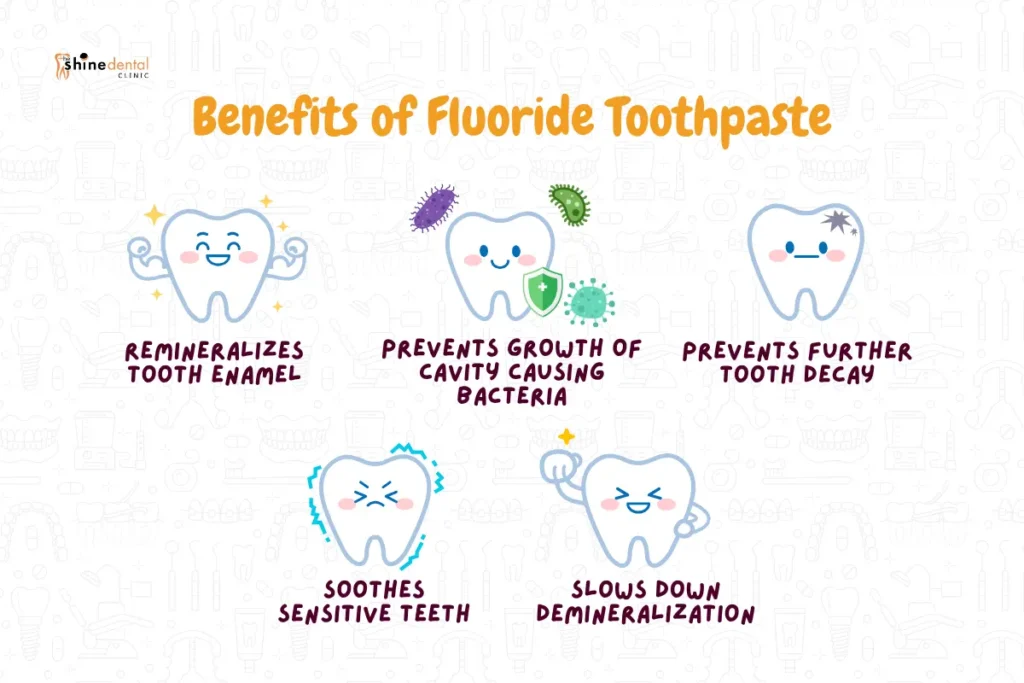
1. Remineralisation Every day, acids from food and bacteria strip minerals (mainly calcium and phosphate) from tooth enamel, a process called demineralisation. Fluoride helps reverse this by attracting minerals back to weakened enamel, making it stronger than it was before.
2. Creating Fluorapatite When fluoride is incorporated into enamel, it replaces part of the enamel structure with a compound called fluorapatite. This is more resistant to acid attacks than the original hydroxyapatite, giving your teeth a harder, more acid-resistant surface.
3. Inhibiting Bacterial Activity Fluoride interferes with the ability of decay-causing bacteria (primarily Streptococcus mutans) to metabolise sugars and produce the acids that attack enamel.
The result? Studies consistently show that fluoride toothpaste reduces cavities by 20–40% in children and adults when used correctly.The World Health Organisation (WHO) lists fluoride as a key preventive measure for dental caries and recommends its use globally.
Is Fluoride Toothpaste Safe? The Short Answer
Yes, when used at the right amount and age-appropriate concentration, fluoride toothpaste is safe and highly beneficial.
The concern around fluoride safety typically centres on two conditions:
- Fluorosis (cosmetic white spots on teeth from too much fluoride during development)
- Fluoride toxicity (from ingesting very large amounts)
Both are real but entirely preventable with proper use. Let’s address each clearly.
Understanding Dental Fluorosis
Dental fluorosis occurs when children consume too much fluoride during the years when permanent teeth are forming (roughly from birth to age 8). The result is usually mild, faint white streaks or spots on the enamel, and is mostly cosmetic.
Severe fluorosis (pitting or brown staining) is rare and typically associated with regions where naturally occurring fluoride levels in drinking water are extremely high, not from toothpaste use alone.
In Nepal, natural fluoride levels in most water supplies are within safe limits, but it is still important to follow age-appropriate toothpaste guidelines.
Key fact: Fluorosis only affects teeth that are still forming under the gums. Once a child’s permanent teeth have fully erupted, fluorosis risk is gone entirely.
Age-by-Age Guide to Safe Fluoride Toothpaste Use
Getting the amount right is everything. Here is what dental authorities recommend:
Infants (0-6 Months) Before Teeth Appear
No toothpaste is needed yet. Gently wipe your baby’s gums with a clean, damp cloth after feeds. This keeps bacteria levels low and gets your baby used to oral hygiene routines early.
Read our complete guide: How to Clean Baby’s Teeth Properly
Babies and Toddlers (6 Months – 3 Years) First Teeth to Full Set of Baby Teeth
As soon as the first tooth erupts typically around 6 months, you should begin brushing.
Recommended amount: A smear (grain of rice-sized) amount of fluoride toothpaste (1,000 ppm fluoride concentration).
This tiny amount provides protective benefits while limiting any swallowed fluoride to safe levels. Always supervise brushing at this age since toddlers naturally swallow toothpaste.
Unsure when your baby’s first tooth should appear? Read: When Do Baby Teeth Start Coming In?
Children (3-6 Years)
At this age, children have better control but still tend to swallow toothpaste.
Recommended amount: A pea-sized amount of fluoride toothpaste (1,000 ppm).
Teach your child to spit after brushing not rinse, as rinsing with water washes away the protective fluoride film left on teeth.
Children (6 Years and Older) and Adults
Children who can reliably spit and are not swallowing toothpaste can safely use a standard adult fluoride toothpaste (1,000–1,450 ppm).
Recommended amount: A pea-sized amount, brushing for two full minutes, twice daily.
Adults with a high risk of cavities (dry mouth, frequent sugar intake, gum recession) may benefit from a high-fluoride prescription toothpaste (2,800–5,000 ppm) ask your dentist if this applies to you.
Quick Reference Chart
| Age Group | Amount | Fluoride Concentration |
| 0–3 years | Smear (rice-grain) | 1,000 ppm |
| 3–6 years | Pea-sized | 1,000 ppm |
| 6+ years & adults | Pea-sized | 1,000–1,450 ppm |
| High-risk adults | Pea-sized | Up to 5,000 ppm (prescription) |
What About Fluoride Toxicity?
Toothpaste toxicity from normal use is not a realistic concern when the above guidelines are followed. To give you perspective:
- A standard 75 ml tube of toothpaste contains approximately 112 mg of fluoride.
- A child would need to swallow a very large proportion of an entire tube to experience acute toxicity symptoms (nausea, vomiting).
- The smear and pea-sized amounts used during brushing contain negligible fluoride, even if partially swallowed by a young child.
The key risk comes from children treating toothpaste as a snack and eating large amounts directly from the tube. Store toothpaste out of reach of young children and supervise brushing until at least age 7-8.
What About “Fluoride-Free” or “Natural” Toothpastes?
Fluoride-free toothpastes are widely marketed as safer alternatives. However, the evidence does not support their use as an equivalent substitute for cavity prevention.
Ingredients like hydroxyapatite (HAp) are being studied as a potential fluoride alternative, and early research is promising, but the current body of evidence for fluoride’s effectiveness is far more robust and spans decades of global use.
Some patients choose fluoride-free options for personal or cultural reasons. If you do, it becomes even more critical to:
- Limit sugar intake
- Visit your dentist regularly for professional fluoride treatments and check-ups
- Use other preventive measures like dental sealants for children
Our dentists at Shine Dental are happy to discuss your options without judgment. Book a consultation here.
Common Myths About Fluoride – Debunked
Myth 1: “Fluoride causes cancer.”
Large-scale epidemiological studies, including reviews by the WHO and major cancer research bodies, have found no credible link between fluoride at recommended levels and cancer.
Myth 2: “Fluoride is a neurotoxin that lowers IQ.”
This claim often references studies from areas where naturally occurring fluoride in water is 2–10 times higher than the recommended safe level (0.5–1.5 mg/L). These findings do not apply to the concentrations in toothpaste or properly fluoridated water.
Myth 3: “If my child eats well, they don’t need fluoride toothpaste.”
Even an excellent diet does not eliminate cavity risk. Fluoride’s topical action directly on the tooth surface is distinct from any dietary benefit and remains valuable for all children.
Myth 4: “Fluoride toothpaste is only for kids with lots of cavities.”
Fluoride is beneficial for everyone. Prevention is always easier and cheaper than treatment.
Schedule an appointment at The Shine Dental Clinic
Whether you are a first-time parent, an expat family new to Nepal, or an adult wondering if you are using the right toothpaste, our English-speaking dental team at Shine Dental is here to help.
We offer child-focused, calm, and evidence-based dental care in Sanepa, Lalitpur, and we believe in empowering every patient with clear, honest information. Book your appointment today