
When your baby is uncomfortable due to teething, your first instinct as a parent is to find quick and effective relief. Seeing your child fussy, restless, or in discomfort can be stressful, especially when you’re unsure which remedies are actually safe. While there are countless suggestions available, from home remedies to marketed products, not all of them are backed by reliable evidence. In fact, some commonly recommended solutions can do more harm than good.
Understanding safe teething pain relief, what works, what to avoid, and when to seek help is essential to ensure your baby’s safety and comfort. For parents, especially those navigating this phase for the first time, having access to clear, practical, and trustworthy guidance can prevent unnecessary risks.
Leading health organizations such as the American Academy of Pediatrics emphasize that simple, non-invasive methods are often the safest and most effective way to manage teething discomfort. To understand the full teething journey first, see our guide on Signs of teething in babies: Timeline, symptoms, and when to seek extra care.
Why Teething Causes Discomfort
Teething discomfort occurs when your baby’s teeth begin to push through the gums. This process creates pressure, inflammation, and tenderness in the gum tissue. Since the gums are sensitive, even a small amount of pressure can feel uncomfortable for your baby.
Because babies cannot express pain verbally, they rely on behaviors such as crying, chewing, drooling, or irritability to communicate discomfort. You may also notice changes in sleep patterns or feeding habits during this time. Teething symptoms are usually mild but can still affect your baby’s mood and routine. Understanding the cause behind these behaviors helps you respond more calmly and effectively.
Curious about exactly when to expect these changes? Our detailed teething timeline guide for parents walks you through every stage month by month.
Safe and Effective Teething Relief Methods
When it comes to teething, simple and safe solutions are often the most effective. Here are some proven methods that can help ease your baby’s discomfort.
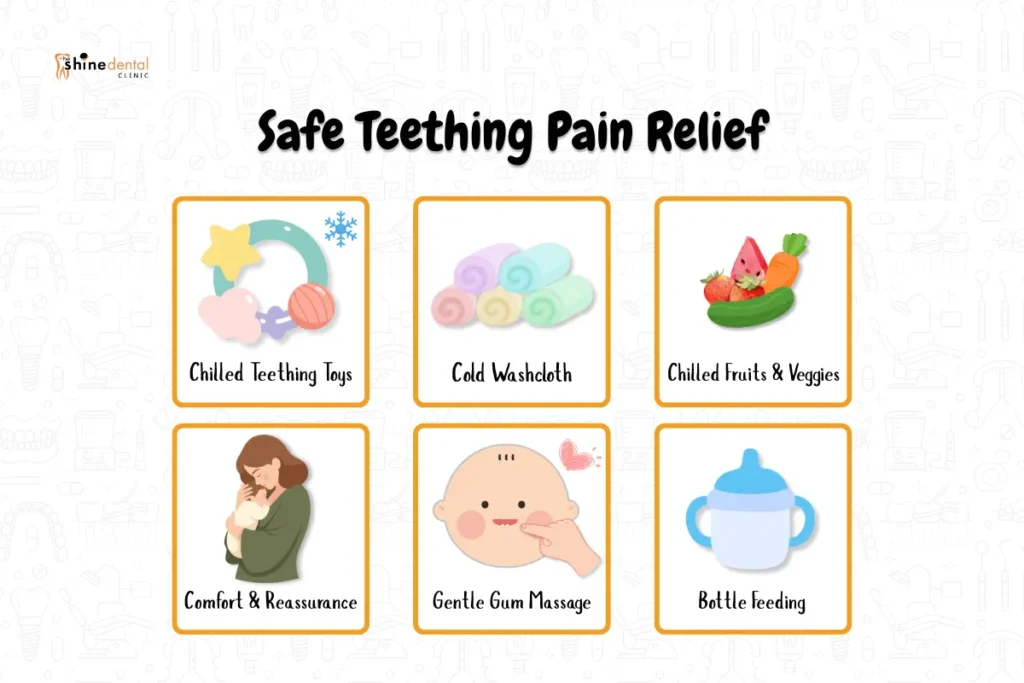
- Gentle Gum Massage
Using clean hands, gently rubbing your baby’s gums can provide quick and natural relief. The light pressure from your fingers helps counteract the discomfort caused by the tooth pushing upward.
This method works because it temporarily reduces the pressure in the gums and provides a soothing sensation. It’s also a convenient option since it doesn’t require any tools or products.
For best results, ensure your hands are clean and use slow, gentle movements. Many babies respond positively to this method, especially during early teething stages.
- Chilled Teething Toys
Teething toys that are slightly cooled (but not frozen) can be very effective in soothing sore gums. The cooling effect helps reduce inflammation and provides a numbing sensation that eases discomfort.
Why it works:
Cool temperatures constrict blood vessels in the gums, which reduces swelling and calms irritation. Babies also enjoy the chewing action, which further relieves pressure.
However, it’s important to avoid freezing these toys. Extremely cold or hard surfaces can damage delicate gum tissue instead of helping it.
Quick tip: Always check teething toys for BPA-free materials, a soft and flexible design, and easy-to-clean surfaces. The U.S Food and Drug Administration (FDA) recommends choosing products specifically designed for infants.
- Cold Washcloth Method
A clean, damp washcloth placed in the refrigerator can be a simple yet highly effective teething solution. Once slightly chilled, it can be given to your baby to chew on.
This method is popular because it combines two benefits:
- A soft texture that is gentle on gums
- A cooling effect that reduces discomfort
It’s also an affordable and easily accessible option for parents who prefer natural remedies over commercial products.
- Comfort and Reassurance
Sometimes, physical solutions alone are not enough. Teething can make babies feel unsettled, which is why emotional comfort plays a significant role in relief.
Simple actions such as:
- Holding your baby
- Rocking them gently
- Offering distractions through play
can significantly reduce fussiness. Your presence provides reassurance, helping your baby feel safe and calm even during discomfort.
Choosing Safe Teething Products
Not all teething products available in the market are safe or necessary. Making informed choices is essential to protect your baby from potential risks.
When selecting teething toys, look for:
- BPA-free materials: Ensures the product is free from harmful chemicals
- Soft and flexible design: Gentle on gums while still effective for chewing
- Easy-to-clean surfaces: Helps maintain hygiene and prevent infections
Good oral health habits begin well before the first tooth appears. Establishing a proper cleaning routine early makes teething easier to manage. For step-by-step guidance, read how to clean your baby’s teeth properly.
Teething Remedies to Avoid
While many remedies are marketed as effective, some can pose serious risks. Being aware of what to avoid is just as important as knowing what works.
Amber Teething Necklaces
Amber necklaces are often promoted as natural solutions for teething pain. However, there is no scientific evidence supporting their effectiveness.
More importantly, they come with significant safety risks.
Risks include:
- Choking hazard: The necklace can break, and small beads may be swallowed
- Strangulation risk: Wearing anything around a baby’s neck can be dangerous, especially during sleep
- Lack of safety regulation: These products are not always tested under strict standards
Health authorities, including the American Academy of Pediatrics, strongly advise against their use. For a full breakdown of why, read our in-depth post on whether teething and fever are connected, what’s normal and what’s not.
Frozen Teething Objects
While cooling can help, freezing teething toys is not recommended. Frozen items become too hard and can damage sensitive gum tissue instead of soothing it.
It’s always better to use chilled, not frozen, options to ensure safety.
Unverified Medications or Gels
Some teething gels or medications contain ingredients that may not be safe for infants. Certain numbing agents can cause side effects or allergic reactions.
Avoid using over-the-counter treatments without proper guidance, especially for very young babies.
When to Seek Professional Advice
Teething discomfort is usually mild and manageable. However, there are situations where professional guidance becomes important.
You should seek help if your baby:
- Appears to be in severe or prolonged pain
- Refuses to eat or drink for extended periods
- Shows symptoms like high fever, vomiting, or diarrhea
- Displays signs of infection or unusual behavior
These symptoms are not typical of teething and may indicate another underlying issue. Consulting a professional ensures that your baby receives appropriate care and treatment.
If you are unsure whether your baby’s tooth development is on track, our guide on tooth eruption order and the complete baby teeth timeline can help you understand what to expect and when to ask for help . You can also explore expert guidance from the American Academy of Pediatric Dentistry (AAPD) on infant oral health.
Practical Tips for Parents
Managing teething becomes much easier with the right approach and preparation. Small, consistent efforts can make a big difference in your baby’s comfort.
- Keep safe teething tools ready:
Having options like chilled toys or clean cloths available ensures you can respond quickly
- Avoid risky or unverified remedies:
Stick to methods that are safe and recommended by experts
- Monitor symptoms carefully:
Understanding what’s normal helps you identify when something isn’t
- Maintain routines:
Consistent sleep and feeding schedules provide comfort and stability
For parents, especially those with access to local dental care, seeking guidance when needed can provide reassurance and confidence during this phase.
Conclusion
Providing safe teething pain relief is about choosing simple, proven methods while avoiding unnecessary risks. While it’s natural to look for quick solutions, not all remedies are safe, and some can cause more harm than good.
By focusing on gentle techniques like gum massage, chilled teething toys, and emotional comfort, you can effectively manage your baby’s discomfort. At the same time, avoiding unsafe options such as amber necklaces, frozen objects, or unverified medications ensures your child’s safety.
With the right knowledge and approach, teething becomes a manageable and temporary phase. Supporting your baby with patience, care, and informed decisions helps them stay comfortable while giving you peace of mind throughout the process.
From teething concerns to early oral hygiene guidance,The Shine Dental Clinic is here to help parents feel informed, reassured, and confident at every stage of their child’s dental growth. Our gentle, child-centered team in Nepal is ready to guide you Book an appointment