
Introduction: Why Choosing the Right Toothbrush Matters for Your Child’s Smile
A child’s healthy smile begins with simple daily habits, and choosing the right toothbrush is one of the first important decisions parents make. Many parents ask the same question: “Is a soft bristle or hard bristle toothbrush better for my child?”
With so many toothbrush options available, it can be confusing for new parents, especially those caring for newborns, toddlers, and young children. Some parents believe that harder bristles clean teeth more effectively, while others worry about protecting their child’s sensitive gums.
The truth is that toothbrush choice is not just about cleaning teeth – it is about creating a comfortable and safe oral care routine that children can continue throughout their lives.
For babies and children, dental professionals generally recommend choosing a toothbrush designed specifically for their age, with gentle bristles and the correct size. At The Shine Dental Clinic, a trusted destination for pediatric dental care in Nepal, parents receive guidance on maintaining healthy teeth and gums from infancy through childhood.
Soft Bristle vs Hard Bristle Toothbrush: Understanding the Difference
Before choosing a toothbrush for your child, it helps to understand how soft and hard bristles differ.
What Is a Soft Bristle Toothbrush?
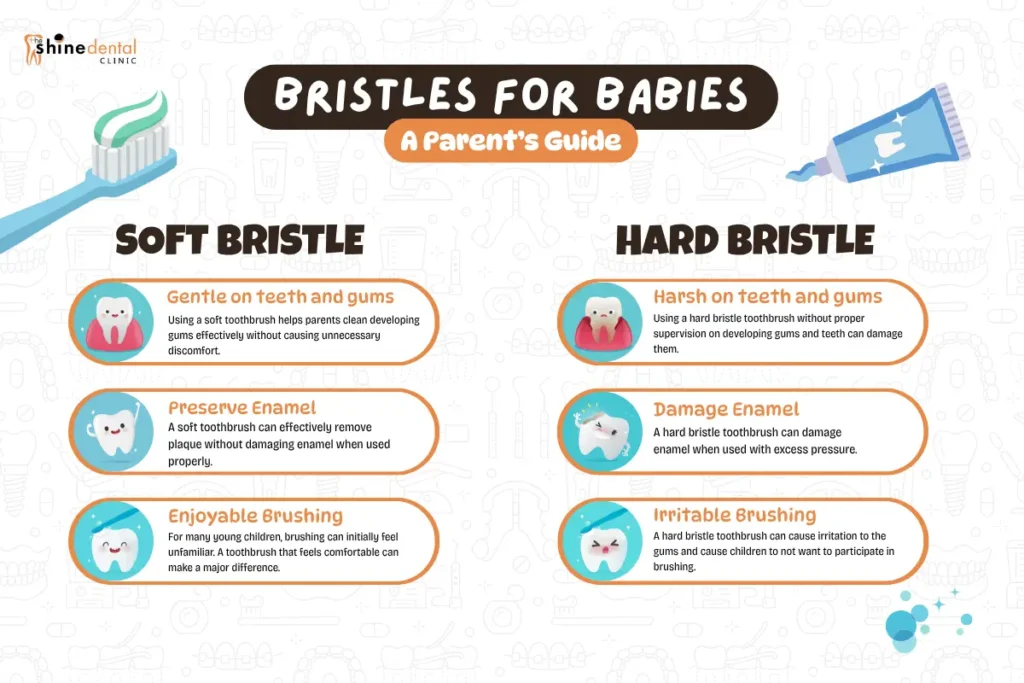
A soft bristle toothbrush has flexible, gentle bristles designed to clean teeth while being comfortable on sensitive gums.
Soft toothbrushes are commonly recommended for children because they:
- Provide gentle cleaning
- Are comfortable for sensitive mouths
- Reduce the risk of irritation from excessive brushing pressure
- Help children develop positive brushing habits
- Are suitable for everyday oral care
Children often have more sensitive gums than adults, especially when they are teething or adjusting to brushing routines. According to the American Academy of Pediatric Dentistry (AAPD), a comfortable toothbrush experience early in life helps children build positive associations with oral care that last into adulthood.
What Is a Hard Bristle Toothbrush?
A hard bristle toothbrush has firmer, less flexible bristles. Some adults choose harder toothbrushes because they feel they provide stronger cleaning, but more pressure does not necessarily mean better oral hygiene.
For children, hard bristles may create problems when used with aggressive brushing techniques, including:
- Gum discomfort
- Increased sensitivity
- Difficulty developing comfortable brushing habits
The effectiveness of brushing depends more on proper technique, consistency, and regular cleaning rather than using a stiff toothbrush. The World Health Organization (WHO) confirms that oral diseases are largely preventable through good hygiene habits – not aggressive tools.
Which Toothbrush Is Best for Babies and Children?
Most babies and children benefit from using a soft or extra-soft bristle toothbrush with a small brush head designed for their age.
A child’s toothbrush should be:
- Soft-bristled
- Age appropriate
- Small enough to comfortably fit inside the child’s mouth
- Easy for parents or children to hold
- Designed specifically for children’s dental needs
For newborns, oral care begins even before the first tooth appears. Our Infant & Early Childhood Oral Health Care service helps parents understand what to do from day one, including gum cleaning techniques before the first tooth arrives.
Once teeth begin appearing, introducing a child-friendly toothbrush helps establish healthy habits early. If you have questions about when to start or which products to use, our FAQs page covers many common parent concerns.
Why Pediatric Dentists Usually Recommend Soft Bristles for Kids
Soft Bristles Protect Developing Teeth and Gums
Children’s mouths are still developing. Their gums, baby teeth, and early permanent teeth require gentle care.
Using a soft toothbrush helps parents clean effectively without causing unnecessary discomfort. A positive brushing experience during childhood can influence how children view dental care as they grow – something our team at The Shine Dental Clinic focuses on with every young patient we see.
Soft Bristles Remove Plaque When Used Correctly
Many parents assume a harder toothbrush removes more plaque, but brushing effectiveness depends mainly on:
- Correct brushing technique
- Brushing for the recommended amount of time
- Cleaning all tooth surfaces
- Maintaining a consistent routine
A soft toothbrush can effectively remove plaque when used properly. Teaching children gentle circular brushing motions is more valuable than encouraging aggressive brushing. Our Preventive Dental Care team regularly demonstrates the right technique during checkup visits.
Soft Toothbrushes Help Children Enjoy Brushing
For many young children, brushing can initially feel unfamiliar. A toothbrush that feels comfortable can make a major difference.
Parents can encourage better habits by:
- Allowing children to choose a child-friendly toothbrush design
- Making brushing part of a daily routine
- Brushing together as a family
- Offering encouragement rather than pressure
Creating positive experiences helps children develop confidence in caring for their own smiles – and reduces the dental anxiety that many adults still carry from difficult childhood experiences.
Are Hard Bristle Toothbrushes Safe for Children?
Hard bristle toothbrushes are generally not the preferred choice for babies and young children.
Children often have difficulty controlling brushing pressure, which means they may brush too forcefully. A firm toothbrush combined with excessive pressure may cause discomfort and make brushing unpleasant.
Parents should remember:
- Gentle brushing with a soft toothbrush is usually more beneficial than aggressive brushing with a hard toothbrush.
- If parents are unsure about the right toothbrush for their child’s age, consulting a pediatric dentist in Lalitpur can provide personalized guidance.
How to Choose the Right Toothbrush for Your Baby or Child
For Newborns and Infants
Early oral care helps build the foundation for lifelong dental health.
Parents should focus on:
- Cleaning the baby’s gums gently
- Introducing oral hygiene routines early
- Using age-appropriate dental products
- Monitoring the development of the first teeth
Starting early helps children become familiar with oral care. Our Infant & Early Childhood Oral Health Care service in Lalitpur includes newborn oral assessments and teething support for parents who want expert guidance from the very beginning.
For Toddlers
Toddlers need toothbrushes designed for small mouths and developing motor skills.
Look for:
- Small brush heads
- Soft bristles
- Comfortable handles
- Child-friendly designs
Parents should continue supervising brushing because young children often cannot clean all tooth surfaces effectively on their own. The AAPD recommends that parents supervise brushing until at least age 6–8 to ensure thoroughness.
For Older Children
As children grow, they can gradually become more independent with brushing.
Parents should still monitor:
- Brushing technique
- Regular brushing habits
- Toothbrush condition
- Any signs of dental problems
Regular dental visits also help identify concerns before they become serious. Book a routine dental checkup at The Shine Dental Clinic to stay on top of your child’s oral development.
Common Toothbrush Mistakes Parents Make
Mistake 1: Choosing Hard Bristles Because They Feel Stronger
A toothbrush feeling stronger does not mean it is cleaning better. Effective brushing comes from the right technique, not excessive force. This is a widely recognized point in evidence-based pediatric dentistry – mechanical force alone does not determine plaque removal effectiveness.
Mistake 2: Allowing Young Children to Brush Completely Alone
Young children often enjoy brushing independently, but many need parental support until they develop better coordination. Parents can allow children to practice while helping complete areas they may miss.
Mistake 3: Replacing Toothbrushes Too Late
A worn toothbrush becomes less effective. Parents should replace their child’s toothbrush when:
- Bristles become damaged
- The toothbrush looks worn
- It has been used for an extended period
A fresh toothbrush supports better daily cleaning.
Mistake 4: Waiting Until There Is a Dental Problem
Many parents visit a dentist only when their child experiences pain. Preventive dental care is much more effective. Routine dental visits help:
- Monitor tooth development
- Identify early signs of decay
- Teach children healthy habits
- Reduce dental anxiety
Our Preventive Dental Care services at The Shine Dental Clinic are designed specifically to keep your child ahead of dental problems – not just treat them after they arise.
Pediatric Dental Care Tips for Parents in Kathmandu Valley
Parents living in Kathmandu Valley, including expatriate families, can support their child’s oral health by focusing on prevention.
Important habits include:
- Starting oral care early
- Choosing appropriate toothbrushes
- Limiting frequent sugary snacks and drinks
- Encouraging regular brushing
- Scheduling professional dental checkups
Finding a child-friendly dental clinic is also important because children often need a different approach than adults. A comfortable environment and gentle communication can help children feel relaxed during dental visits. See what families across the valley are saying on our Wall of Love – real stories from parents who’ve watched their children go from anxious to confident during dental visits.
Expatriate and international families can also visit our International & Expat Dental Care page to learn more about our internationally trained team and English-language services.
The Shine Dental Clinic focuses on children’s dental health and provides expert guidance for parents seeking quality pediatric dental care in Nepal.
When Should Parents Visit a Pediatric Dentist?
Parents should consider visiting a pediatric dentist when:
- The first tooth appears
- They have questions about brushing or toothpaste
- Their child experiences tooth pain
- They notice tooth discoloration
- Their child feels nervous about dental visits
- They want preventive dental guidance
Early dental visits help children become comfortable with dental care and allow professionals to monitor healthy development. Book an appointment at The Shine Dental Clinic – our team specializes in helping children feel safe and at ease, even on the very first visit.
Frequently Asked Questions About Soft vs Hard Bristle Toothbrushes
Is a soft toothbrush better than a hard toothbrush for kids?
Yes. Soft toothbrushes are generally recommended for children because they clean effectively while being gentle on developing teeth and sensitive gums.
Can babies use hard bristle toothbrushes?
Hard bristle toothbrushes are usually not recommended for babies because their gums and developing teeth require gentle care. Learn more about infant oral care options at The Shine Dental Clinic.
What type of toothbrush should a toddler use?
Toddlers should use a small, child-sized toothbrush with soft bristles and a comfortable handle designed for their age.
How often should children replace their toothbrush?
Parents should replace children’s toothbrushes regularly and sooner if the bristles become worn or damaged. The ADA recommends replacing toothbrushes every 3–4 months, or sooner after an illness.
Where can parents find pediatric dental care in Kathmandu?
Parents looking for child-focused dental services in Kathmandu Valley can consult The Shine Dental Clinic in Sanepa, Lalitpur for professional pediatric dental guidance and family-friendly care. You can also browse our FAQs for quick answers to common dental questions.
Conclusion: Small Toothbrush Choices Create Healthy Smiles
Choosing between a soft and hard bristle toothbrush may seem like a small decision, but it plays an important role in your child’s oral health journey.
For most babies and children, a soft bristle toothbrush combined with proper brushing technique, regular dental visits, and good oral hygiene habits provides the best foundation for a healthy smile.
Parents do not have to navigate children’s dental care alone. With guidance from experienced pediatric dental professionals, families can build healthy habits that last a lifetime.
For expert advice on children’s dental care in Kathmandu Valley, The Shine Dental Clinic is committed to helping children maintain healthy, confident smiles from an early age. Make an appointment today and take the first step toward your child’s best smile.