
Teething is one of the earliest phase a baby goes through, and while it is completely natural, it often brings a wave of questions that concern the parents. Among the most common worries is whether teething can cause fever. Many parents notice their baby feeling warm, being excessively irritable or showing changes in sleep and feeding patterns, and it’s easy to assume that teething is the reason behind it all of it.
However, not all symptoms that appear during this stage are directly caused by teething. Understanding the difference between the normal teething discomfort and signs of illness is important for one’s baby’s safety and your peace of mind. Misinterpreting symptoms can either lead to unwanted worry or, more importantly, delay proper care when it’s actually needed.
This guide will clearly help first time parent, weather teething cause fever, why the confusion happens, what symptoms are normal, and when you should consider seeking professional advice
Does Teething Cause Fever?
Teething may cause a slight rise in body temperature, but it does not lead to a high fever.This mild increase is usually due to swollen gums as the tooth pushes through. However, the change is generally small and not considered medically significant.
A true fever is defined as a body temperature rises above 38°C (100.4°F). According to the American Academy of Pediatrics, If ones baby’s temperature reaches or exceeds this level, it is unlikely to be caused by teething alone. In most cases, a high fever is a sign that the body is fighting an infection or illness.
One important thing to remember is that a baby’s body temperature can fluctuate naturally throughout the day. Factors such as thick and warm clothing, weather, or activity levels can make them feel slightly warm to the touch. This is why using a thermometer is the most reliable way to determine whether one’s baby actually has a fever.
Understanding this process helps the parents to avoid attributing all symptoms to teething and ensures that more serious conditions are not overlooked. For a broader picture of what to expect during this phase, our guide on Signs of Teething in Babies covers the full timeline and symptoms parents oftern miss.
Why the Confusion Happens
The idea that teething causes fever is very common, and there are several reasons why this belief continues.
During the teething phase, babies tend to:
- Put objects in their mouth more frequently:
This is a natural and gradual process response to gum uneasiness and discomfort, but it also increases exposure to germs and bacteria, which can lead to mild infections
- Experience changes in routine:
Teething can disrupt sleep patterns, feeding habits, and overall mood, making babies seem unwell even when they are not sick
- Be at an age of increased exposure:
Around the same time teething begins, babies start exploring their environment more actively, which naturally increases their chances of catching minor illness
These factors often occur together, parents may associate symptoms like fever with teething, when in reality, they may be caused by unrelated health issues.
What is Normal During Teething?
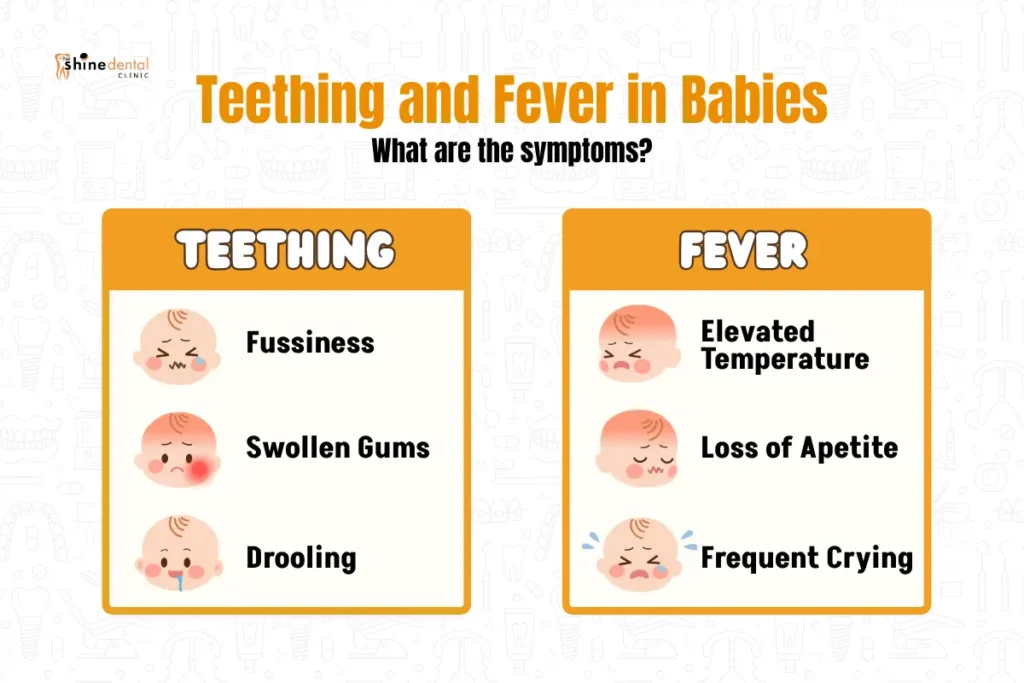
While teething does not cause high fever, it can lead to several mild and temporary symptoms that are completely normal.
These are some key points that are normal during teething:
- Slightly elevated temperature (but not a true fever):
Your baby may feel a bit warmer than usual during teething due to gum inflammation, but the temperature should remain below 38°C. If it goes beyond this, it’s likely not related to teething and may need attention.
- Increased drooling:
Excessive drooling is one of the most common early signs of teething, as the body produces more saliva during this stage. You may notice your baby’s clothes becoming wet frequently, which can sometimes lead to mild skin irritation around the mouth or chin.
- Irritability and fussiness:
Gum discomfort can make babies more sensitive and easily upset, especially when they are tired or unable to settle. They may cry more than usual or seek extra comfort from parents during this phase.
- Chewing and biting behavior:
Babies often chew on toys, fingers, or nearby objects to relieve the pressure building in their gums. This natural response helps soothe irritation and is a clear sign that teething may be underway.
- Mild sleep disturbances:
Teething discomfort can interrupt your baby’s usual sleep routine, causing them to wake up more often or have difficulty falling asleep. These disruptions are usually temporary and improve once the tooth emerges.
- Temporary changes in appetite:
Some babies may eat less than usual because sore gums make sucking or chewing uncomfortable. This change is typically short-term and feeding patterns return to normal once the discomfort reduces.
These symptoms are usually short-lived and tend to improve once the tooth breaks through the gum. Our complete guide on Baby Teeth and Early Dental Care explains what to expect from your baby’s first tooth all the way through to early childhood.
What Symptoms Are Not Caused by Teething?
It’s equally important to understand what teething does not cause. Some symptoms are often mistakenly linked to teething but are usually signs of another condition.
These include:
- High fever (above 38°C):
A true fever is not a normal symptom of teething. While babies may feel slightly warm, a temperature above 38°C usually indicates an infection or illness and should be checked by a professional.
- Severe diarrhea:
Mild changes in digestion can sometimes occur, but frequent or persistent diarrhea is not typical of teething. It may point to an underlying infection or dietary issue that needs attention.
- Vomiting:
Teething does not cause vomiting. If your baby is throwing up, it’s important to take it seriously and seek medical advice to rule out other conditions.
- Rashes on the body (beyond drool rash):
While drooling can cause mild irritation around the mouth and chin, rashes on other parts of the body may indicate allergies, infections, or other health concerns.
- Extreme lethargy:
If your baby seems unusually tired, less active, or difficult to wake, this is not related to teething and should be evaluated promptly by a healthcare professional.
Recognizing these differences helps ensure that your baby receives proper care when needed. The NHS guidance on teething also confirms that high fever and diarrhea are not teething symptoms and should always be taken seriously.
When should you be concerned?
As a parent, it’s natural to feel unsure about when to worry. While teething symptoms are generally mild, there are clear signs that indicate the need for professional advice
- A high or persistent fever:
If your baby develops a fever that lasts more than a day or keeps returning, it’s unlikely to be related to teething. A consistent or rising temperature may indicate an infection and should be evaluated by a healthcare professional.
- Continuous diarrhea or vomiting:
While minor digestive changes can sometimes occur, ongoing diarrhea or vomiting can quickly lead to dehydration. These symptoms are not typical of teething and require proper medical attention.
- Refusal to eat or drink for extended periods:
A slight drop in appetite is normal, but if your baby consistently refuses feeds or fluids, it can affect their overall health and hydration levels. This should not be ignored.
- Unusual irritability or inconsolable crying:
Teething may cause fussiness, but if your baby cannot be comforted despite your efforts, it may signal a more serious underlying issue that needs attention.
- Signs of dehydration:
Watch for symptoms such as dry lips, fewer wet diapers, sunken eyes, or unusual tiredness. These are important warning signs that your baby may not be getting enough fluids.
Trust your instincts, If something doesn’t feels rights, it’s always better to get it checked. Early attention can prevent small concerns from becoming bigger problems
How to Check and Manage Fever in Babies
If you suspect your baby has a fever, it’s important to check it accurately and respond appropriately.
Checking Temperature
Using a reliable digital thermometer rather than relying on touch. Measuring temperature properly gives you a clear understanding of you baby’s condition.
Keeping Your Baby Comfortable
If your baby is slightly warm but otherwise active and feeding well, you can:
- Dress them in light, comfortable clothing
- Ensure they stay hydrated
- Monitor their symptoms closely
Avoid Self-Diagnosing
It’s easy to assume symptoms are related to teething, but avoid making conclusions without proper observation. If symptoms persist or worsen, professional guidance is the safest option.
How to Soothe Teething Discomfort Safely
While managing concerns about fever, it’s also important to focus on relieving your baby’s teething discomfort in safe ways.
- Gently massage your baby’s gums with clean hands
- Offer chilled (not frozen) teething toys
- Use a clean, cool washcloth for chewing
- Provide extra comfort through holding and soothing
The CDC’s child development resources also highlight the importance of close observation and responsive care during early developmental stages like teething.
These simple methods can help ease discomfort without introducing unnecessary risks.
Conclusion
Teething is a natural and important part of your baby’s development, but it can sometimes be misunderstood. While it may cause mild discomfort and a slight increase in temperature, high fever is not a normal symptom of teething.
Understanding the difference between typical teething signs and symptoms of illness allows you to respond with clarity and confidence. Instead of assuming every change is due to teething, careful observation helps you make better decisions for your baby’s health.
When in doubt, it’s always best to seek professional advice. Early attention to unusual symptoms ensures your baby stays safe, comfortable, and well cared for during this important stage of growth.
A child’s first dental experiences matter. At The Shine Dental Clinic, we focus on creating gentle, fear-free visits that help children feel safe, relaxed, and cared for from day one
Frequently Asked Questions (FAQs)
Can teething cause a fever of 38°C or higher?
No. A temperature of 38°C or above is considered a true fever and is not caused by teething. While gum inflammation during teething may produce a very slight warmth, any reading at or above 38°C is a sign that your baby’s body may be responding to an infection or illness. It is best to consult a healthcare professional rather than assume teething is the cause.
How long does teething fever last?
The mild temperature fluctuation associated with teething typically lasts only a day or two around the time a tooth is actively pushing through. If warmth or a fever persists beyond two days, or if the temperature rises above 38°C, it is unlikely to be teething-related and should be evaluated by a doctor.
At what age does teething usually begin?
Most babies begin teething between four and seven months of age, though it can start as early as three months or as late as twelve months. Every baby develops at their own pace, so slight variation from these ranges is completely normal.
Is drooling during teething normal?
Yes, increased drooling is one of the most consistent and earliest sings of teething. The body produces more saliva as the teeth begin to move through the gums. This can sometimes cause mild redness or rash around the mouth and chin, which can be managed by keeping the area clean and dry.
Can teething cause diarrhea?
Teething does not directly causes diarrhea. While some parents notice slightly looser stools during this period, this is often linked to increased hand to mouth contact and exposure to new germs, not to teething itself. Persistent or watery diarrhea should always be assessed by a healthcare professional as it can lead to dehydration.
When should I take my baby to the dentist for the first time?
It is generally recommended to schedule your baby’s first dental visit within six months of the first tooth appearing, or by their first birthday whichever comes first. Early visits help establish healthy habits and allow the dentist to check that development is on track. At The Shine Dental Clinic, we make first visits gentle and stress-free so your child feels comfortable from the very beginning.