
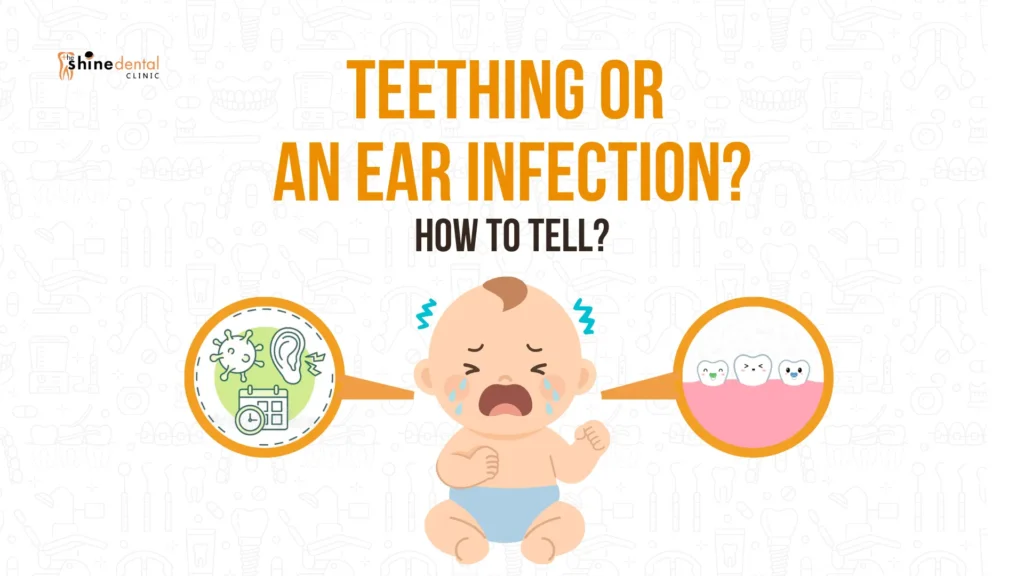
When babies suddenly start pulling at their ears, become unusually fussy, or struggle to sleep, it can leave parents feeling confused and concerned. A common question that often comes up is: Is this teething, or an ear infection?
Both conditions can cause discomfort and changes in behavior, which makes it difficult to tell them apart, especially for first-time parents. A baby who is crying more than usual, refusing to eat, or waking up frequently at night can quickly raise concerns, and it’s natural to want to understand what’s going on.
The challenge is that teething and ear infections share several overlapping symptoms, such as irritability and sleep disturbances. However, the underlying causes and severity of these conditions are quite different. Knowing how to distinguish between teething vs ear infection can help you decide when simple comfort is enough and when it’s important to seek medical attention.
According to Cleveland Clinic, teething discomfort can sometimes radiate toward the jaw and ear area because of shared nerve pathways in the face.
This guide will walk you through why these two conditions can look similar, what signs to watch for, and how to respond with confidence.
Why Teething Can Mimic Ear Infection
Teething doesn’t only affect the gums, it can also create discomfort that spreads to nearby areas like the jaw, cheeks, and even the ears. This happens because the nerves in the mouth and ear region are closely connected. When a tooth begins to push through the gums, the pressure and inflammation can cause sensations that feel like ear pain.
Because of this, babies may:
- Tug or pull at their ears occasionally
- Rub their cheeks or jaw
- Show signs of general discomfort or restlessness
- Become more irritable than usual
These behaviors can easily be mistaken for symptoms of an ear infection. However, the key difference lies in how intense and consistent these symptoms are. Teething-related discomfort tends to come and go, while ear infection symptoms are usually more persistent and often worsen over time.
To understand why these symptoms appear when they do, it helps to know when your baby’s teeth typically start coming in. Understanding this connection can help parents jump to conclusions white staying alert to more serious signs.

Key Symptoms of Teething
Teething is a natural developmental phase, and while it can be uncomfortable, the symptoms are generally mild and temporary. Most babies experience teething without any serious complications.
Here are the most common signs of teething:
1. Mild Irritability
Babies may become slightly more fussy or clingy than usual due to gum discomfort. This irritability often increases in the evening when they are tired and less distracted.
2. Increased Drooling
Excessive drooling is one of the earliest and most noticeable signs of teething. You may find yourself changing bibs or clothes more frequently. In some cases, constant moisture can cause mild skin irritation around the mouth or chin.
3. Chewing and Biting Behavior
Babies instinctively try to relieve gum pressure by chewing on objects. They may bite toys, fingers, or anything within reach. This behavior is completely normal and often helps soothe discomfort.
4. Swollen or Tender Gums
You may notice redness, swelling, or a slightly raised area on the gums where a tooth is about to emerge. Some babies may resist feeding because of this sensitivity.
5. Temporary Discomfort
Teething discomfort usually lasts for a few days before and after a tooth breaks through the gum. It comes in phases rather than being constant, which is an important distinction from infections.
Overall, teething symptoms are manageable and tend to improve without medical treatment. For a detailed breakdown of what to expect and when, see our guide on Signs of teething in Babies: Timeline and symptoms.
Key Symptoms of Ear Infection
Ear infections, on the other hand, are medical conditions that often require attention and sometimes treatment. They are usually caused by bacteria or viruses and can lead to more intense and persistent symptoms.
Here are the key signs of an ear infection:
1. Persistent Ear Pain
Babies may cry more frequently and seem uncomfortable for longer periods. The pain may become more noticeable when they lie down, as this increases pressure in the ear and it is common for the pain to be worse at night.
2. Fever
A significant or persistent fever is a strong indicator of infection. Unlike teething, which may cause only a slight temperature increase, ear infections often lead to higher fevers.
3. Trouble Sleeping
Pain from an ear infection can worsen at night, making it difficult for babies to fall asleep or stay asleep. Frequent waking is common in such cases.
4. Reduced Appetite
Swallowing can increase pressure in the ear, making feeding uncomfortable. This may cause babies to refuse breastfeeds, bottles, or solid foods.
5. Fluid Discharge (in Some Cases)
In more serious cases, you may notice fluid or pus coming from the ear. This is a clear sign that medical attention is needed.
Unlike teething, ear infection symptoms tend to persist or worsen over time rather than improve on their own. The American Academy of Pediatrics offers additional guidance on identifying and treating ear infections in young children.
How to Tell the Difference
Here’s a simple comparison to help you identify the likely cause:
| Symptom | Teething | Ear Infection |
| Fever | Rare and mild | Common and often higher |
| Duration | Short-term, comes and goes | Persistent and may worsen |
| Severity | Mild to moderate discomfort | Moderate to severe pain |
| Ear pulling | Occasional | Frequent and intense |
| Sleep issues | Temporary disruptions | Ongoing sleep problems |
This table provides a general guideline, but it’s important to observe your baby’s overall behavior rather than relying on a single symptom. The National Health Service recommends monitoring the duration and severity of symptoms when trying to distinguish between teething discomfort and ear infections.
Its also worth understanding the full teething timeline so you can cross referenc your baby’s age and symptoms. Our stage-by-stage teething timeline guide can help you stay informed
When to See a Doctor
While teething is a normal developmental stage, ear infections require proper medical evaluation. Knowing when to seek help can make a big difference in your baby’s comfort and recovery.
You should consult a healthcare professional if:
- Symptoms last more than a few days without improvement
- Your baby develops a fever above 38°C
- There are signs of severe or persistent pain
- Your baby is unusually irritable or cannot be comforted
- Feeding becomes consistently difficult
- You notice fluid discharge from the ear
It’s always better to be cautious. If something feels unusual or more intense than typical teething symptoms, seeking professional advice is the safest choice.
The Centers for Disease Control and Prevention encourages parents to seek medical advice when symptoms involve persistent fever, drainage, or significant behavioral changes.
How Parents Can Respond at Home
If your baby’s symptoms appear mild and are likely due to teething, there are simple ways to help them feel more comfortable.
- Offer safe teething toys for chewing
- Gently massage the gums with clean hands
- Maintain a calm and consistent routine
- Provide extra comfort through holding or soothing
At the same time, continue to monitor symptoms closely. If they change, worsen, or don’t improve, it’s important to reassess the situation.
Conclusion
Teething and ear infections can look very similar at first, but understanding their differences can help you respond with confidence. Teething usually causes mild, short-term discomfort that comes and goes, while ear infections tend to involve more persistent and intense symptoms such as fever and ongoing pain.
By learning how to recognize the signs of teething vs ear infection, you can avoid unnecessary worry while also ensuring that your baby receives the right care when needed.
When in doubt, trust your instincts as a parent. If something feels unusual or more serious than typical teething, it’s always best to consult a healthcare professional. Early attention can make all the difference in keeping your baby comfortable, safe, and healthy.
The pediatric-friendly team at The Shine Dental Clinic is here to guide you with trusted advice, gentle care, and personalized support for your child’s growing smile.
Frequently Asked Questions (FAQs)Baby Teeth and Early Dental Care: The Parent’s Guide 2026
Can teething cause ear pain?
Yes. Teething can cause discomfort that radiates toward the ear due to shared nerve pathways between the mouth and ear. This is why babies often pull at their ears during teething, even without an ear infection.
How can I tell if my baby’s fever is from teething or an ear infection?
Teething may cause a very slight temperature rise (usually below 38°C), while an ear infection typically causes a higher, more persistent fever. If your baby’s fever exceeds 38°C or doesn’t go away within a day, consult a doctor.
Can a baby have both teething and an ear infection at the same time ?
Yes, it’s possible. Both can occur together, which makes it even harder too identify that cause. If symptoms feel more intense than usual teething or last longer than a few days, get your baby checked by a healthcare professional.
Does ear pulling always mean an ear infection ?
No, Babies pull their ears for many reasons, including teething, curiosity, or tiredness. Ear pulling alone is not a reliable sign of infection. Look for additional symptoms like fever, fluid discharge, or persistent crying before assuming it’s an ear infection.
When should I stop worrying and just see a doctor?
If your baby has a fever above 38°C, symptoms lasting more than 2-3 days, fluid coming from the ear, or is inconsolable, skip the guessing and see a doctor. It’s always better to get checked early than to wait.