
While many parents know that teething typically begins around 6 months of age, understanding the normal order of tooth eruption can provide reassurance and help you track your child’s oral development.
Baby teeth do not appear randomly. Most children follow a predictable sequence as their primary teeth emerge. Knowing which teeth usually come first, when they are expected to appear, and what changes to expect along the way can help parents support healthy oral development from infancy through toddlerhood.
If you’re wondering about the broader teething timeline, you may also find our guide on When Do Baby Teeth Come In? helpful for understanding what to expect during each stage of development.
What Is Tooth Eruption?
Tooth eruption is the process by which teeth move from within the jawbone and emerge through the gums into the mouth. Most children develop a total of 20 primary (baby) teeth, which typically erupt between 6 months and 3 years of age.
According to the American Academy of Pediatric Dentistry (AAPD), variations in timing are common, and every child develops at their own pace.
Why Understanding Tooth Eruption Order Matters
Understanding the normal sequence of baby teeth eruption can help parents:
- Monitor healthy oral development
- Identify potential developmental concerns early
- Establish proper oral hygiene habits
- Support healthy chewing and speech development
- Know what to expect during different stages of teething
Although the exact timing may vary, the eruption order is generally consistent among most children.
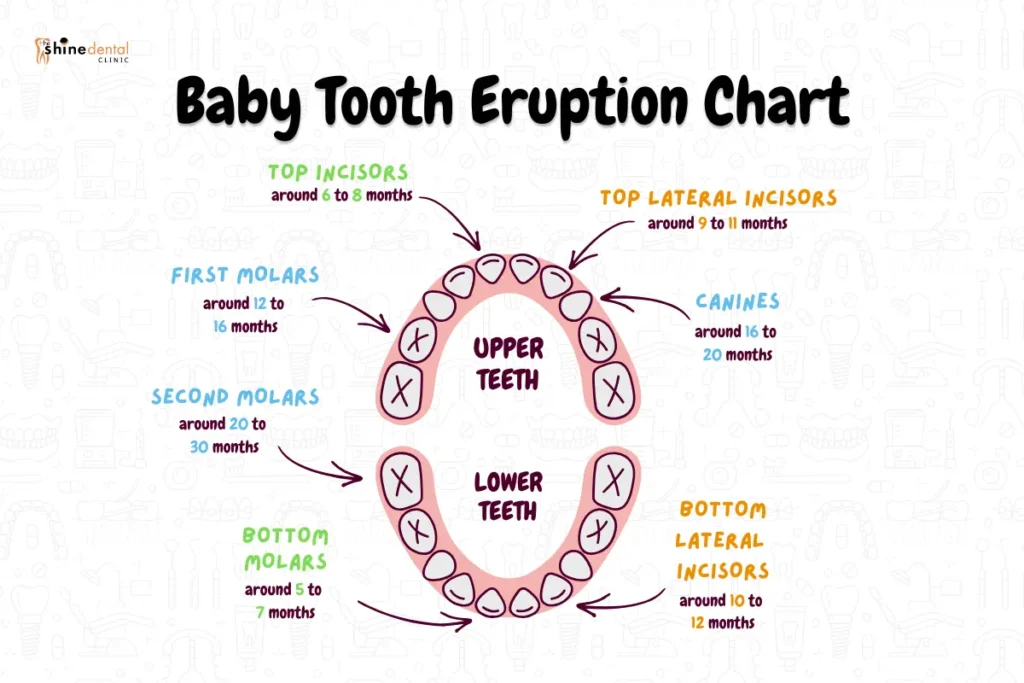
Baby Tooth Eruption Order Chart
The following chart shows the typical order in which primary teeth erupt:
| Tooth Type | Average Eruption Age |
| Lower Central Incisors | 6-10 months |
| Upper Central Incisors | 8-12 months |
| Upper Lateral Incisors | 9-13 months |
| Lower Lateral Incisors | 10-16 months |
| First Molars | 13–19 months |
| Canines (Cuspids) | 16–23 months |
| Lower Second Molars | 23–31 months |
| Upper Second Molars | 25–33 months |
Parents can also refer to the official eruption chart provided by the American Dental Association (ADA) Eruption Charts for additional guidance.
Stage 1: Lower Central Incisors
Average Age: 6-10 Months
The lower central incisors are usually the first teeth to appear. These are the two front teeth located in the center of the lower jaw.
Common signs during this stage may include:
- Increased drooling
- Gum sensitivity
- Chewing on objects
- Mild fussiness
These first teeth help babies begin biting soft foods and mark the start of their oral health journey.
Stage 2: Upper Central Incisors
Average Age: 8–12 Months
The upper front teeth generally erupt shortly after the lower central incisors.
As these teeth emerge, many parents notice a more noticeable smile and improved ability to bite and explore different textures of food.
Stage 3: Lateral Incisors
Average Age:
- Upper lateral incisors: 9–13 months
- Lower lateral incisors: 10–16 months
Lateral incisors appear beside the central incisors, gradually filling in the front portion of the mouth.
By this stage, many children have between six and eight visible teeth.
Stage 4: First Molars
Average Age: 13-19 Months
First molars are larger chewing teeth located toward the back of the mouth.
Because these teeth are wider and have a larger surface area, some children may experience increased discomfort during eruption.
Parents may notice:
- Increased chewing behavior
- Mild irritability
- Tender gums
- Changes in sleep patterns
Stage 5: Canines (Cuspid Teeth)
Average Age: 16-23 Months
Canines are the pointed teeth positioned between the incisors and molars.
These teeth play an important role in:
- Tearing food
- Supporting proper bite development
- Assisting speech development
Stage 6: Second Molars
Average Age:
- Lower second molars: 23–31 months
- Upper second molars: 25–33 months
Second molars are usually the final baby teeth to erupt.
By approximately age three, most children have a complete set of 20 primary teeth.
Is Tooth Eruption Order Always the Same?
Not necessarily.
While most children follow a similar pattern, slight differences in timing and sequence are common. Genetics, growth patterns, and individual development can all influence when teeth appear.
A child whose teeth erupt slightly earlier or later than average is often developing normally.
However, significant delays or unusual eruption patterns should be evaluated by a pediatric dentist.
Some children may develop teeth later than average. In many cases this is normal, but understanding Delayed Teething: When Should Parents Worry? can help parents determine when professional evaluation may be beneficial.
Common Signs of Teething
As teeth erupt through the gums, children may experience:
- Increased drooling
- Swollen or tender gums
- Desire to chew on objects
- Mild irritability
- Temporary sleep disturbances
- Reduced appetite for a short period
How to Care for Teeth During Eruption
Good oral care should begin from the moment the first tooth erupts.
Oral hygiene should begin even before all teeth have erupted. Parents can learn more about establishing healthy habits in our guide to Baby Oral Care Before Teeth Appear and After the First Tooth.
Oral Care Tips for Parents
- Brush twice daily using a soft-bristled infant toothbrush.
- Use a smear-sized amount of fluoride toothpaste for children younger than three years.
- Avoid putting your child to bed with a bottle containing milk or juice.
- Encourage healthy eating habits.
- Schedule your child’s first dental visit by age one or within six months of the first tooth appearing.
The AAPD Parent Resources and FAQs provide additional information on infant oral health and dental visits.
When Should Parents Be Concerned?
While variations are normal, parents should consider consulting a pediatric dentist if:
- No teeth have erupted by 18 months of age
- Teeth appear significantly delayed compared to developmental milestones
- Teeth erupt with unusual discoloration
- There are concerns regarding jaw growth or oral development
- Persistent pain, swelling, or signs of infection occur
If you notice significant delays, unusual eruption patterns, or concerns about oral development, scheduling your child’s can provide reassurance and professional guidance.
The National Institute of Dental and Craniofacial Research (NIDCR) offers evidence-based information on children’s dental development and oral health.
Frequently Asked Questions
What tooth usually erupts first?
The lower central incisors are usually the first baby teeth to emerge, typically between 6 and 10 months of age.
How many teeth should a one-year-old have?
Many children have between 4 and 8 teeth by their first birthday, although healthy variation is common.
Can baby teeth erupt out of order?
Yes. Minor variations in tooth eruption order are common and usually not a cause for concern.
When should all baby teeth be present?
Most children have all 20 primary teeth by approximately age three.
Is delayed tooth eruption always a problem?
No. Some children naturally develop teeth later than others. However, if no teeth have erupted by 18 months, it is advisable to seek a professional dental evaluation.
Final Thoughts
Understanding the normal tooth eruption order can help parents confidently navigate their child’s teething journey. While every child develops at their own pace, most babies follow a predictable pattern, beginning with the lower front teeth and ending with the second molars.
Tracking dental milestones, practicing good oral hygiene, and attending regular dental checkups can help ensure healthy oral development from the very first tooth.
Concerned About Your Child’s Tooth Eruption Timeline?
If your child’s teeth seem delayed, are erupting in an unusual pattern, or you simply want expert reassurance, our pediatric dental team is here to help. Early evaluation can identify potential concerns and provide guidance tailored to your child’s development.
Book an appointment today at The Shine Dental Clinic to receive personalized advice on your child’s tooth eruption, teething concerns, and long-term oral health.