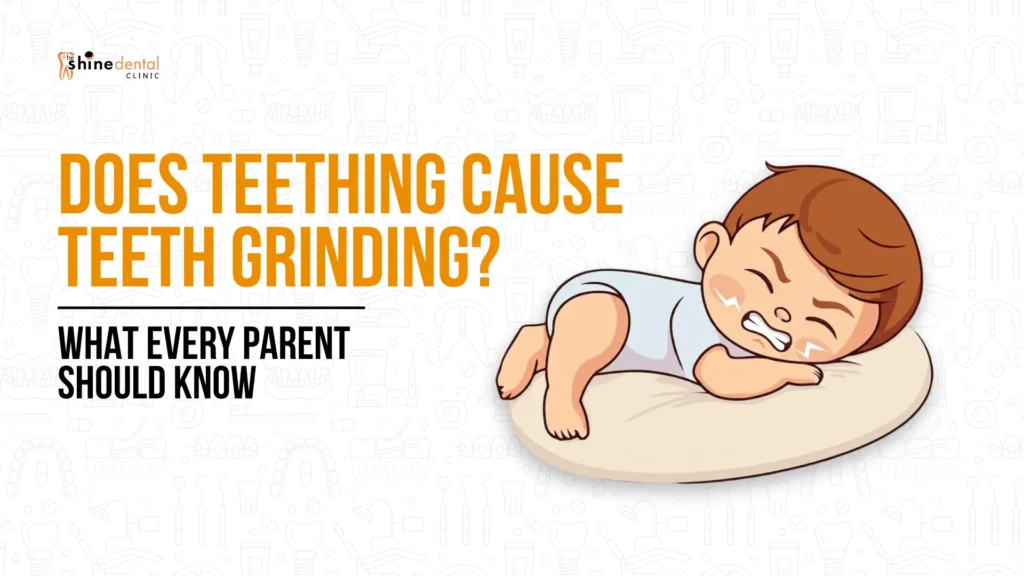
Quick answer: In most toddlers, teeth grinding (bruxism) is directly linked to teething. The pressure of a new tooth pushing through the gums creates discomfort, and grinding is one of the few ways a toddler can relieve it. It’s most common around molar eruption (roughly 13 to 33 months), tends to happen at night, and fades once the tooth has fully come through. It’s rarely a cause for concern unless it continues well after teething ends or leaves visible wear on the teeth.
You’re walking past your toddler’s room at night and you hear it: a grating, gnashing sound that makes you wince. You tiptoe in, half expecting to find something wrong, and realize it’s just your child, fast asleep, grinding their teeth.
If this sounds familiar, take a breath. This is one of the most common, and most misunderstood, toddler habits, and in the vast majority of cases, the cause isn’t stress or a dental problem. It’s teething.
In short: teeth grinding affects an estimated 2 to 3 out of every 10 children, with rates highest during the toddler and preschool years. Teething-related grinding usually starts a few days before a new tooth erupts and stops once it’s through, and molars tend to be the biggest trigger, since they’re larger and create far more pressure than front teeth. Most of the time, no treatment is needed beyond simple comfort measures. It’s really only persistent grinding unrelated to teething, or visible tooth wear, that’s worth mentioning to a dentist.
What Is Teeth Grinding (Bruxism) in Toddlers?
Bruxism is the clenching or grinding of teeth, usually without the child being aware of it. In toddlers, it happens almost exclusively during sleep, which is why it’s parents, not the children themselves, who notice it. According to the American Academy of Pediatrics, bruxism is considered a normal, usually self-limiting habit in early childhood rather than a medical disorder. The American Academy of Family Physicians similarly notes that bruxism happens most often in children, with roughly 20 to 30 percent grinding their teeth at some point, usually while asleep.
There are technically two types: sleep bruxism, by far the more common form in toddlers, and awake bruxism, which involves clenching or grinding during the day, often while a child is concentrating hard or exploring a new sensation in their mouth. Teething-related grinding falls almost entirely into the sleep bruxism category.
Why Does Teething Cause Toddlers to Grind Their Teeth?
Teething creates pressure beneath the gums before a tooth is even visible, and grinding is one of the few physical outlets a toddler has to relieve that pressure. The back-and-forth motion between the upper and lower gums, or newly erupted teeth, works similarly to how an adult might press on a sore muscle for temporary relief.
This connection tends to be most noticeable around molar eruption, typically between 13 and 33 months, since molars are larger and create considerably more pressure than front teeth. It’s also most pronounced in the days just before a tooth actually breaks through the gumline, when discomfort tends to peak, and especially at night, when the mouth is at rest and there are no daytime distractions to occupy your toddler’s attention. Colgate’s Oral Care Center notes that misaligned teeth can also contribute to grinding in some children, though teething-related pressure remains the most common trigger at this age.
If you’ve read our teething timeline guide or signs of teething guide, you’ll notice grinding follows the same pattern as drooling, gum-rubbing, and nighttime fussiness. It’s simply another way toddlers respond to a tooth on its way in.
How Common Is Teething-Related Teeth Grinding?
It’s far more common than most parents expect, with the toddler and preschool years being the peak window, according to pediatric sources like Nemours KidsHealth. Children’s Hospital of Philadelphia estimates that about 3 in 10 kids grind their teeth before reaching age 5, and that most outgrow it by age 6. Most children outgrow the habit entirely once all their baby teeth, or later their permanent teeth, have fully erupted.
At our clinic in Lalitpur, teething-related grinding is one of the most frequent concerns parents bring up during a child’s first few dental visits, often alongside questions about drooling, fussiness, or disrupted sleep. It’s rarely the grinding itself that needs treatment; it’s the reassurance parents are looking for. Many parents also find it helpful to know that grinding tends to ease off in waves, flaring up around each new tooth and settling down again in between, rather than being a constant, ongoing habit.
Is My Toddler’s Teeth Grinding Normal, or Something to Worry About?
In most cases, yes, it’s entirely normal. Teething-related grinding typically starts a few days before a new tooth erupts and fades again once that tooth has fully come through. It happens mainly at night, and it usually isn’t accompanied by daytime pain complaints or any real trouble eating. If your toddler’s grinding fits this general pattern, it generally isn’t something to worry about, and you can expect it to resolve on its own.
Teething vs. Other Causes: How to Tell the Difference
Teething isn’t the only reason toddlers grind their teeth: bite misalignment and, less commonly, stress can also play a role. Here’s how to tell which one you’re dealing with.
More likely teething-related if:
- Grinding started around the same time as other teething signs, such as drooling, gum swelling, or chewing on objects
- It comes in short bursts tied to specific teeth coming in, rather than happening constantly
- Your child seems otherwise comfortable during the day, even if the nights get noisy
Worth mentioning to your dentist if:
- The grinding is constant and doesn’t seem tied to any particular teething episode
- You notice visible wear, flattening, or chipping on the teeth
- Your child complains of jaw or ear pain, or seems to have real trouble chewing
- The grinding continues well after all their teeth have erupted
If any of the second list applies, it’s worth a check-up rather than waiting it out. Our guide on children’s dental emergencies covers other situations where a visit shouldn’t be delayed.
How Can I Help My Toddler Stop Grinding at Night?
You can’t stop an unconscious grinding habit directly, but you can ease the discomfort behind it, which often reduces how much it happens.
- Offer safe teething relief before bed. A chilled, not frozen, teething ring or a clean, cold washcloth to chew on can ease gum pressure so there’s less need to grind.
- Keep the bedtime routine calm. Overtiredness and overstimulation tend to make any nighttime habit, including grinding, more pronounced.
- Try a gentle gum massage. Using a clean finger before sleep, if your toddler tolerates it, can relieve some of the pressure that triggers grinding.
- Avoid amber teething necklaces or unproven remedies. As covered in our post on amber teething necklaces, these carry real safety risks with no proven benefit.
- Let it run its course. Trying to physically stop a toddler from grinding mid-sleep isn’t necessary and will likely disrupt their rest for no real benefit.
- Track the pattern. Note when the grinding happens and whether a new tooth appears within a week or two afterward, so it’s easier to tell your dentist whether it’s teething-related.
When Should I Take My Toddler to the Dentist for Teeth Grinding?
Book a check-up if the grinding continues for more than a few weeks with no sign of a new tooth, if you notice flattened or visibly worn teeth, if your toddler wakes up with a sore jaw or avoids certain foods, or simply if you want peace of mind. At a routine visit, a pediatric dentist can check for early enamel wear and rule out bite alignment issues. In most cases, it’s a quick reassurance rather than a treatment.
Frequently Asked Questions
Is it normal for a 1-year-old to grind their teeth?
Yes. Grinding can start as soon as the first teeth erupt and is common throughout the toddler years, especially during active teething periods.
How long does teething-related teeth grinding last?
Usually just a few days to a couple of weeks around each new tooth, though some toddlers grind on and off throughout the entire teething process, which can span until around age 3.
Can teething grinding damage my toddler’s teeth?
Occasional grinding during teething rarely causes lasting damage to baby teeth. Persistent, long-term grinding unrelated to teething is what dentists watch more closely for enamel wear.
Should I wake my toddler up if I hear them grinding at night?
No. It isn’t harmful in the short term, and waking your child will only disrupt their sleep without stopping the habit.
Does teething teeth grinding mean my toddler needs a night guard?
No. Night guards are typically only used for persistent bruxism unrelated to teething, usually in older children with permanent teeth. A pediatric dentist can advise if one is ever genuinely needed.
Worried about your toddler’s teeth grinding, or not sure if it’s teething-related? The team at The Shine Dental Clinic offers gentle, child-focused check-ups in a calm environment built for little ones. Book an appointment on WhatsApp and we’ll help put your mind at ease.
Medically reviewed by the pediatric dentists at The Shine Dental Clinic, Lalitpur, Nepal.