
Teething is a gradual journey that begins in infants and continues into the toddler years. While the eruption of front teeth is often the first milestone parents notice, the arrival of molars tends to be more challenging for both children and newly parents. Many parents are surprised to find that their child, who handled early teething relatively well, becomes more irritable, restless, or uncomfortable during this later stage.
Molar teething is different because of the size, shape, and position of these teeth. Located at the back of the mouth, molars play an important role in chewing and overall oral development. However, their eruption can bring more noticeable discomfort compared to earlier teeth.
Understanding molar teething age and symptoms helps parents prepare for this stage with confidence. When you know what to expect and how to respond, it becomes much easier to support your child and manage this phase calmly.
What Are Molars and Why Are They Important?
Molars are the larger, flatter teeth located at the back of the mouth. Unlike the front teeth, which are mainly used for biting, molars are responsible for grinding and chewing food. This makes them essential for a child’s transition from soft foods to a more varied diet.
There are two main sets of molars that appear during early childhood:
- First molars
- Second molars
These teeth are wider and have a broader surface area, which is why they take longer to emerge through the gums. Their development is an important step in your child’s growth, as it supports proper chewing, nutrition, and even speech development over time.
When Do Molars Appear?
Molars are part of the later stages of teething and typically appear after the front and canine teeth have already come in. While every child develops at their own pace, there is a general timeline that most follow:
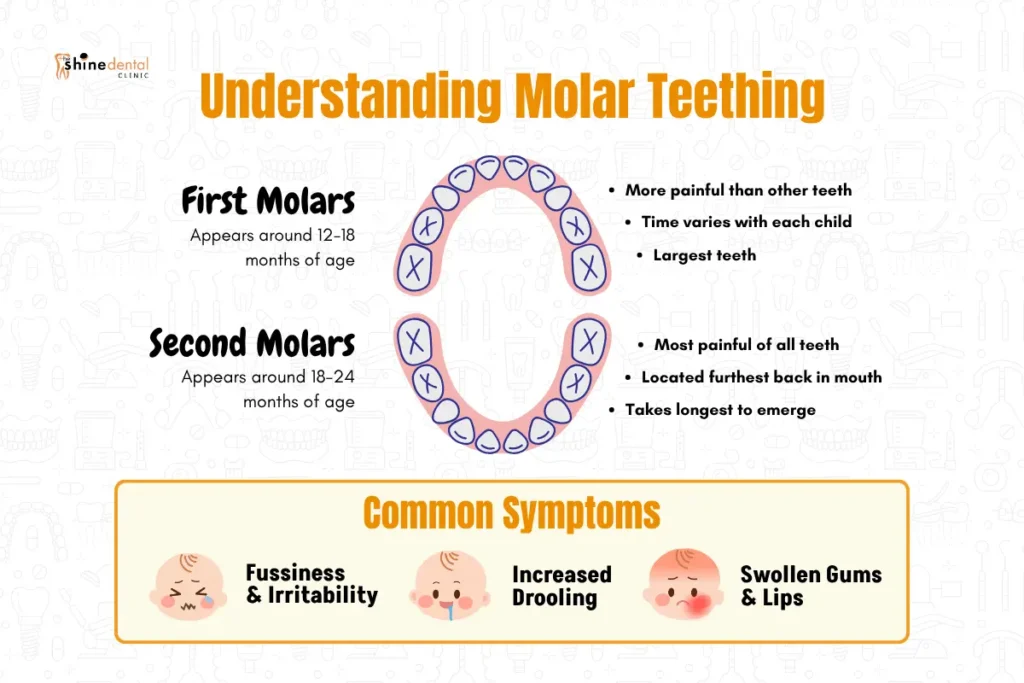
- First molars: Usually appear between 12 to 18 months
- Second molars: Typically emerge between 18 to 24 months
This means that molar teething often occurs when your baby has grown into a more active and aware toddler. Because of this, their reactions to discomfort may be more noticeable, they may express frustration more clearly, resist routines, or show stronger behavioral changes.
It’s also important to remember that teething does not happen all at once. Each molar may take time to push through the gums, leading to phases of discomfort followed by calmer periods.
The Process of Molar Teething
The process of molar teething is similar to that of other teeth but tends to be slower and more intense due to the size of the tooth.
Here’s what typically happens:
Pressure Builds Under the Gums
Before you can see a tooth coming in, the process has already started beneath the gums. As the tooth slowly moves upward, it creates pressure on the surrounding gum tissue, which can make your child feel uncomfortable. During this stage, you may notice your child chewing on toys, putting their fingers in their mouth, or becoming a little more fussy than usual. Even though there is no visible tooth yet, the movement happening under the gums can make your child more aware of their mouth and cause temporary sensitivity.
Gum Swelling and Sensitivity
As the tooth gets closer to breaking through the gum, the area around it may become swollen, red, or tender. This is because the gum tissue is adjusting and making room for the new tooth to appear. Your child may try to ease the discomfort by chewing more often, rubbing their gums, or wanting to bite on different objects. Some children may also seem more irritable during this time, especially when the gums feel sore or sensitive.
Tooth Breaks Through the Gum
When the molar finally starts to come through the gum, this is often the point when discomfort feels strongest. The gum tissue has to stretch and adjust as the tooth makes its way to the surface, which can feel uncomfortable for your child. You may notice more chewing, fussiness, or changes in eating habits during this stage. Some children prefer softer foods or may avoid chewing on the side where the new tooth is appearing until the area feels more comfortable.
Post-Eruption Adjustment
Once the tooth has broken through the gum, the pressure usually starts to decrease and your child begins to feel more comfortable. However, the gum may still look slightly swollen or feel sensitive for a few days while it adjusts around the new tooth. During this time, your child may gradually return to their usual eating and sleeping patterns as the discomfort fades. Keeping the area clean with gentle brushing also helps protect the new tooth and supports healthy oral development.
This process repeats for each molar, which is why this stage can feel prolonged compared to earlier teething phases.
Why Molars Cause More Discomfort
Many parents notice that molar teething seems more intense than earlier stages, and there are clear reasons for this.
Molars:
- Have a larger surface area: Their size means they affect a bigger portion of the gum as they erupt
- Take longer to emerge: The process is slower, which can extend the period of discomfort
- Create more pressure on the gums: This leads to stronger sensations compared to smaller front teeth
Because of these factors, symptoms during molar teething may appear more noticeable. However, it’s important to remember that this is still a normal part of development.
Common Symptoms of Molar Teething
While every child is different, there are several common signs that indicate molar teething is in progress:
Increased Irritability
During molar teething, your child may become more clingy, fussy, or easily frustrated than usual. Since they cannot fully explain the discomfort they are feeling, they may express it through changes in mood or wanting extra comfort and attention.
Swollen or Tender Gums
As molars begin to come through, the gums at the back of the mouth may look swollen, red, or feel tender. Your child may react when the area is touched or avoid chewing on that side because the gums feel sensitive.
Sleep Disruption
Teething discomfort can sometimes make it harder for your child to settle down or sleep through the night. They may wake up more often, become restless, or need extra soothing during this period.
Strong Urge to Chew
Many toddlers develop a stronger need to chew when their molars are coming in. Biting on safe toys, teethers, or fingers can help relieve the pressure and provide temporary comfort for their sore gums.
Changes in Appetite
When chewing becomes uncomfortable, some children may eat less or prefer softer foods for a short time. These changes are usually temporary and often improve as the tooth moves through the gum and the discomfort decreases.
How to Soothe Molar Teething Pain
Although molar teething can be uncomfortable, there are several safe and effective ways to help your child feel better.
Use Chilled Teething Toys
Offering a slightly chilled (not frozen) teething toy can help soothe inflamed gums and reduce discomfort. The cool temperature provides gentle relief. Cleveland Clinic also recommends chilled teething toys and safe chewing options as effective ways to ease gum discomfort during teething.
Offer Safe Chewing Options
Providing soft, safe items for chewing can help relieve pressure in the gums. This allows your child to naturally manage discomfort. For more information, see our guide on safe teething products for toddlers.
Maintain Calming Routines
Keeping daily routines consistent with bedtime routine, especially around sleep can help your child feel more secure during this uncomfortable phase.
Provide Comfort and Reassurance
Sometimes, extra cuddles, gentle rocking, or simply being close can make a big difference. Emotional comfort is just as important as physical relief.
When Should You Be Concerned?
Molar teething can be intense, but it should not cause severe symptoms. It’s important to recognize when something may not be related to teething.
You should seek professional advice if your child experiences:
- High fever
- Persistent diarrhea or vomiting
- Severe or prolonged pain
- Unusual lethargy or lack of activity
These symptoms are not typical of teething and may indicate another issue. Experts at Mayo Clinic advise parents not to assume severe symptoms such as high fever or vomiting are caused by teething alone.
If you’re unsure whether your child’s symptoms are teething-related, our pediatric dental team at The Shine Dental Clinic is here to help.
Supporting Your Toddler During Molar Teething
Molar teething is a significant stage in your child’s development and can feel more challenging than earlier phases due to the size and position of these teeth. While the process may bring increased discomfort, irritability, and temporary disruptions in routine, it is a completely normal part of growing up.
By understanding molar teething age and symptoms, parents can better prepare for what to expect and respond with confidence. Simple soothing techniques, patience, and consistent care can go a long way in helping your child stay comfortable.
With the right support and awareness, this phase becomes much easier to manage and before long, your child will have a stronger, more complete set of teeth to support their development.
Whether your baby is starting to teethe or your toddler needs their first dental check-up, The Shine Dental Clinic offers supportive and compassionate care tailored for young children. Early dental awareness and supportive care during teething can help children develop healthier oral habits and more positive dental experiences as they grow.
Contact The Shine Dental Clinic today to learn more about pediatric dental services and how we can support your child’s oral health journey.
FAQ: At What Age Do Molars Come In?
At what age do molars come in?
First molars typically appear between 12-18 months, and second molars emerge between 18-24 months. Every child develops at their own pace, so timing may vary slightly.
Is molar teething more painful than front teeth teething?
Yes. Molars are larger with a bigger surface area, take longer to emerge, and create more pressure on the gums than front teeth, making the discomfort more intense.
What are the signs my toddler is teething molars?
Look for swollen or tender gums, increased irritability, sleep disruption, strong urge to chew, and changes in appetite. Symptoms come and go depending on eruption stages.
How can I soothe my baby’s molar teething pain?
Use chilled teething toys, offer safe chewing options, maintain consistent routines, and provide comfort and reassurance. Avoid numbing gels without consulting your pediatrician.
When should I worry about molar teething symptoms?
Seek professional help if your child has a high fever, persistent diarrhea or vomiting, severe prolonged pain, or unusual lethargy. These aren’t typical teething signs.