
One of the most common concerns parents have during early childhood is how long teething will last. For many, it can feel like a never-ending phase, just when your baby seems comfortable, new symptoms appear again. Fussiness, sleep disruptions, drooling, and feeding changes can come and go, making it difficult to understand whether things are improving or not.
This uncertainty often leads parents to ask: Is this normal? How long will this continue? The truth is, teething is not a one-time event but a gradual process that unfolds over time. Because it happens in stages, with periods of discomfort followed by relief, it can feel much longer than it actually is.
Understanding how long teething lasts, including the different stages and what to expect at each phase, helps you manage this journey with more confidence and less stress. When you know what’s coming next, it becomes easier to respond calmly instead of worrying about every change in your baby’s behavior.
When Does Teething Start and End?
Teething typically begins around 4 to 7 months of age, although this timeline can vary from one baby to another. Some babies may show early signs as soon as 3 months, while others may not begin until closer to 9 months. The American Academy of Pediatrics notes that a first tooth can appear anywhere between 3 months and 1 years of age, Both scenarios are considered normal. For a closer look at first-tooth timing specifically, see When Do Baby Teeth Start Coming in? A Complete Parent’s Guide to Teething Timeline.
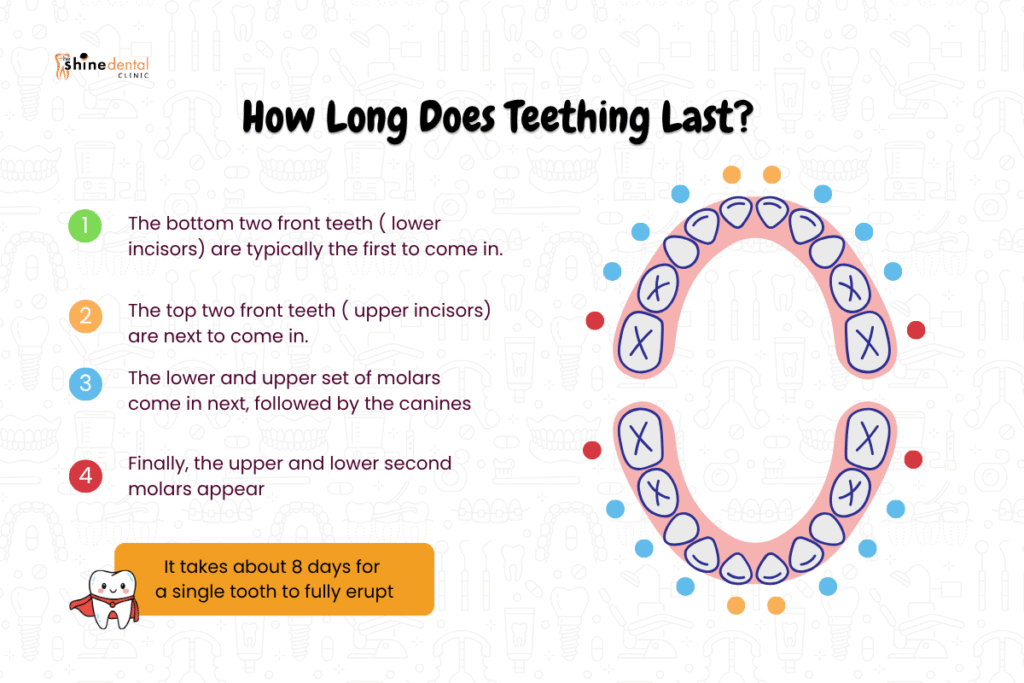
The process continues gradually until about 2 to 3 years of age, when most children have a full set of 20 primary (baby) teeth. This means teething is not a short phase, it spans a significant portion of early childhood. The full order in which teeth typically arrive is covered in Tooth Eruption Order: Complete Baby teeth Eruption Timeline for Parents.
However, one important thing to understand is that teething discomfort is not constant. Your baby is not in pain for the entire duration of these years. Instead, symptoms appear in short phases, usually around the time when a tooth is about to emerge.
This cycle of discomfort and relief is what makes teething feel unpredictable, even though it follows a natural developmental pattern. For a broader rundown of symptoms across the whole journey, see Signs of Teething in Babies: Timeline, Symptoms, and When to Seek Extra Care.
Stage-by-Stage Teething Timeline
Breaking teething into stages can make it easier to understand and manage. Each stage comes with its own set of expectations and challenges.
Early Stage (4-10 Months)
This is the beginning of the teething journey, when the first teeth, usually the lower front teeth, start to emerge. For many babies, this stage introduces them to the sensation of gum pressure for the first time.
What to expect:
- Mild irritability: Babies may become slightly more sensitive as they adjust to the new sensation in their gums.
- Increased drooling: Saliva production increases as the body responds to gum stimulation, often leading to drool rashes if not managed.
- Chewing behavior: Babies begin to chew on fingers, toys, or cloth to relieve pressure.
- Slight sleep disturbances: Discomfort may occasionally interrupt sleep, especially at night.
This phase is generally considered the easiest stage of teething. Symptoms are usually mild and short-lived, and many babies adjust quickly.
Middle Stage (10-18 Months)
During this stage, more teeth begin to appear, including the upper front teeth and the first molars. This is when many parents start noticing stronger symptoms compared to the early stage.
What to expect:
- Increased discomfort: As more teeth erupt, the frequency of symptoms may increase.
- More noticeable gum swelling: The gums may appear red or tender, especially before a tooth emerges.
- Changes in eating habits: Babies may temporarily refuse food or prefer softer options due to gum sensitivity.
Molars, in particular, can make this stage more challenging. Because they are larger and take longer to erupt, they create more pressure on the gums.
This stage often feels more demanding because symptoms may occur more frequently, even though they still come in phases. The American Academy of Pediatric Dentistry’s guidance on infant oral health, which outlines typical eruption pattern and when to involve a dentist
Late Stage (18-24 Months)
This stage involves the eruption of the second molars, which are often considered the most uncomfortable teeth during early development.
What to expect:
- Increased fussiness: Toddlers may become more expressive about their discomfort, leading to stronger reactions.
- Disrupted sleep: Night waking may become more frequent during active teething periods.
- Strong urge to chew: Toddlers may chew more aggressively to relieve pressure.
Since your child is older during this stage, they may show more noticeable behavioral changes. This can make the phase feel more intense, even though it is still temporary.
How Long Does Teething Pain Last for Each Tooth?
Although the overall teething process spans several years, the discomfort associated with each individual tooth is relatively short-lived.
Typically:
- Pain begins 2 to 3 days before the tooth erupts
- Continues for a few days as the tooth breaks through the gum
- Gradually subsides once the tooth is visible
This means your baby experiences discomfort in short bursts, not continuously. After one tooth erupts, there is usually a period of relief before the next tooth begins its process.
Understanding this pattern can be reassuring, it explains why your baby may seem uncomfortable one week and completely fine the next.
Why Teething Feels Longer Than It Actually Is
Many parents feel like their baby is “always teething,” even though the actual discomfort is temporary. This perception happens for several reasons:
Symptoms come in cycles:
Teething discomfort tends to rise and fall rather than stay constant. A fussy day or two is often followed by a calmer stretch, then another rough patch as the next tooth moves closer to the surface. Strung together, these repeated cycles can start to feel like one continuous deal.
Sleep disruptions increase stress:
Teething often interrupts sleep for both baby and parents. Frequent nighttime waking leaves everyone running on less rest. Which makes the whole experience feel far more intense and harder to cope with, even when the discomfort itself hasn’t actually gotten worse.
Multiple teeth may erupt close together:
It’s common for two or more teeth to push through around the same time. When that happens. There’s little to no recovery window between episodes, so the discomfort can feel like one long stretch instead of separate, shorter phases.
Because of these factors, teething may feel overwhelming, even though each phase is relatively short.
When Teething Duration May Not Be Normal
While variations in timing are completely normal, there are certain situations where it’s worth paying closer attention.
You may want to seek professional advice if:
- No teeth have appeared after 12 to 15 months
- Pain seems unusually severe or prolonged
- Your baby shows symptoms that are not typical of teething
These situations are not necessarily serious, but getting reassurance from a professional can help rule out other causes and give you peace of mind. It’s also worth knowing that fever and diarrhea are not typically caused by teething itself; the CDC’s guidance on children’s oral health and most major pediatric sources point to other illnesses as the likely cause when those symptoms appear, so they are worth mentioning to your pediatrician rather than waiting them out. For a deeper look at this specific concern, see Delayed Teething: When Should Parents Worry?
How Parents Can Manage Each Stage
Teething becomes much easier to handle when you understand what to expect and prepare accordingly.
- Anticipate more discomfort during molar stages:
Molars tends to be bigger and slower to come in than front teeth, which usually means more noticeable discomfort when they erupt. Knowing this ahead of time can help you recognize what’s going on instead of feeling caught off guard, and makes it easier to stay patient through whatt’s often one of the tougher stretches of teething.
- Keep safe soothing methods ready:
Having a few go-to comfort options on hand, like teething toys, a cool washcloth, or gentle gum massage, means you are not scrambling to figure out what to do in the middle of a rough moment. Being prepared in advance can make those harder days feel a lot more manageable for both.
- Maintain consistent routines:
Familiar sleep and feeding routines help your baby feel secure, even during discomfort. HealthyChildren.org outlines safe dosing and when medications is and isn’t appropriate but always check with your pediatrician or dentist before giving any medication. You may also want to read Is fluoride Toothpaste Safe? What Parents and Patients Need to Know as part of building out a full at-home care routine.
- Seek guidance when needed:
Getting advice from a trusted dental professional can help you make informed decisions. If you are weighing over the over the counter pain relief for a teething baby,
For parents, especially those with access to nearby care, having reliable support can make this phase feel far less overwhelming.
Conclusion
Understanding how long teething lasts helps parents set realistic expectations and approach each stage with confidence. While the overall process may span a couple of years, the discomfort itself is temporary and occurs in manageable phases.
By recognizing the different stages, understanding the pattern of symptoms, and preparing for each phase, you can support your child more effectively. Instead of feeling like teething is never-ending, you’ll begin to see it as a series of short, predictable steps in your baby’s development.
With patience, awareness, and the right approach, teething becomes a manageable part of your child’s growth, rather than a constant source of stress.
The Shine Dental Clinic provides a calm, welcoming environment where babies and toddlers receive patient, compassionate dental care designed around their comfort and development. Book an appointment or browse more guides on our blog.
What can I give my baby for teething pain?
Always consult your pediatrician or dentist before giving any medication. They can recommend age-appropriate options and safe dosing. Over-the-counter pain relief isn’t always necessary; many babies respond well to non-medication methods like cool teething rings, clean washcloths, and gentle gum massage
Why won’t my baby sleep? Is it teething?
Teething can interrupt sleep, especially during active eruption periods. However, sleep disruptions alone don’t confirm teething. Look for other signs like swollen gums, drooling, or chewing behavior. Sleep disturbances typically last a few days to a week as each tooth erupts, then improve once the tooth breaks through.
Does teething cause fever? My baby has temperature.
Fever is not typically caused by teething. While a slight elevation in temperature might coincide with tooth eruption, actual fever usually indicates illness. If your baby has a fever during teething, it’s worth mentioning to your pediatrician rather than assuming it’s teething-related. Similarly, diarrhea is not typically caused by teething itself, while increased drooling may change your baby’s stomach, actual diarrhea usually indicates another cause, likely an illness.
How long does teething pain actually last?
Pain for individual both last about 2-3 days before it erupts, continues for a few days as the tooth breaks through, and gradually subsides once visible. After one tooth erupts, there’s usually relief before the next tooth begins.