
Second molar teething is often considered one of the most challenging stages in a child’s early dental development. By this point, many parents feel they have already gone through the hardest parts of teething, only to find that this final phase can be just as demanding, if not more. Toddlers may suddenly become more irritable, struggle with sleep, or show changes in appetite, leaving parents wondering what’s causing the shift.
Unlike earlier teething stages, toddlers are more aware of their discomfort but still unable to fully express what they’re feeling. This can lead to frustration for both the child and the parent. Understanding second molar teething and how to soothe your toddler can make a significant difference in how you manage this phase.
With the right approach, patience, and a few practical strategies, this stage becomes much easier to handle, helping your child stay comfortable while maintaining a sense of routine and stability at home.
When Do Second Molars Appear?
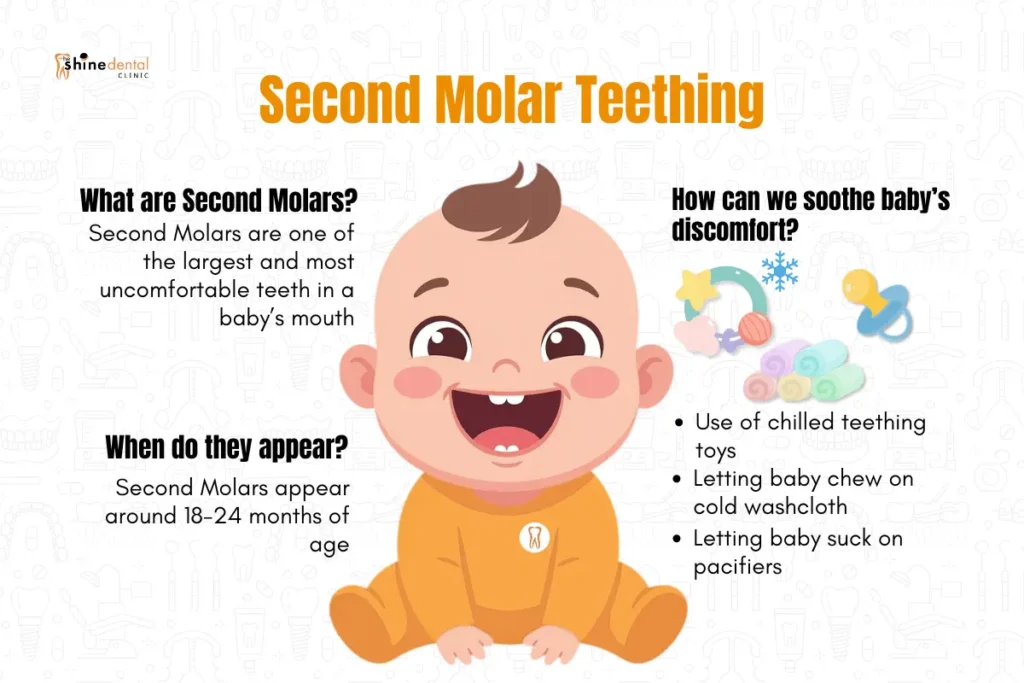
Second molars are among the last baby teeth to emerge and usually appear during the later stages of early childhood. In most cases, they erupt between:
- 18 to 24 months of age
According to pediatric dental guidance from Cleveland Clinic, second molars commonly erupt during the later stages of toddler development and may cause stronger discomfort than earlier teeth.
By this time, your child is likely more active, expressive, and aware of their surroundings. This means they may react more strongly to discomfort compared to when they were younger. You may notice clearer signs of frustration, resistance, or mood changes during this period.
It’s also important to understand that teething doesn’t happen overnight. The process of a tooth pushing through the gums takes time, which is why symptoms may come and go over several days or even weeks. For a full overview of when each tooth arrives, see our Tooth Eruption Order: Complete Baby Teeth Eruption Timeline for Parents.
Why Second Molars Are More Painful
Second molars tend to cause more noticeable discomfort compared to earlier teeth, and there are a few key reasons behind this.
They are larger in size
Second molars are bigger than the teeth that came in before them, so they need to push through a larger area of gum tissue. As they move upward, they can create more pressure and tenderness, which may make your toddler feel more uncomfortable during this stage of teething.
They take longer to emerge
Since second molars are larger and located deeper in the mouth, they usually take more time to fully come through. This means your child may experience periods of discomfort that come and go over several weeks, making it feel like the teething process is lasting longer than expected.
They are located further back in the mouth
Second molars appear at the back of the mouth, an area that can be harder for toddlers to cope with because the pressure feels deeper. This may cause them to chew more, become a little fussier, or need extra comfort while their new teeth are making their way in.
This combination often leads to stronger symptoms and longer periods of fussiness. While this can be challenging, it’s important to remember that it is still a normal and temporary part of your child’s development.
The Process of Second Molar Teething
Understanding what happens during second molar teething can make the experience easier for parents to handle. Since these teeth appear at the back of the mouth and are larger than most other teeth, the process can sometimes feel uncomfortable for toddlers. While every child reacts differently, second molar teething usually happens in stages, with periods of pressure, sensitivity, eruption, and finally relief.
Early Pressure Stage
Before you can see the second molar, it is already making its way through the gums beneath the surface. As the tooth slowly moves upward, it creates pressure in the surrounding gum area, which can make your toddler feel uncomfortable even though there are no visible signs yet. During this time, you may notice your child becoming a little more restless, wanting to chew on things more often, or seeking extra comfort and attention. This stage can sometimes be confusing for parents because the tooth has not appeared, but the discomfort has already started.
Gum Swelling and Sensitivity
As the second molar gets closer to coming through, the gums around the area may start to look swollen, red, or feel more sensitive. Because molars are larger teeth and need more space to emerge, this stage can cause noticeable discomfort for some toddlers. Your child may chew on toys, fingers, or other objects to ease the pressure, and they may become more irritable than usual. Changes in eating habits, mood, or sleep patterns can also happen as your toddler adjusts to the uncomfortable feeling in the back of their mouth.
Tooth Eruption
The eruption stage begins when the second molar finally starts breaking through the gum surface. This is often the stage parents notice the most because the signs of teething become more obvious. Your toddler may experience increased gum tenderness, want to chew more frequently, or feel uncomfortable while eating. The area around the emerging tooth may appear raised or slightly swollen, and your child may need extra patience and comfort during this period. Although this stage can feel challenging, the discomfort usually improves as the tooth continues to come through.
Relief Phase
Once the second molar has fully emerged, the pressure on the gums begins to reduce, and your toddler usually starts feeling more comfortable again. The swelling and sensitivity gradually settle, and many children return to their normal routines, including eating, sleeping, and playing more easily. While the tooth may still need time to fully adjust within the mouth, the intense discomfort linked with eruption typically passes. With gentle care, reassurance, and good oral hygiene habits, your child can move through this final stage of teething more comfortably.
This cycle may repeat for each second molar, which is why this stage can feel longer than earlier teething phases. To understand the full teething journey from start to finish, read our guide on How Long Does Teething Last: A Stage-by-Stage Guide for Parents.
Common Symptoms of Second Molar Teething
While every child is different, there are several common signs that indicate second molar teething:
- Increased irritability: Toddlers may become more sensitive, frustrated, or clingy due to ongoing discomfort.
- Sleep disturbances: You may notice frequent waking at night or difficulty settling at bedtime.
- Gum swelling at the back of the mouth: The area where molars are emerging may appear red or slightly swollen.
- Strong chewing behavior: Toddlers often chew on toys, fingers, or objects to relieve pressure.
- Occasional loss of appetite: Eating may feel uncomfortable, leading to temporary changes in food preferences or reduced intake.
These symptoms usually appear for a few days before and after the tooth erupts, rather than being constant. The National Health Service notes that symptoms such as irritability, chewing behavior, and mild sleep disruption are common during teething, while severe illness is usually unrelated.
For a broader look at all teething signs across every stage, visit our article on Signs of Teething in Babies: Timeline, Symptoms, and When to Seek Extra Care.
Effective Ways to Soothe Your Toddler
Although second molar teething can be uncomfortable, there are several safe and effective ways to help your toddler feel better.
1. Use Chilled Teething Tools
Offering a slightly chilled (not frozen) teething ring or toy can help reduce gum inflammation and provide soothing relief. The cool sensation can be especially comforting during periods of increased discomfort.
2. Maintain a Calm Routine
Consistency is key during this phase. Keeping daily routines, especially bedtime, predictable can help your toddler feel secure, even when they are uncomfortable. Familiar patterns provide a sense of stability.
3. Offer Safe Chewing Options
Providing soft, safe items designed for teething allows your toddler to naturally relieve gum pressure. This can help reduce irritability and give them a way to manage discomfort on their own.
4. Provide Extra Comfort and Reassurance
At this stage, emotional support plays a major role. Extra cuddles, gentle rocking, or simply spending more time close to your toddler can help them feel calmer and more secure.
The American Dental Association also recommends chilled teething rings and gentle gum pressure as safe ways to ease teething discomfort in toddlers.
Related: How to Clean Baby’s Teeth Properly: A Complete Step-by-Step Guide for Parents
Managing Sleep During This Phase
Sleep disruption is one of the most common challenges during second molar teething. Toddlers who previously slept well may begin waking up more often or resisting bedtime.
To manage this:
- Stick to familiar bedtime routines to provide comfort and predictability
- Keep the environment calm and soothing
- Avoid introducing new habits (like rocking to sleep every night) that may be difficult to change later
While sleep disturbances can be frustrating, they are usually temporary and improve once the tooth has fully emerged.
When to Seek Help
Although second molar teething can cause noticeable discomfort, it should not lead to severe symptoms. It’s important to recognize when something may be unrelated to teething.
You should consider consulting a professional if:
- Symptoms seem unusually severe or prolonged
- Your toddler develops a high fever
- There are signs of persistent diarrhea or vomiting
- Your child appears unusually tired or inactive
These signs are not typical of teething and may require further evaluation. The Centers for Disease Control and Prevention advises parents not to assume high fever, vomiting, or severe diarrhea are caused by teething alone.
For guidance on what is and isn’t caused by teething, read our dedicated article: Teething and Fever in Babies: What’s Normal and What’s Not.
If you have concerns or your child’s symptoms seem unusual, our team at The Shine Dental Clinic is here to help. You can also explore our full range of pediatric dental services or visit our FAQs page for more guidance on common dental concerns in children.
Conclusion
Second molar teething is often one of the most demanding stages in your child’s early development, but it is also a temporary and natural process. The increased discomfort, changes in sleep, and occasional fussiness can feel overwhelming at times, but they are part of your child’s growth.
By understanding second molar teething and how to soothe your toddler, you can approach this phase with more confidence and patience. Simple strategies like maintaining routines, offering safe relief methods, and providing emotional reassurance can make a significant difference.
With the right support, your toddler will move through this stage more comfortably and before long, this final phase of early teething will be behind you.
At The Shine Dental Clinic, we understand that patience, comfort, and trust matter just as much as treatment. Let us help your child build healthy dental habits with confidence.
Ready to book an appointment? Our gentle, child-focused team is here to support your toddler through every stage of dental development. Learn more about us or get in touch today.
Frequently Asked Questions About Second Molar Teething
At what age do second molars typically come in?
Second molars usually erupt between 18 and 24 months of age. They are among the last baby teeth to appear and may cause stronger discomfort than earlier teeth because of their larger size and position further back in the mouth.
How long does second molar teething last?
The process can vary from child to child, but discomfort typically peaks in the days just before and after the tooth breaks through the gum. Because there are multiple second molars, the overall phase may span several weeks. Symptoms usually come and go rather than staying constant throughout.
What are the most common signs of second molar teething?
Common signs include increased irritability, drooling, swollen or red gums at the back of the mouth, strong chewing on objects or fingers, disrupted sleep, and a temporary loss of appetite. These symptoms are usually manageable and temporary.
Can teething cause a fever?
Mild temperature changes can accompany teething, but a high fever is not a typical teething symptom. If your toddler develops a high fever alongside other symptoms like vomiting or diarrhea, it is likely unrelated to teething and warrants a visit to a healthcare professional. Read more in our guide on Teething and Fever in Babies.
What is the safest way to soothe a teething toddler?
Safe options include offering a slightly chilled (not frozen) teething ring, gently rubbing the gums with a clean finger, maintaining a calm and consistent daily routine, and providing extra cuddles and reassurance. Avoid numbing gels containing benzocaine for young children unless specifically recommended by a dentist.
Why are second molars more painful than earlier teeth?
Second molars are larger and positioned deeper in the mouth, which means they affect a greater area of gum tissue during eruption. Their size also means the process takes longer than for front teeth, extending the period of discomfort.
When should I take my toddler to the dentist for teething concerns?
You should contact a dentist if your toddler’s symptoms seem unusually severe or prolonged, if they develop a high fever, or if you notice signs of infection such as significant swelling, pus, or extreme pain. The team at The Shine Dental Clinic is experienced in child-friendly care and is happy to help you navigate any concerns.
How can I help my toddler sleep better during second molar teething?
Keeping bedtime routines consistent and predictable helps toddlers feel secure even when they are uncomfortable. A calm, familiar environment, a brief gum massage before sleep, and a chilled teething toy can all ease nighttime discomfort. Try to avoid introducing new sleep habits that might be difficult to maintain once teething has permanent teeth and speech development