If you have been putting off your child’s first dental visit because they seem too young, or because everything looks fine, you are not alone. A lot of parents wait until something hurts before booking that first appointment and it’s completely normal. But here’s the catch: the first dental visit for children isn’t about finding problems. It’s about preventing them.
When should your child first see a dentist?
The general recommendation from dental associations worldwide is that children should have their first dental visit by their first birthday, or within six months when the tooth starts to appear. That might be very early, and many parents are astonished to hear this. But there’s a good reason behind this as well, as we’ve covered in our guide on when is the right time for your child’s first dental checkup.
Baby teeth might fall out eventually, but they matter a lot while they are still there. They help your child chew, speak clearly, and hold spaces in the jaw for the permanent teeth that follow. When baby teeth are lost too early due to problems like decay and infection, it can affect how adult teeth come in.
What actually happens during the first visit?
Being honest as a pediatric doctor, the first visit at The Shine Dental Clinic is usually very gentle and calm. For young kids, it’s less about drilling and more about getting comfortable. We look at the gums, count any teeth that have come in, and check for early signs of decay. For babies, I might do a simple lap exam where the child rests their head on my lap, so that they feel safe and familiar.
Just as important, taking time talking to parents discusses things like how to clean your baby’s gums before teeth arrive, what to do about teething discomfort, whether bottle feeding habits could affect their teeth, and what signs to watch out for. These conversations are simple but genuinely useful, and you can find our complete guide to children’s dental care in Nepal if you’d like to read more before your visit.
But my child doesn’t have cavities. Do we still need to come?
This is the constant question that parents have in their mind, the problem hasn’t occurred but do we still need to visit the dentist?
And the answer is ‘YES’ and this is actually the best time to come. Preventive care is always easier than treatment. When children visit the dentist early and regularly, they get used to the environment, the chair, the lights, the sounds which causes them to stress less. By the time they need any actual work done, it’s not a scary place anymore. It’s familiar.
Tooth decay is one of the most common dental problems in children, but it’s largely preventable with early care and good habits, including the daily prevention steps every parent should know.
What if my child is nervous?
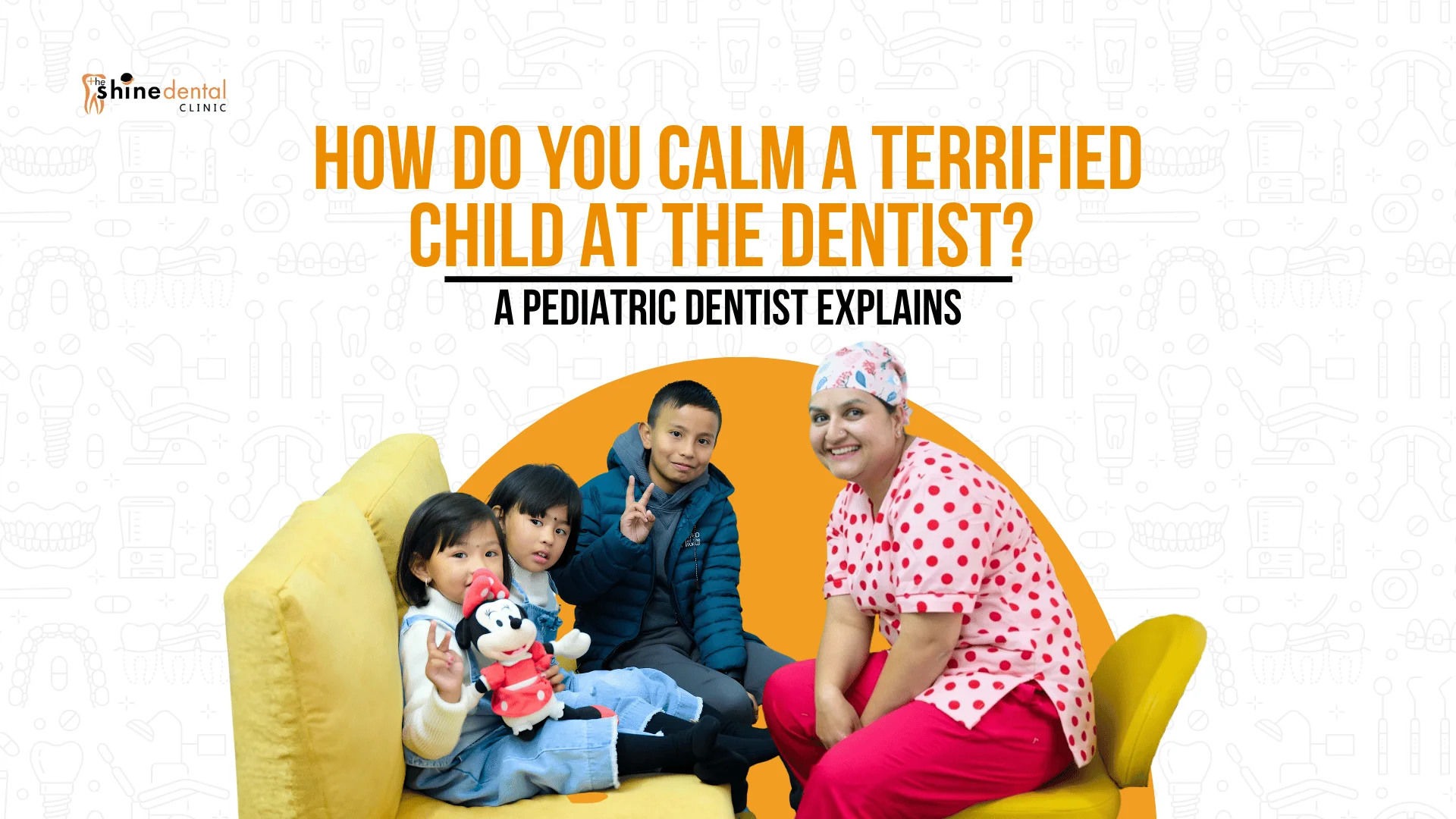
That’s completely normal, and something that we doctors have to deal with every single day. Children who have never been to a dental clinic before don’t know what to expect, so their brain fills in the gaps with fear. My role as a pediatric dentist is to slow things down. I never rush into a procedure. We might spend the first visit just getting comfortable, exploring the tools, and letting your child feel in control of the pace. If this sounds like your child, our piece on dental anxiety in kids walks through more ways we help nervous children feel at ease.
If a child is anxious, that’s not the reason to delay the visit. It’s actually a reason to come sooner, so we have time to build trust before anything clinical needs to happen. This is exactly the kind of calm, stress-free dental clinic experience we aim to create for every family.
A note to parents
Your child picks up on your energy more than you realize. If you are nervous about the visit, they’ll sense it. So if you have questions or worries, please bring them to me directly. I’d rather spend some time reassuring you than have your child walk in feeling something is wrong. We are a team in this, you your child and me.
If you are looking to book an appointment at a child dental clinic in Nepal, we are here at The Shine Dental Clinic in Sanepa. Let’s make it a good experience from the very beginning.