
One of the most common misunderstandings among parents is the belief that baby teeth are not important because they will eventually fall out. Many parents assume that dental care is only necessary after permanent teeth appear. However, this belief can create serious oral health problems during a child’s most important developmental years.
Baby teeth, also known as milk teeth or primary teeth, are much more than temporary teeth. They help children learn how to chew, speak, smile confidently, and develop healthy oral habits. They also play an important role in guiding permanent teeth into the correct position.
For parents in Nepal, including young parents, families living in different parts of the country, and expat parents raising children away from their home environment, understanding the importance of baby teeth is essential. Early awareness and preventive dental care can help children avoid unnecessary pain and build a foundation for a lifetime of healthy smiles.
The truth is simple: baby teeth may be temporary, but their impact on your child’s future oral health is permanent. For a broader overview, see our complete guide to baby teeth and early dental care
The Biggest Myth About Baby Teeth: “They Will Fall Out Anyway”
The statement “they are only baby teeth” is a common reason why some children do not receive proper dental care during their early years. While it is true that baby teeth eventually fall out, they remain in the mouth for many years and perform important functions during childhood development.
Baby teeth are responsible for helping children eat comfortably, pronounce words clearly, and maintain the correct spacing required for adult teeth. When these teeth are neglected, problems can develop that affect a child’s comfort, confidence, and future dental health.
Ignoring baby teeth problems can lead to:
- Tooth pain and discomfort
When cavities develop in baby teeth, children may experience sensitivity, toothaches, and difficulty performing everyday activities. A child who is experiencing dental pain may avoid eating certain foods, become irritated, or have difficulty concentrating while playing or learning.
- Difficulty eating and maintaining proper nutrition
Healthy teeth are necessary for chewing food properly. Children with painful or damaged teeth may avoid nutritious foods because chewing becomes uncomfortable. This can affect their eating habits during important growth stages.
- Problems with speech development
Baby teeth support the development of clear speech by helping children position their tongue and form sounds correctly. Healthy teeth contribute to better communication skills as children learn new words and interact with others.
- Early loss of teeth and future dental complications
When baby teeth are lost earlier than expected due to decay or infection, nearby teeth can shift into the empty space. This may reduce the space available for permanent teeth and create alignment concerns later. The American Academy of Pediatric Dentistry notes that primary teeth act as natural placeholders, and early tooth loss is one of the leading causes of crowded or misaligned adult teeth.
- Increased risk of dental anxiety
Children who experience severe dental pain or emergency treatments at an early age may develop fear or anxiety around dental visits. Preventive dental care helps children build positive experiences with dentists.
Why Baby Teeth Are Important for Your Child’s Development
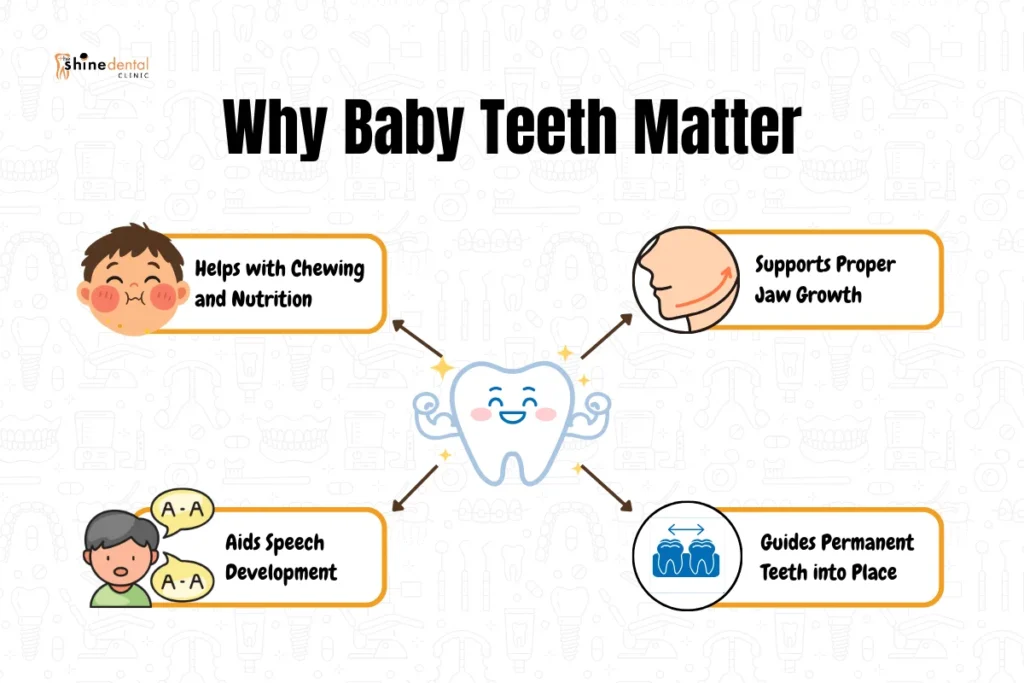
Baby Teeth Help Children Eat Properly
Eating is one of the first important functions of baby teeth. Children need strong and healthy teeth to bite, chew, and enjoy a variety of foods that support their growth.
When baby teeth are affected by cavities or infection, chewing can become painful. Some children may avoid hard foods, fruits, vegetables, or other nutritious options because they feel discomfort while eating.
Healthy baby teeth help children:
- Chew food effectively
Proper chewing allows children to process food comfortably and supports healthy digestion. Strong teeth help children gradually develop the ability to eat different textures and a balanced diet. - Develop healthy eating habits
Children who can eat without dental discomfort are more likely to enjoy a wider variety of foods. This supports better nutrition and overall physical development. - Maintain confidence during meals
Dental pain can make children uncomfortable during family meals or social situations. Healthy teeth allow children to participate normally without worrying about discomfort.
Baby Teeth Support Speech Development
Children learn to communicate rapidly during their early years. Baby teeth play a role in helping children pronounce sounds and develop clear speech patterns.
Teeth work together with the tongue, lips, and jaw to create different sounds. Problems with baby teeth may affect how comfortably a child speaks or interacts.
Healthy baby teeth support:
- Clear pronunciation of words
Certain sounds require proper positioning of the tongue against teeth. Healthy teeth provide the support needed for normal speech development. - Confidence while communicating
Children who can speak comfortably are more likely to participate in conversations, learning activities, and social interactions. - Normal oral muscle development
Healthy teeth contribute to the proper movement and function of the mouth during early childhood development.
Baby Teeth Guide Permanent Teeth Into the Correct Position
One of the most important roles of baby teeth is acting as natural space holders for permanent teeth.
A child’s permanent teeth develop underneath the baby teeth. The baby teeth help maintain the correct amount of space needed for adult teeth to grow into the proper position. Understanding the tooth eruption order and timeline can help parents know what to expect at each stage.
If baby teeth are lost too early because of decay or infection:
- Nearby teeth may move into the empty space:
This can reduce the space available for permanent teeth. - Permanent teeth may erupt incorrectly:
When adult teeth do not have enough room, they may come in crowded or misaligned. - Future orthodontic treatment may become more complicated:
Maintaining healthy baby teeth can support better dental development as children grow.
Baby Teeth Support Jaw and Facial Development
A child’s mouth, jaw, and facial structure continue developing throughout childhood. Healthy baby teeth support normal growth patterns by helping maintain proper function and balance.
When children have healthy teeth, they can:
- Practice normal chewing movements
- Develop proper jaw function
- Maintain balanced facial growth
- Build healthy oral habits from an early age
What Happens When Baby Teeth Get Cavities?
Tooth decay is one of the most common childhood dental problems. Cavities occur when bacteria in the mouth use sugars from foods and drinks to produce acids that damage the tooth surface. According to the World Health Organization, untreated tooth decay in primary teeth affects hundreds of millions of children worldwide, making it one of the most widespread childhood health conditions.
Although baby teeth are temporary, cavities should never be ignored.
Untreated cavities can cause:
- Persistent tooth pain:
Children may struggle to explain dental discomfort, and parents may notice changes such as irritability, reduced appetite, or difficulty sleeping. - Difficulty eating:
Painful teeth can make children avoid chewing, especially on the affected side. - Dental infections:
Severe decay can spread deeper into the tooth and affect surrounding tissues. - Problems with permanent teeth:
In some situations, infection from damaged baby teeth may affect developing adult teeth. - Emergency dental treatment:
Preventive care is usually simpler, more comfortable, and less stressful than treating advanced dental problems.
Common Baby Teeth Mistakes Parents Should Avoid
Ignoring Cavities Because Baby Teeth Will Fall Out
A cavity is still a dental problem regardless of whether the tooth is temporary or permanent.
Leaving cavities untreated can allow bacteria and infection to progress, causing unnecessary pain and potentially affecting the child’s eating, sleeping, and daily activities.
Giving Too Many Sugary Drinks and Snacks
Sugar itself is not the only concern, frequent exposure to sugar throughout the day increases the risk of cavities. This is especially true of bottle-fed babies, see our guide on whether your baby’s bottle could be causing tooth decay for age-specific tips.
Parents can protect their child’s teeth by:
- Reducing frequent sugary snacks between meals
- Avoiding putting children to sleep with sugary drinks
- Encouraging water instead of sweetened beverages
- Choosing nutritious snacks that support dental health
Not Starting Brushing Early
Dental care should begin as soon as the first tooth appears.
Early brushing is not only about cleaning teeth; it also teaches children that oral hygiene is part of their daily routine.
Parents should:
- Create a consistent morning and evening brushing habit
- Supervise young children while brushing
- Encourage children to participate as they grow older
- Follow professional dental guidance for choosing a safe, fluoride toothpaste
Delaying the First Dental Visit
Many parents visit a dentist only when their child experiences pain. However, dental visits are most valuable when they focus on prevention. The Healthy Children Organization recommends that children see a dentist by their first birthday or within six months of their first tooth appearing, so problems can be caught and prevented early.
An early dental visit helps parents understand:
- How to clean their child’s teeth properly
- How to prevent cavities
- What dental changes to expect as the child grows
- How to make dental visits comfortable for children
How Parents in Nepal Can Protect Their Child’s Baby Teeth
Parents can help their children develop strong and healthy smiles by creating simple daily habits:
1. Begin Oral Care from an Early Age
Dental care should start before dental problems appear. Our step-by-step guide on how to clean your baby’s teeth properly walks through age-by-age techniques. Cleaning the mouth early and caring for the first teeth helps establish good habits and reduces the risk of future problems.
2. Make Brushing a Daily Family Routine
Children learn by watching their parents. When parents demonstrate good brushing habits, children are more likely to understand that oral care is an important part of everyday life.
3. Encourage Healthy Eating Habits
A balanced diet supports strong teeth and overall development. Parents should encourage nutritious foods and limit frequent sugary snacks and drinks.
4. Schedule Preventive Dental Checkups
Regular dental visits allow dentists to monitor growth, identify early problems, and provide guidance before small concerns become major issues. The CDC’s oral health data consistently shows that children who receive regular preventive care have significantly lower rates of untreated decay.
5. Create Positive Dental Experiences
Parents can help children feel comfortable by speaking positively about dental visits and avoiding creating fear around dentists.
When Should Your Child Visit a Dentist?
Many dental professionals recommend that children have their first dental visit when their first tooth appears or by around one year of age. If you are not sure what to expect, our guide on when baby teeth start coming in covers the full timeline.
Early dental checkups help parents receive guidance about:
- Proper brushing techniques
- Diet and cavity prevention
- Normal tooth development
- Managing dental habits such as thumb sucking
- Creating lifelong oral health routines
For families in Nepal, choosing a trusted dental care provider can help ensure children receive proper preventive guidance and treatment when needed. The Shine Dental Clinic can support parents with children’s dental care and oral health education.
Frequently Asked Questions About Baby Teeth
Do baby teeth really matter if they fall out?
Yes. Baby teeth are important because they support eating, speech development, jaw growth, and the correct positioning of permanent teeth.
Can cavities in baby teeth affect adult teeth?
Yes. Untreated cavities and infections in baby teeth may create problems for developing permanent teeth and overall oral health.
When should parents start brushing their child’s teeth?
Parents should begin oral care as soon as the first tooth appears and continue building a regular brushing routine.
What age should a child first visit a dentist?
Children should have an early dental visit when the first tooth appears or around their first birthday to receive preventive guidance.
How can parents prevent cavities in baby teeth?
Parents can reduce cavity risk by maintaining good brushing habits, limiting sugary foods and drinks, encouraging healthy eating, and scheduling regular dental checkups.
Baby Teeth Deserve Attention and Care
The myth that “baby teeth do not matter” can prevent children from receiving the dental care they need during important developmental years.
Every baby tooth has a purpose. These first teeth help children eat, speak, smile, and prepare for healthy permanent teeth.
For parents in Nepal, investing in early dental awareness and preventive care is one of the best ways to protect a child’s lifelong oral health. Visit The Shine Dental Clinic to book a checkup, or browse our full library of baby and kids dental care articles for further guidance on caring for your child’s smile.
A healthy smile begins with the first tooth, and every baby tooth matters.