

Why Baby Teeth Deserve Early Protection
Many parents believe that baby teeth are temporary and don’t require much attention. However, these tiny teeth play a vital role in your child’s overall health, speech development, nutrition, and the proper alignment of permanent teeth. Unfortunately, baby tooth decay is one of the most common chronic childhood conditions, and it is largely preventable.
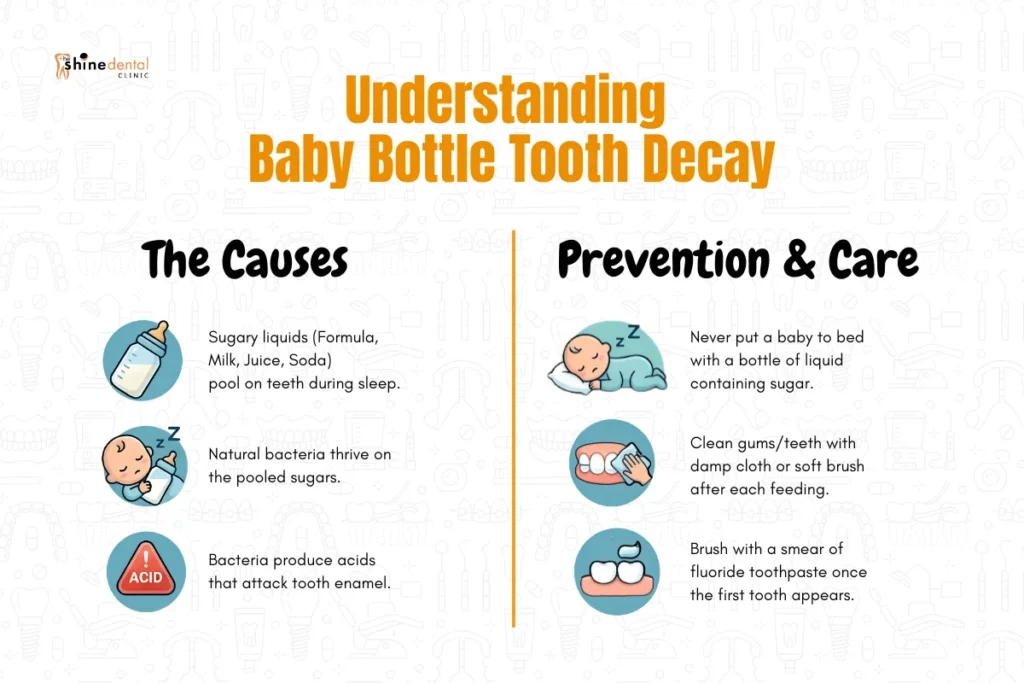
One of the leading causes is baby bottle tooth decay, also known as early childhood tooth decay. This condition occurs when a baby’s teeth are frequently exposed to milk, formula, juice, or other sugary drinks for extended periods, especially during naps or bedtime.
Whether you’re a first-time parent, an expat family living in Nepal, or caring for an autistic child with unique oral care needs, understanding how to protect your baby’s smile from the very beginning can make a lifetime of difference.
What Is Baby Bottle Tooth Decay?
Baby bottle tooth decay is a form of early childhood tooth decay that affects infants and young children. It develops when bacteria in the mouth feed on sugars left on the teeth, producing acids that gradually weaken tooth enamel.
Although baby teeth eventually fall out, they are essential for:
- Helping children chew food properly
- Supporting clear speech development
- Guiding permanent teeth into the correct position
- Maintaining healthy jaw growth
- Building confidence through a healthy smile
Ignoring baby teeth can lead to pain, infections, difficulty eating, and costly dental treatments later.
How Can a Baby Bottle Cause Tooth Decay?
Frequent Exposure to Milk or Sugary Drinks
Milk, formula, fruit juice, and sweetened beverages naturally contain sugars. When these liquids remain on your baby’s teeth for long periods, especially overnight, they create the perfect environment for bacteria to thrive.
During sleep, saliva production decreases, making it harder for the mouth to naturally wash away sugars and acids. This significantly increases the risk of baby tooth decay.
Falling Asleep With a Bottle
Many babies find comfort in falling asleep with a bottle. While this may seem harmless, prolonged contact between the teeth and sugary liquids greatly increases the chance of cavities.
If your baby needs comfort at bedtime, consider gradually replacing the bottle with other soothing routines such as:
- Gentle rocking
- Singing lullabies
- Reading bedtime stories
- Offering a comforting cuddle
If your baby is old enough, plain water is a better bedtime option than milk or juice after brushing.
Delayed Baby Oral Care
Oral care should begin long before the first tooth appears.
Even before teething starts, gently wipe your baby’s gums with a clean, damp, soft cloth after feedings. Once the first tooth erupts, begin brushing twice daily using a soft-bristled infant toothbrush and a tiny smear of fluoride toothpaste, following your dentist’s recommendations.
Creating healthy habits early makes brushing easier as your child grows.
What Does Baby Tooth Decay Look Like?
Early detection can prevent more serious dental problems.
Watch for these common warning signs:
- White chalky spots near the gum line
- Yellow or brown discoloration
- Small holes or pits in the teeth
- Bad breath that persists
- Swollen or irritated gums
- Sensitivity when eating or drinking
- Crying during feeding without another obvious cause
If you notice any of these signs, schedule a dental visit as soon as possible. Early treatment is often simpler and less invasive.
How to Prevent Baby Tooth Decay
Preventing baby tooth decay does not require expensive products or complicated routines. Small, consistent habits practiced every day can significantly reduce your child’s risk of cavities.
Clean Your Baby’s Mouth From Birth
Oral hygiene should begin even before the first tooth appears. Using a clean, damp cloth to gently wipe your baby’s gums after feedings removes bacteria and milk residue while helping your baby become comfortable with having their mouth cleaned. Establishing this habit early makes the transition to tooth brushing much easier.
Brush Baby Teeth Twice Daily
As soon as the first tooth erupts, begin brushing twice each day using a soft-bristled infant toothbrush and a tiny smear of fluoride toothpaste as recommended by your dentist. Brushing before bedtime is particularly important because it removes sugars and bacteria that would otherwise remain on the teeth overnight.
Avoid Bedtime Bottles
One of the most effective ways to prevent baby bottle tooth decay is to avoid putting your child to bed with a bottle containing milk, formula, or juice. If your baby needs a drink before sleeping, complete the feeding first and then gently clean or brush their teeth before they go to bed. If your child wakes during the night and needs a drink, plain water is the safest option once appropriate for their age.
Limit Sugary Drinks
Fruit juices, flavored milk, and sweetened beverages should be limited because they increase the amount of sugar that remains on your child’s teeth. Encouraging water between meals and introducing a training cup around six months of age can help reduce prolonged bottle use and support healthier oral habits.
Schedule Early Dental Visits
Many parents wait until their child has a dental problem before visiting a dentist. However, AAPD’s experts recommend scheduling the first dental visit by your child’s first birthday or within six months after the first tooth appears. Early visits allow dental professionals to monitor development, identify any concerns, and provide personalized advice on keeping your child’s teeth healthy. You can book your child’s first appointment with our pediatric dental team at The Shine Dental Clinic whenever you are ready.
Special Oral Care Tips for Parents of Autistic Children
Children with autism may experience sensory sensitivities that make tooth brushing more challenging. Patience and consistency are essential.
Helpful strategies include:
- Following the same brushing routine every day
- Using visual schedules or picture cards
- Letting your child explore the toothbrush before brushing
- Trying toothbrushes with different textures or sizes
- Using positive reinforcement and praise
- Keeping brushing sessions short and gradually increasing the time
If your child has significant sensory challenges, consult a pediatric dentist experienced in autism-friendly, sensory-sensitive dental care
Tips for Expat Parents Living in Nepal
Moving to a new country often means adapting to unfamiliar healthcare systems.
To support your child’s oral health:
- Research pediatric dental clinics before you need them.
- Keep up with regular dental check-ups.
- Maintain your baby’s oral care routine even during travel.
- Pack your child’s toothbrush and toothpaste when traveling within Nepal.
- Ask healthcare providers about fluoride recommendations based on your local water supply.
Maintaining familiar routines helps children feel secure and supports healthy habits.
Common Myths About Baby Tooth Decay
Many misconceptions prevent parents from taking baby oral health seriously. One of the most common myths is that baby teeth are unimportant because they eventually fall out. In reality, healthy baby teeth support proper nutrition, speech development, and the correct alignment of permanent teeth.
Another misconception is that only candy causes cavities. While sweets certainly contribute to tooth decay, natural sugars found in milk, formula, and fruit juice can also cause cavities when they remain on the teeth for extended periods.
Some parents also believe they should wait until all of their baby’s teeth appear before beginning oral care. In fact, cleaning your baby’s gums from birth and brushing as soon as the first tooth erupts offers the best protection against early childhood tooth decay.
Frequently Asked Questions
Can babies get cavities before their first birthday?
Yes. Cavities can develop soon after the first teeth erupt if sugars remain on the teeth for prolonged periods and oral hygiene is not established.
What causes baby bottle tooth decay?
Frequent exposure to milk, formula, juice, or other sugary drinks, especially during naps or bedtime, allows bacteria to produce acids that damage tooth enamel.
Should I clean my baby’s gums before teeth appear?
Yes. Cleaning the gums with a soft, damp cloth after feedings helps remove bacteria and introduces your baby to a healthy oral care routine.
When should I start brushing my baby’s teeth?
Start brushing as soon as the first tooth appears using a soft infant toothbrush and a tiny smear of fluoride toothpaste, following your dentist’s advice.
When should my baby have their first dental visit?
Your child should see a dentist by their first birthday or within six months of the first tooth erupting.
How can I make brushing easier for my autistic child?
Create a predictable routine, use visual supports, allow extra time for sensory adjustment, and celebrate small successes to build confidence.
Conclusion
Your baby’s first smile is more than just a precious milestone, it marks the beginning of lifelong oral health. By understanding the causes of baby tooth decay and taking simple preventive steps, you can protect your child’s teeth from unnecessary pain, infection, and future dental problems.
Whether you’re raising a newborn, navigating parenthood as an expat in Nepal, or supporting an autistic child with unique sensory needs, small daily habits can have a lasting impact. Clean your baby’s gums early, brush their teeth twice a day, avoid bedtime bottles with milk or juice, and schedule regular dental check-ups.
Remember, healthy baby teeth lay the foundation for a healthy adult smile. The care you provide today helps your child enjoy better oral health, greater confidence, and happier smiles for years to come. Ready to get started? Book your child’s visit with The Shine Dental Clinic