
Good oral habits begin long before your child starts school. In fact, the brushing routine you build in the first few years of life lays the groundwork for healthy teeth that can last a lifetime. Many parents are unsure when to start, how often to brush, or which products to use. This guide answers all of those questions in a clear, age-by-age format so you can feel confident at every stage.
Why a Brushing Routine Matters from the Start
Baby teeth may be temporary, but the habits formed around them are not. A consistent brushing routine does far more than just clean teeth. It removes plaque and food debris that cause decay, it helps babies and toddlers become comfortable with having their mouths touched, and it builds the foundation for a lifelong self-care habit.
According to the World Health Organisation (WHO), oral diseases affect nearly 3.5 billion people worldwide, and early childhood tooth decay is among the most common chronic conditions in children. The good news is that it is largely preventable with simple, daily oral hygiene. Starting a routine early is one of the most effective steps a parent can take.
Before diving into brushing, it helps to understand why baby teeth matter so much. They are not just placeholders, they support speech development, chewing, jaw growth, and hold space for permanent teeth to come in correctly.
When Does Oral Care Actually Begin?
Many parents assume that oral care starts with the first tooth. In reality, it begins earlier. Even before any teeth erupt, bacteria can build up inside your baby’s mouth. Gently wiping the gums after each feeding removes this bacteria and prepares your baby for a brushing routine later on.
To understand the full timeline of when teeth typically appear, read our guide on when baby teeth start coming in. Knowing what to expect takes away the guesswork and helps you plan your oral care routine at each stage.
Age-by-Age Baby Brushing Routine
Stage 1: Newborn to 6 Months (Before Teeth Appear)
No toothbrush is needed yet, but oral care is still important. After each feeding, wrap a clean, damp cloth or a piece of soft gauze around your finger and gently wipe your baby’s gums, inner cheeks, and tongue. This removes milk residue and reduces the bacteria that naturally colonise a newborn’s mouth.
This step also does something just as valuable: it gets your baby used to the sensation of having their mouth cleaned. Babies who experience regular gum wiping from an early age tend to resist brushing far less once teeth arrive.
What you need: A clean, soft cloth or gauze pad.
Frequency: After feeds, or at minimum twice a day.
Tip: Hold your baby in your lap facing outward, or lay them on a flat surface so you have a clear view of their mouth.
Stage 2: 6 to 12 Months (First Tooth Appears)
As soon as the first tooth breaks through the gum, it is time to introduce a toothbrush. Most babies get their first tooth between 4 and 7 months, though the timing varies. If your baby’s teeth seem delayed, our article on delayed teething can help you understand what is normal and when to seek advice.
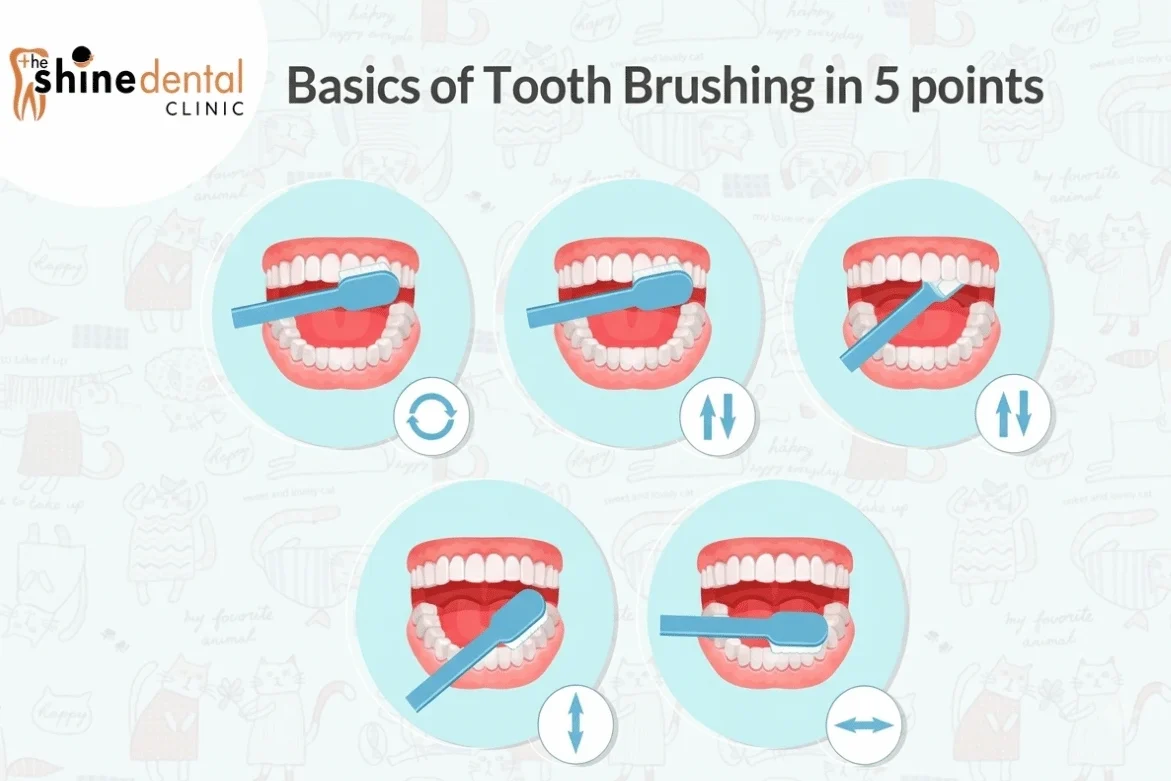
Use a soft-bristled infant toothbrush with a small head designed specifically for babies. Apply a grain-of-rice-sized amount of fluoride toothpaste and brush the tooth gently on all sides. Pay particular attention to the area where the tooth meets the gum line, as this is where plaque tends to collect.
At this age, babies do not yet know how to spit, but the tiny amount of fluoride toothpaste recommended is considered safe if swallowed.
What you need: A soft-bristled infant toothbrush and a rice-grain smear of fluoride toothpaste (1,000 ppm).
Frequency: Twice daily, once in the morning after the first feed and once before bedtime.
According to the American Academy of Pediatric Dentistry (AAPD), brushing should begin as soon as the first tooth erupts. Waiting longer gives bacteria an unnecessary head start on enamel.
Stage 3: 12 to 24 Months (More Teeth Erupt)
Between 12 and 24 months, most babies get their upper and lower front teeth, their first molars, and their canine teeth. You can follow the full sequence in our tooth eruption order guide to know exactly which teeth to expect and when.
As more teeth emerge, the surface area to clean increases and the risk of decay between teeth that are close together also grows. Continue using a soft toddler-sized toothbrush. Keep the toothpaste amount to a rice-grain smear and brush all surfaces of every tooth, including the inner surfaces, outer surfaces, and biting edges.
Many children at this age want to “help” with brushing. Letting them hold the toothbrush and explore is fine, but always follow up by brushing thoroughly yourself. Young children do not yet have the coordination to brush effectively on their own.
What you need: A toddler-sized soft toothbrush and a rice-grain smear of fluoride toothpaste.
Frequency: Twice daily.
Stage 4: 2 to 3 Years (The Toddler Stage)
By age two, most children have a full set of 20 primary teeth. This is also the stage when children begin wanting to do things independently. Encouraging some involvement in brushing is healthy, but parental supervision remains essential.
Increase the amount of fluoride toothpaste to a pea-sized amount once your child reaches three. Brush for a full two minutes each session. A sand timer or a two-minute song works well to make the time more manageable. Teach your child to spit the toothpaste out rather than swallow it, though occasional swallowing of a pea-sized amount is not harmful.
Parents should continue brushing their child’s teeth after the child has had a turn until around age 6 to 7, when children develop enough manual dexterity to brush effectively on their own. Research from the British Society of Paediatric Dentistry supports parental involvement in brushing until at least this age.
What you need: A soft toddler toothbrush and a pea-sized amount of fluoride toothpaste (1,000 ppm).
Frequency: Twice daily for two minutes each session.
Morning vs. Nighttime Brushing: Why Both Matter
Many parents prioritise one brushing session over the other. In reality, both serve distinct and equally important purposes.
Morning brushing removes the plaque and bacteria that accumulate in the mouth overnight. Saliva flow is reduced during sleep, which means bacteria have several hours to multiply undisturbed. Starting the day with a clean mouth gives your child’s teeth better protection before food and drinks are introduced.
Nighttime brushing is arguably even more critical. During sleep, saliva production decreases dramatically. Saliva plays a natural protective role in the mouth by washing away food particles and neutralising acids produced by bacteria. Without this protection at night, bacteria have extended opportunity to produce acids that attack tooth enamel. Brushing before bed and not eating or drinking anything sweet afterward, is one of the most effective cavity-prevention habits you can build.
If your child falls asleep before brushing can be completed, gently clean their teeth with a damp cloth rather than skipping the step entirely.
Choosing the Right Toothbrush
Not all toothbrushes suit babies and toddlers equally. When selecting a toothbrush for your child, look for the following:
Soft bristles. Extra-soft or soft bristles are gentle on tender gums and young tooth enamel. Medium or hard bristles can cause irritation and are not recommended for young children.
A small head. The brush head should be small enough to reach every corner of your baby’s mouth, including the back teeth as they emerge.
An easy-grip handle. A wide, chunky handle is easier for little hands to hold when children start practising brushing themselves.
Replace the toothbrush every three months or sooner if the bristles begin to fray. A worn toothbrush is significantly less effective at removing plaque.
The NHS (National Health Service, UK) recommends using a small-headed, soft-bristled toothbrush for children from the moment the first tooth appears.
Is Fluoride Toothpaste Safe for Babies?
Yes. Fluoride toothpaste is both safe and recommended by dental and paediatric health organisations worldwide when used in the correct amount. We have written a detailed guide on this topic: Is Fluoride Toothpaste Safe? What Parents Need to Know.
Fluoride works by strengthening tooth enamel and making teeth more resistant to the acids produced by bacteria. It can also help reverse early signs of enamel damage before they develop into cavities.
The key is using the right amount for your child’s age:
- Under 3 years: A grain-of-rice-sized smear of fluoride toothpaste (1,000 ppm)
- 3 years and older: A pea-sized amount of fluoride toothpaste (1,000 ppm)
Supervision during brushing ensures children do not swallow large quantities. While swallowing a small amount is not harmful, consistently ingesting more than recommended can lead to dental fluorosis, a cosmetic condition that appears as faint white streaks on permanent teeth. This is why the amount matters.
The American Academy of Pediatrics (AAP) endorses the use of fluoride toothpaste from the time the first tooth appears, using the age-appropriate amount.
Common Brushing Mistakes to Avoid
Even well-intentioned parents can fall into habits that work against their child’s oral health. Here are the most common mistakes and how to correct them:
- Starting too late: Oral care should begin before teeth appear, and brushing should start as soon as the first tooth arrives. Waiting gives bacteria a head start on enamel that is already thinner and more vulnerable in babies than in adults.
- Using too much toothpaste. More toothpaste does not mean better protection. Stick to the rice-grain or pea-sized amounts based on your child’s age.
- Skipping the nighttime brush. Nighttime is when bacteria are most active in the absence of saliva. Skipping this session is one of the leading contributing factors to early childhood tooth decay.
- Letting the child brush alone too soon. Children generally do not develop the fine motor skills needed for thorough brushing until around age 6 or 7. Parents should actively brush their child’s teeth throughout the toddler and early childhood years.
- Allowing bottles or sippy cups in bed. Giving a baby or toddler a bottle of milk, formula, or juice to sleep with exposes their teeth to sugar for extended periods overnight. This is one of the leading causes of early childhood tooth decay, sometimes called “bottle rot.” The AAPD strongly advises against this habit.
- Rushing the session. Two minutes is the clinically recommended brushing time for a reason. Less time means less plaque removal. Use a timer to make sure the full two minutes are completed
Making Brushing Enjoyable
Resistance to tooth brushing is extremely common among toddlers and is a normal part of this developmental stage. These approaches can make the experience more positive:
Letting your child choose their own toothbrush, whether in their favourite colour or featuring a beloved character, increases their enthusiasm. Singing a two-minute brushing song together makes the time pass faster and turns the routine into something shared. Some parents use a small reward chart where children earn a sticker for each successful brushing session. Brushing alongside your child and modelling the behaviour is also powerful, as young children learn a great deal by watching their parents.
The goal is for brushing to feel like a normal, expected part of the day rather than something to resist. Consistency over time is the most powerful tool you have. Even an imperfect session is better than skipping it altogether.
When to Schedule the First Dental Visit
Your baby’s first dental visit should happen by their first birthday or within six months of the first tooth appearing, whichever comes first. This is a guideline recommended by both the AAPD and the WHO.
Early visits allow a dentist to check for early signs of decay, assess the development of teeth and jaws, and provide personalised guidance on diet, fluoride use, and brushing technique. Children who visit the dentist early tend to be more comfortable in the dental setting as they grow older. These appointments are typically short, positive, and focused entirely on prevention rather than treatment.
For families in Lalitpur and the wider Kathmandu Valley, the team at The Shine Dental Clinic provides child-focused dental care in a calm, inclusive environment. Our English-speaking dentists work with children and parents to make every visit comfortable and informative. Book your child’s first dental visit here.
Frequently Asked Questions
Can I use an electric toothbrush for my baby?
Some electric toothbrushes are designed for children as young as three. For babies and younger toddlers, a soft manual toothbrush gives you better control and is gentler. Ask your dentist what they recommend based on your child’s age and stage.
My child swallowed toothpaste. Should I be worried?
Swallowing a small amount equivalent to the recommended serving size is not a cause for concern. If a child swallows a significantly large amount from the tube, contact your local poison control centre for guidance. This is another reason why using the correct, age-appropriate amount matters.
When should I start flossing my child’s teeth?
Begin flossing as soon as two teeth are touching with no gap between them. Use child-friendly floss picks to make it easier for both of you.
Is it normal for my baby to have no teeth by 12 months?
Some delay in teething is normal, but if your baby has no teeth by 12 to 15 months, it is worth checking with your dentist. Read more in our guide on delayed teething.
Conclusion
A baby brushing routine does not need to be complicated, but it does need to be consistent. Starting with gum wiping before teeth appear, transitioning to a soft brush as soon as the first tooth comes in, and maintaining twice-daily brushing throughout childhood are the foundations of good oral health.
Every small step you take now protects your child from pain, infection, and more complex dental treatment later on. The habits built in these early years tend to last a lifetime.
If you have questions about your child’s oral health or would like personalised guidance at any stage, the team at The Shine Dental Clinic is here to help. Browse our full dental resources and blog for more parent guides, or book your child’s first dental checkup today.