
Teething is one of the earliest developmental milestones in a baby’s life, but for many parents, it can feel confusing, exhausting and sometimes even worrying. A baby who was calm and predictable can suddenly become fussy, restless and difficult to soothe. Nights may get longer, feeding patterns may change, and it’s not always clear what’s causing the discomfort.
Understanding teething and baby discomfort- signs, duration, and safe relief can make a big difference during this phase. Instead of wondering and feeling confused, you can recognize the pattern of the baby going through and respond in a way that actually helps.
For new parents, having access to right information and guidance, knowing when to look for help can bring a lot of relief and reassurance. According to pediatric guidance from the American Academy of Pediatric, Teething is natural, but how you look after it can shape your baby’s comfort and even their early dental health habits.
The guide walks you through every insight that you need to know, from early signs to safe relief methods, while also helping you understand better on what’s normal and what might lead to you seeking help.
Dr. Note: “Teething can feel more stressful for parents than for babies. While the symptoms can look intense, most babies are simply adjusting to a new sensation rather than experiencing severe pain.”
Understanding Teething in Babies
Teething is a natural process where a baby’s tooth begins to break through gums. While its a normal part of development, it can cause uncomfortable situations due to pressure and soreness.
Most babies begin teething around six months, but this isn’t completely accurate. Medical resources like Mayo Clinic note that some babies may start early around four months, while others may not show signs until closer to their first birthday. The variation is completely normal.
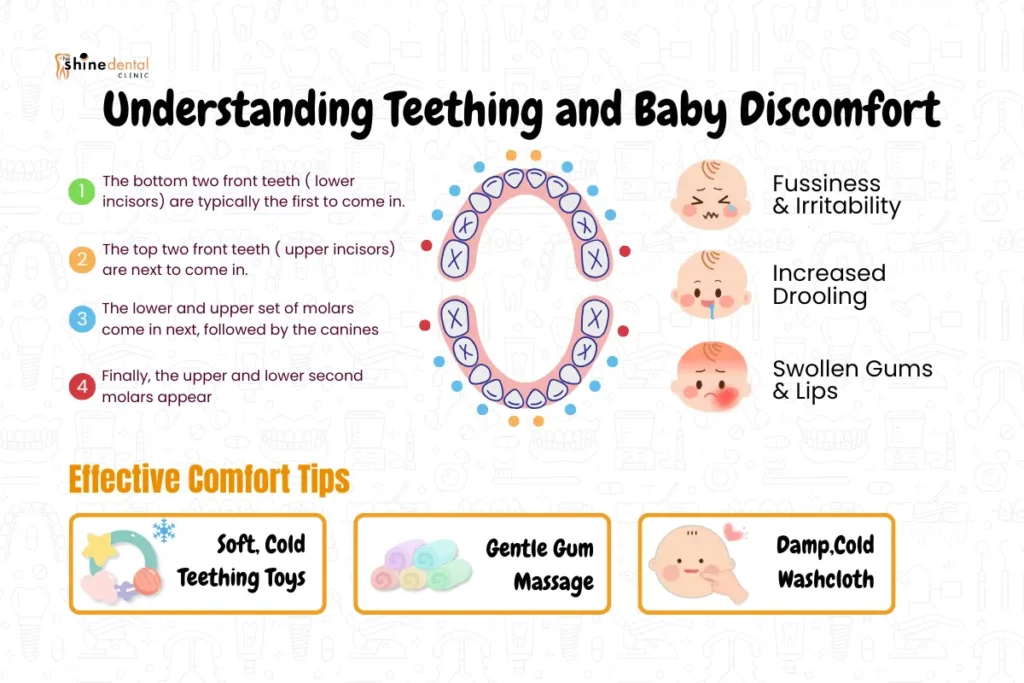
Teething doesn’t happen all at once. It occurs in stages, with different teeth developing at different times. The lower front teeth are usually first to appear, followed by upper front teeth, and lastly the molars.
What makes teething challenging is that babies cannot explain their feelings. Instead, they express discomfort through behaviors, this is why understanding the signs becomes so important.
Signs of Teething in Babies
Teething symptoms aren’t the same for every baby. It can vary but recognizing teething symptoms early can help you respond calmly instead of feeling unsure about what’s happening.
Common Signs to Watch for
Increased drooling You may notice your baby drooling much more than usual. This is often one of the beginning or the first signs and can sometimes may lead to mild skin irritation around the mouth
Irritability and mood changes Babies may become more needy, fussy or easily upset. This is usually caused due to discomfort in the gums as teeth begin to push through
Chewing and biting behaviour Parents might notice the baby constantly trying to chew on toys,fingers, or even clothing. This is a natural way for them in order to relieve pressure
Swollen or sensitive gums The gums may appear slightly red or swollen, especially around the section where a tooth is about to emerge
Changes in sleep patterns Teething discomfort causes uneasiness, distress which can result into disrupted sleep. Babies who usually sleep well may wake up more frequently during this phase
Reduced appetite During this teething phase, it’s quite common for babies to show less interest in feeding. This happens because the pressure and sensitivity in their gums can make sucking, chewing, or even swallowing feel uncomfortable.
Health authorities like the NHS also highlight these common early indicators of teething. These symptoms usually appear a few days before the tooth erupts and settles shortly after.
Dr. Note: “It’s easy to overthink every small change during teething. Instead of focusing on individual symptoms, look at the overall pattern, teething signs usually come and go gently rather than appearing all at once.”
Does Teething Cause Fever?
This is one of the most common concerns among the parents. Many parents assume fever is a normal part of teething, but this isn’t entirely accurate. Teething may slightly raise body temperature, but high fever is not a typical symptom. According to the webmd a significant fever usually indicates another illness rather than teething.
If your baby has a noticeable fever, it is important not to assume it’s just teething. It may be linked to another condition rather than teething alone. Paying attention to additional symptoms that can help you decide whether it’s time to seek medical advice.
Want to dig deeper into this? Check out our detailed guide: Does Teething Cause Fever? What Parents Should Know
Dr. Note: “A slight warmth is normal during teething, but a true fever usually has another cause. It’s always safer to pause and assess rather than assume.”
Teething vs Ear Infection
Teething discomfort can sometimes be mistaken for an ear infection, as babies may pull their ears or appear unusually picky. However, ear infections are typically more intense and may include symptoms like relentless crying, fever, or difficulty feeding. Understanding the difference can help parents respond appropriately and avoid unnecessary worry. However, there are a few key differences parents can watch for:
Ear pulling Babies may pull their ears during teething due to discomfort spreading to nearby areas, but in ear infections, this behaviour is usually more intense and frequent.
Pain level Teething causes mild to moderate discomfort, while ear infection often result in sharper and constant pain,
Fever Teething may cause slight increase in temperature, but a high fever is more commonly related with an ear infection
Sleep disturbance Both can affect sleep, but ear infections often cause more noticeable and long lasting sleep disruption
Feeding behaviour Babies with ear infections may refuse feeding more consistently because swallowing can increase ear pressure.
If symptoms seem severe, last long than expected, or include high fever, its best to consult a healthcare professional to rule out and ear infection
Still unsure which one it is? Check out our detailed guide: Teething vs Ear Infection: How to Tell the Difference
Dr. Note: “Babies often react to discomfort in ways that can seem confusing. What looks like an ear problem may actually be referred to as pain from the gums, but persistent symptoms should never be ignored.”
How Long Does Teething Last?
Teething isn’t a one-time event, it’s a gradual process that begins around six months of age and continues until the early toddler years. While the overall phase lasts for a couple of years, the uneasiness itself comes and goes. Each tooth may cause irritation for a few days before and after it emerges, with calmer periods in between.
According to the American Dental Association, most children will have a full set of 20 baby teeth by age of 2-3
General Teething Timeline
Teething follows a general pattern, although every baby develops at their own pace and it may vary. Some may start earlier, while others take a little longer and both are completely normal.
- Around 6 months: First teeth begin to appear, usually the lower front teeth
- 6-12 months: Upper and lower front teeth come in
- 12-24 months: Molars and additional teeth begin to erupt
- By 2-3 years: Most children have a full set of 20 baby teeth
It’s important to understand that this is an ongoing gradual process, not something that happens overnight. There will be phases of discomfort followed by periods where one’s baby seems completely fine.
Dr. Note: “Many parents feel like teething never ends, but in reality, it’s a series of short phases. Understanding this pattern can make the entire process feel much more manageable.”
Molar Teething in Babies: Age, Symptoms, and Relief Tips
Molars are larger and flatter teeth, which means they take more time to push through the gums and can cause more noticeable discomfort compared to front teeth. They usually appear between:
- 12–18 months (first molars)
- 18–24 months (second molars)
During this stage, you may notice increased fussiness, ore frequent waking at night or stronger urge to chew on objects. While this can be challenging, it is still a normal part of your child’s development
Want the full breakdown? Check out our detailed guide: Molar Teething Age and Symptoms Explained
Second Molar Teething: Signs, Sleep Changes, and Relief Tips
Second molars are often the last teeth to come in and can be the most uncomfortable for some children due to their size and the position at the back of the mouth.
To help your child during this phase. These are some helpful tips which include:
Offering chilled(not frozen) teething toys to soothe sore gums: A slightly cooled teething ring can help reduce gum swelling and provide gentle relief. Avoid freezing them, as overly hard or cold surfaces can hurt sensitive gums instead of helping.
Maintaining a consistent daily routines around sleep: Keeping feeding and sleep schedules predictable can help your baby feel more secure during this uncomfortable phase. Familiar routines often make it easier for them to settle, even when they are a bit fussy.
Providing extra comfort and reassurance, as babies may feel more unsettled: Teething can make babies clingier than usual, so offering more cuddles, gentle rocking or simply being close can help them feel calm and supported
Be patient with temporary sleep disruptions or mood changes: It’s normal for babies to wake more often or seem irritable during teething. These changes are usually short-term, and patience can go a long way in helping both you and your baby get through this phase
Need more tips for this stage? Check out our detailed guide: Second Molar Teething: Tips to Soothe Your Toddler
Safe Teething Pain Relief
Helping your baby feel better during teething doesn’t require complicated solutions. staying comfortable during teething is a priority but it’s important to choose safe and proven methods. Recommended methods are also supported by Healthy Children Organization.
Safe Relief Methods
Gentle gum massage Using clean hands, gently massaging your baby’s gums can help reduce pressure and soothe irritation. This simple technique often provides quick and calming relief.
Chilled (not frozen) teething rings A slightly chilled teething ring can help calm inflamed gums and reduce uneasiness. Make sure its cool but not frozen, as extreme cold can harm sensitive tissue
Cold, clean washcloth for chewing A clean, damp washcloth that has been lightly chilled can be soothing for babies to chew on. Its a simple, safe, convenient and easily available option for relief.
Extra comfort and Attention During teething, babies may need extra closeness and reassurance. Holding, Soft rocking, or gently distracting them can help ease discomfort and make them feel secure.
These methods are simple, effective, and widely recommended.
Dr. Note: “When it comes to teething, simple and consistent care often works better than trying multiple remedies at once.”
Top Safe Teething Toys to Comfort Your Baby Naturally
Choosing the right teething toy is important for both comfort and safety. Materials that are easy to clean are generally the best option. The U.S. Food and Drug Administration recommends selecting products made from non- toxic, BPA free material and also to avoid toys that are too hard or have parts that could break, as safety should always come first. These are some of the thing that can be considered while purchasing teething toys:
BPA-free materials Choose teething toys made from non- toxic, BPA- free materials to ensure they are safe for your baby to chew on regularly. Safety-certified products reduce the risk of exposure to harmful chemicals
Soft, flexible textures Soft and flexible textures are gentler on sore gums and more comfortable for babies during teething. They also help provide soothing pressure without causing irritation and discomfortability.
Easy-to-clean designs Teething toys should be simple to wash and kept with hygiene, as babies tend to use them frequently. Regular cleaning helps prevent the buildup of germs.
Try avoiding toy which might be riskier to children like:
Toys that are too hard: Hard materials can put extra pressure on sensitive gums and may cause more discomfort instead of relief.
Liquid- filled items: Some toys contain gel or liquid inside, which can be unsafe if they break or leak. It’s better to choose solid, well- made options.
Ready to go shopping? Check out our detailed guide: Best Teething Toys for Babies: Safe Picks for Parents
Dr. Note: “A good teething toy doesn’t need to be complicated. If it’s safe, soft, and easy to clean, it’s already doing its job well.”
Amber Necklace Myth
Amber teething necklaces are often marketed as natural remedies, but they are not recommended. The Nation Wide children warns that these necklaces pose serious risks, including choking and strangulation.
They can pose:
Choking hazards if the necklace breaks: Amber necklaces are made of small beads that can come loose if the string weakens or snaps. If this happens, the beads can easily become a choking hazard, especially since babies tend to put everything in their mouth and may accidentally swallow them.
Suffocating risks if worn around the neck, especially during sleep: Wearing any type of necklace around a baby’s neck can be dangerous, as it may get caught on objects or tighten during movement. The risk increases during the night, when a baby cannot adjust or remove it causing the chances of strangulation.
It’s always better to stick with safer alternatives.
Curious about the full risks? Check out our detailed guide: Do Amber Teething Necklaces Really Work? Risks Explained
Dr. Note: “If a product claims quick relief but comes with safety concerns, it’s usually not worth the risk, especially for infants.”
When Should Parents Be Concerned?
While teething is normal and is usually a manageable and temporary phase, it’s important for parents to recognize when symptoms may be linked to something more serious. Not all discomfort should be assumed but certain symptoms should not be ignored.
Watch for:
High fever: While teething may cause an increase in temperature of the body, it should not lead to high fever. If your baby develops a noticeable or persistent fever, it’s likely due to another illness and should be evaluated by a healthcare professional.
Severe diarrhea: Mild changes in digestion can sometimes occur, but severe ongoing diarrhea is not considered as a normal sign of teething. This may point to an infection or health concern that needs proper attention.
Persistent refusal to eat: It’s common for babies to eat a little less than usual during teething, but if they consistently refuse to eat fluid or food it can lead to dehydration. Signs like dry lips, fewer wet diapers, or unusual tiredness should not be ignored.
Extreme irritability: Some fussiness is expected during teething, but if your baby seems constantly distressed, inconsolable or uncomfortable than usual, it may be sign of something that is beyond normal discomfort.
These may indicate other health issues and should be checked by a professional.
Dr. Note: “You know your baby best. If something feels different from their usual behavior, it’s always okay to seek reassurance.”
Why Early Dental Guidance Matters
Teething marks the beginning of your child’s oral health journey, making early dental care more important than many parents realize. Starting good habits early can help prevent common dental issues later in life.
Early dental care helps:
Build familiarity with the dental environment: Early visits help children become comfortable with the surroundings, making future appointments feel less intimidating and more routine.
Reduce fear and anxiety during future visits: When dental check-ups become a normal part of life from a young age, parents get less anxious and children are less likely to develop fear or resistance as they grow older.
Establish healthy oral hygiene habits from the beginning: Learning simple habits like gentle cleaning of gums and brushing early teeth sets the foundation for lifelong oral care.
Dr. Note: “The first dental visits are not just about checking teeth, they’re about building comfort and trust. Starting early helps both parents and children feel more confident about oral care. If you’d like gentle guidance tailored to your child, visiting Shine Dental Clinic can help you get started with the right approach”.
How The Shine Dental Clinic Supports Your Child
Shine Dental Clinic is dedicated to creating a calm, welcoming, child-friendly environment where both children and parents feel at ease from the moment they walk in. Our approach goes beyond basic treatment, we focus on understanding the emotional and developmental needs of your patients as well as new parents ensuring that every visit is gentle, reassuring, and positive. This is especially important during the early stages like teething, when babies may already feel uncomfortable or anxious.
They recognize that:
Babies require gentle and patient handling: Young children need extra care, soft communication, and a slow, reassuring approach to help them feel safe during any dental interaction.
Parents often need reassurance and clear guidance: First-time parents, in particular, may have many questions, and the clinic provides practical advice on teething, oral hygiene, and what to expect as their child grows.
Early dental experience shapes long-term attitudes towards oral care: A positive first experience can reduce fear and build trust, Making future dental visits smoother and stress- free.
Conclusion
Teething may be a challenging phase, but it’s also a temporary and natural part of your baby’s development. By understanding teething and baby discomfort signs, duration, and safe relief, you can respond with confidence instead of worry. Recognizing symptoms early, knowing how long teething lasts, and using safe relief methods can make this journey smoother for both you and your child.
For parents, combining the right knowledge with trusted local dental support ensures your child’s comfort and healthy development from the very beginning.
Dr. Note: “Teething is temporary, but the care you provide now makes a lasting difference.” If you’re unsure at any stage, The Shine Dental Clinic is here to support you.
Frequently Asked Questions About Teething and Baby Discomfort
What are the first signs of teething in a baby?
The earliest signs of teething are usually increased drooling, chewing or biting on toys and fingers, swollen or tender gums, irritability, and disrupted sleep. These signs often appear a few days before a tooth breaks through and settle shortly after.
Does teething cause fever in babies?
No, teething does not cause a true fever. It may cause a slight rise in body temperature, but a temperature of 100.4°F (38°C) or higher usually points to an illness rather than teething and should be checked by a doctor.
What age do babies usually start teething?
Most babies start teething around 6 months of age, though it’s normal for some to begin as early as 4 months or as late as their first birthday. The lower front teeth usually come in first.
How long does teething last?
Teething is a gradual process that lasts from around 6 months of age until the early toddler years, with most children having a full set of 20 baby teeth by age 2 to 3. Discomfort from each individual tooth typically lasts only a few days before and after it emerges.
How can I tell if my baby is teething or has an ear infection?
Teething usually causes mild discomfort, drooling, and chewing, while ear infections tend to cause more intense pain, higher fever, and more persistent crying. If symptoms seem severe or don’t improve, it’s best to consult a healthcare professional.
Are amber teething necklaces safe for babies?
No, amber teething necklaces are not recommended. They pose serious choking and strangulation risks and have no proven pain-relieving benefit, according to health authorities including Nationwide Children’s Hospital and the FDA.
When should I take my baby to the dentist for teething?
It’s recommended to schedule your baby’s first dental visit around the time their first tooth appears or by their first birthday, whichever comes first. Early visits build comfort with the dental environment and support healthy lifelong oral habits