
Teething is an important milestone in your baby’s development, but for many parents, especially first time caregivers, it can feel confusing and sometimes overwhelming as well. A baby who was once calm and predictable may suddenly become fussy, drool excessively, or struggle to sleep through the night. These changes can raise concerns, particularly when it’s unclear whether the symptoms are related to teething or something else
Understanding the signs of teething in babies helps you respond calmly and avoid unnecessary worry. Instead of guessing or feeling anxious, you can recognize what’s normal and what might be in the need of attention. Having clear, practical guidance and help not only makes this phase easier to manage but also helps you support your baby in a more confident and reassuring way.
What Happens During Teething?
Teething occurs when your baby’s first set of teeth, also known as primary teeth, begins to push through the gums. This process creates pressure beneath the gum surface resulting in mid inflammation and sensitivity which leads to discomfort making them express through changes in behaviour rather than words.
Most babies begin teething around 4 to 7 months, although the timeline can vary. Some babies may start earlier, while others may not show signs until closer to their first birthday and both situations are completely normal. Genetics, overall development, and individual differences all play a role in determining when teething begins.
According to Stanford Medicine Children’s Health, the timing of teething can vary significantly between babies, and both early and late teething are usually considered normal developmental variations.
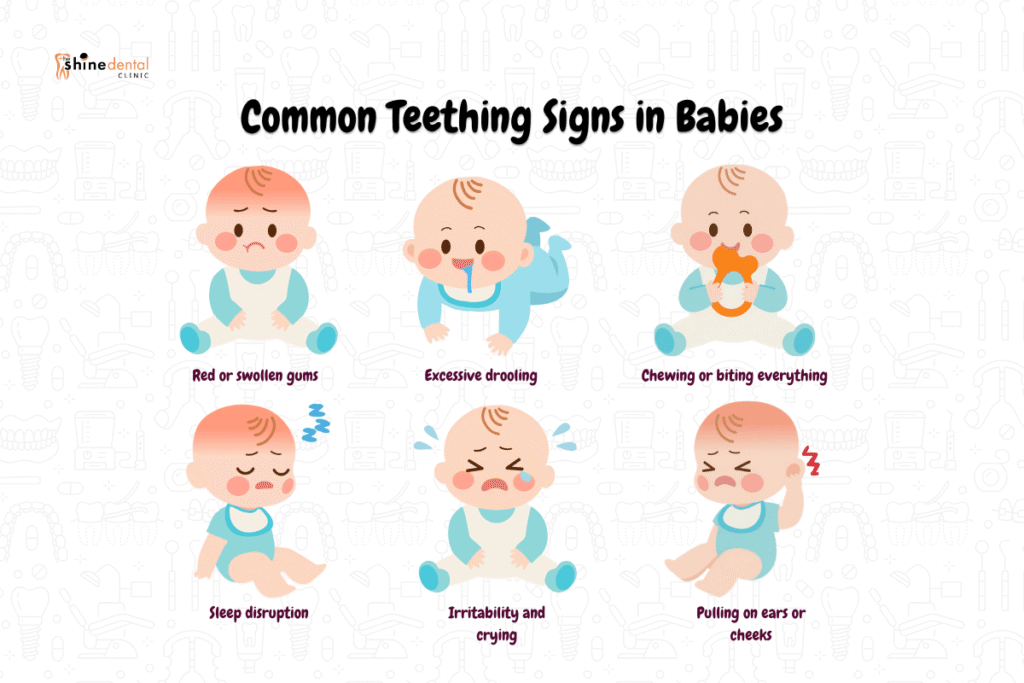
Common Signs of Teething in Babies
Every baby experiences teething differently, but there are several common signs that most parents notice while teething. Recognizing these symptoms can help you understand better on what your baby is going through
1. Increased Drooling
Excessive drooling is often one of the earliest signs of teething that parents notice .Parents may notice your baby’s clothes becoming wet more frequently especially around the neck and chest area. In some cases, constant moisture can lead to mild skin irritation or rash around the mouth, chin or neck
Tip: Keep a soft cloth or a bib in handy, try keeping the areas as clean as can by wiping the area time and again. Apply a simple barrier cream to prevent the skin from being dry, chapped or even sore.
2. Irritability and Fussiness
As teeth begin to push through, babies may become more sensitive and easily upset. This is especially noticeable in the evening or at night. Discomfort can make thame more clingy, restless or even difficult to soothe. Fussiness is often more noticeable when babies are tired and less distracted.
It’s important to remember that this irritability is temporary and usually improves once the tooth breaks through the gum.
Tip: Cuddle with the kid as much as u can, The extra time and care spent with your baby can help provide the needed comfort and reassurance, helping the baby to be distracted from the pain
3. Chewing and Biting Behavior
Babies naturally chew on objects to relieve pressure in their gums. Parents may notice them biting toys, fingers, or anything within reach. This behavior is a normal response to the sensation of pressure in the gums and can actually help reduce discomfort.
Tips: Providing safe objects for chewing,such as teething toys, can be helpful during this stage. Try avoiding teething necklaces or bracelets, liquid or gel- filled rings, or any type of gels with numbing agents.
4. Swollen or Tender Gums
If you gently check your baby’s gums, you may notice redness or slight swelling or a firm area where a tooth is about to emerge. Some babies may resist feeding or become fussy when their gums are touched because of the sensitivity.
This is a clear physical sign that a tooth is on its way
5. Changes in Sleep Patterns
Teething discomfort can disrupt one’s baby’s sleep routine. Babies who previously slept well may start waking up more frequently during the night or have difficulty falling asleep.
This can be challenging for parents, but it’s usually temporary and improves once the discomfort subsides. Child development specialists at Raising Children Network note that temporary sleep disruption is common during active teething periods.
6. Reduced Appetite
Sore gums can make feeding uncomfortable for the parents, especially for babies who are breastfeeding or bottle-feeding. You may notice you baby feeding for shorter periods, pulling away frequently, or refusing certain foods if they have started solids
This reduced appetite is usually temporary and tends to improve once the tooth emerges.
Teething Timeline (Month-by-Month Overview)
Understanding your baby’s teething timeline helps you know what to expect at each stage and reduces unnecessary worry. While every child develops at their own pace, most babies follow a general pattern as their teeth begin to emerge gradually over time.
- 0-3 Months: Preparation Phase (No Visible Teething Yet)
At this early stage, babies are not actively teething, but their tooth buds are already forming beneath the gums. You may not notice any visible signs yet, but this is when the foundation for future teeth is developing.
Some babies may begin putting their hands in their mouth or exploring objects, but this is usually linked to normal sensory development rather than teething.
- 4-6 Months: Early Teething Signs Begin
This is when many babies start showing the first signs of teething, even if no teeth are visible yet. The gums may begin to feel more sensitive as teeth slowly start moving upward.
Common changes during this stage include:
- Increased drooling due to stimulated saliva production
- A stronger urge to chew on fingers, toys, or cloth
- Mild irritability or fussiness, especially in the evening
- Slight changes in sleep patterns
Although teeth may not appear immediately, this is often the phase where parents first notice teething-related behavior.
- 6-10 Months: First Teeth Appear (Lower Front Teeth)
This is typically when the first visible teeth emerge, usually the lower central incisors (bottom front teeth). For many parents, this is an exciting milestone.
During this stage:
- Gum swelling may be more noticeable just before the tooth erupts
- Babies may become more fussy for a few days at a time
- Chewing behavior increases as pressure builds in the gums
Once the tooth breaks through, discomfort usually reduces quickly, giving your baby a short period of relief before the next tooth begins its process. According to MedlinePlus, the lower front teeth are typically the first baby teeth to erupt during infancy.
- 8-12 Months: Upper Front Teeth Emerge
After the bottom teeth, the upper front teeth (central incisors) begin to come in. This stage can feel similar to the previous one but may come with slightly stronger symptoms for some babies.
You may notice:
- Continued drooling and chewing
- Mild sleep disturbances returning temporarily
- Increased sensitivity around the upper gum area
Since multiple teeth can emerge around this time, symptoms may appear in short cycles rather than a single phase.
- 9-13 Months: Lateral Incisors (Side Front Teeth)
The teeth next to the front teeth, known as lateral incisors, begin to emerge during this stage. By now, your baby may already have a few visible teeth, making the teething pattern easier to recognize.
At this point:
- Teething symptoms may feel more familiar and predictable
- Babies may handle discomfort slightly better than before
- Short periods of fussiness may come and go as each tooth erupts
This stage gradually fills in your baby’s smile, but discomfort is still usually mild and temporary.
- 12-18 Months: First Molars Begin to Erupt
This stage is often more noticeable and sometimes more challenging. First molars are larger and located further back in the mouth, which means they create more pressure on the gums.
During this period:
- Irritability may increase compared to earlier stages
- Sleep disruptions may become more frequent
- Babies may chew more aggressively to relieve pressure
- Appetite changes may become more noticeable
Because molars take longer to emerge, this stage can feel more intense and prolonged. For a complete look at how all of your baby’s teeth come in from start to finish, see our Tooth Eruption Order: Complete Baby teeth Eruption Timeline for Parents.
- 16-20 Months: Canines (Pointed Teeth) Appear
Canines, or the pointed teeth between incisors and molars, begin to come in during this stage. These teeth can sometimes cause noticeable discomfort because of their sharper shape.
Common signs include:
- Increased gum sensitivity
- More noticeable irritability during eruption periods
- Continued chewing and biting behavior
Although this stage can be uncomfortable, it is usually shorter compared to molar teething.
Does Teething Cause Fever?
Teething may slightly increase body temperature, but it does not cause high fever.The Seattle Children’s Hospital advises parents that high fever should not automatically be blamed on teething and may indicate another illness.
Teething vs Ear Infection
Babies may pull their ears during teething, but this doesn’t always mean infection.
When Should You Be Concerned?
Teething symptoms are usually mild. However, you should seek professional advice if your baby has:
- High fever
- Persistent diarrhea
- Vomiting
- Extreme irritability
- Refusal to eat for long periods
These symptoms are not typical of teething and may indicate another issue. Parenting experts supported by UNICEF recommend seeking medical guidance when symptoms go beyond mild teething discomfort.
How Parents Can Manage Teething Better
Parents often rely on a mix of home remedies and advice from others. While that can help, it’s important to follow safe and proven methods.
- Stick to gentle, safe teething relief techniques
- Monitor symptoms instead of assuming everything is teething
- Seek guidance when unsure
- Keep up a gentle oral care routine even before all teeth have emerged our guide to Baby Brushing Routine walks through how to start
- Choose the right tools for sore little gums and emerging teeth with our Best Baby Toothbrush Guide: Safe and Gentle Options for Every Stage
Supporting Your Baby Through Teething
Recognizing the signs of teething in babies helps parents respond with confidence instead of confusion. While symptoms like drooling, fussiness, and chewing are normal, it’s important to understand what falls outside typical teething behavior.
With the right awareness and support, teething becomes a manageable phase rather than a stressful one. As your baby’s teeth come in, it also worth thinking ahead to ongoing care from choosing between soft vs hard bristle toothbrush knowing when to replace your child’s toothbrush and whether fluoride toothpaste is safe for your little ones. And when questions arise, seeking professional guidance ensures your child’s comfort and overall well-being.
At The Shine Dental Clinic, we help parents navigate every stage of teething and early dental care with gentle guidance and child-friendly support. Book a consultation today and make your baby’s dental journey stress-free from the very beginning.