
A child’s smile is an important part of their health, confidence, and development. Many parents in Nepal wonder: “When should my child first visit a dentist?” Some wait until their child experiences tooth pain, cavities, or visible dental problems. However, early dental visits are not only about treating problems, they are about preventing them.
A visit to a kids dentist at the right time can help children develop healthy oral habits, prevent cavities, identify early dental concerns, and make future dental experiences more comfortable. At The Shine Dental Clinic, our child-centered approach and full range of children’s dental services are built around exactly this kind of early, preventive care.
For most children, the first dental checkup should happen when the first tooth appears or by the child’s first birthday. Starting early allows parents to receive guidance on brushing, diet, fluoride use, and protecting developing teeth. If you want a full walkthrough of what that first appointment actually looks like, our guide on your child’s first dental visit covers what to expect and how to prepare.
When Should Your Child Have Their First Dental Visit?
Dental professionals generally recommend that children visit a dentist within six months after the first tooth appears or no later than their first birthday. This guidance comes from bodies like the American Academy of Pediatric Dentistry, which advises parents to schedule that first visit by age one regardless of how many teeth have come in. This lines up closely with when most babies begin teething, if you’re not sure whether your baby’s fussiness is related to an emerging tooth, our article on signs of teething in babies breaks down the timeline and symptoms to watch for.
Even though baby teeth eventually fall out, they play important roles in:
- Helping children chew properly
- Supporting speech development
- Maintaining space for permanent teeth
- Building healthy dental habits early
A first visit is usually simple and focuses more on checking one’s child’s oral development and helping parents understand proper dental care. To understand just how much these early teeth matter for the years ahead, take a look at why baby teeth should never be ignored.
Why Early Dental Visits Are Important for Children
Many parents believe a dentist visit is only necessary when a child has pain. However, preventive dental care plays a vital role in protecting your child’s oral health and supporting healthy development from infancy through adolescence. Untreated tooth decay in children remains widespread worldwide, which is exactly why the World Health Organization treats prevention, rather than treatment after the fact, as the priority for children’s oral health.
Preventing Childhood Cavities
One of the biggest benefits of scheduling an early dental visit is preventing tooth decay before it becomes a painful problem. During regular checkups, a kids dentist can identify early signs of cavities and provide guidance that helps parents reduce the risk of future dental issues.
A kids dentist can help parents by:
- Demonstrating the correct brushing and flossing techniques based on the child’s age and stage of dental development, making it easier to establish healthy oral hygiene habits at home. Our step-by-step baby brushing routine guide is a helpful companion for this at home.
- Providing personalized nutritional advice that explains which foods and drinks promote strong teeth and which sugary snacks or beverages increase the risk of tooth decay.
- Evaluating your child’s risk of developing cavities and recommending preventive treatments such as fluoride applications or dental sealants when appropriate, a measure the CDC notes can prevent up to 80% of cavities in back teeth when applied soon after the molars come in. If you’re unsure whether fluoride is safe for your child, see is fluoride toothpaste safe? for a clear breakdown.
- Monitoring the growth of baby teeth and permanent teeth to identify potential concerns before they require more extensive treatment, guided by the typical tooth eruption order and timeline.
- Answering parents’ questions about thumb sucking, pacifier use, teething, and oral habits that may affect long-term dental health.
Parents often ask whether feeding habits contribute to cavities as well. If you’re breastfeeding or bottle-feeding, our articles on breastfeeding and cavity risk and bottle-related tooth decay explain how feeding routines can affect your baby’s teeth and what you can do to protect them.
Helping Children Feel Comfortable at the Dentist
Children who begin dental visits at an early age are more likely to develop positive attitudes toward oral healthcare. Rather than associating the dentist with pain or emergencies, they learn that dental appointments are a normal part of staying healthy.
Early visits help children:
- Become familiar with the dental clinic environment, allowing them to explore the surroundings and meet the dental team in a calm, welcoming setting.
- Develop trust and confidence with their dentist, making future appointments more comfortable and reducing anxiety as they grow older.
- Learn that routine dental checkups are preventive rather than something to fear, encouraging lifelong participation in regular oral healthcare.
- Build confidence during dental examinations, which makes future cleanings, X-rays, and treatments significantly easier for both the child and the dental team.
- Create positive memories that reduce dental fear and anxiety, especially when appointments are introduced in a friendly and child-centered manner.
You can see this in action in our Wall of Love, where parents share how their children went from anxious first-timers to confident regulars, and in Little Smiles, Big Stories, our collection of real patient journeys.
Monitoring Tooth Growth and Development
Children’s teeth, jaws, and facial structures grow rapidly during the first several years of life. Regular dental visits allow dentists to carefully monitor these changes and identify concerns before they become more complicated.
During routine checkups, a kids dentist may:
- Monitor how baby teeth are erupting to ensure they are developing in the correct order and position, following the general baby teeth eruption timeline.
- Assess jaw growth and bite alignment, helping detect problems that could affect chewing, speaking, or future orthodontic treatment.
- Identify early signs of overcrowding or spacing issues, allowing parents to plan appropriate dental care before permanent teeth emerge.
- Watch for habits such as thumb sucking or prolonged pacifier use, which may influence jaw development or tooth alignment if they continue for too long.
- Track overall oral development over time, ensuring that your child’s teeth and mouth are progressing as expected for their age. If eruption seems to be running behind schedule, delayed teething: when should parents worry? offers useful guidance on when it’s simply variation and when it’s worth a checkup.
Signs Your Child Needs to See a Dentist
While regular six-monthly checkups are the best way to stay ahead of dental problems, some signs mean a visit shouldn’t wait for the next scheduled appointment. Parents are usually the first to notice these changes, since they see their child’s eating, sleeping, and daily habits up close. Below are the most common signs that it’s time to book a dental visit.
Tooth Pain or Sensitivity
If your child complains about tooth pain, discomfort while eating, or sensitivity to hot and cold foods, it may indicate a dental issue that needs attention. Pain that appears suddenly, wakes a child up at night, or gets worse over a few days often points to a cavity that has progressed closer to the nerve, and should not be left untreated. Younger children may not be able to describe “pain” clearly, so watch for indirect clues such as pulling at the cheek or jaw, refusing meals they normally enjoy, or becoming unusually irritable around mealtimes.
White, Brown, or Dark Spots on Teeth
Changes in tooth color may be early signs of enamel problems or cavities. A dentist can examine these changes and recommend appropriate care. Chalky white spots near the gumline can be an early stage of decay that is often reversible with fluoride and improved brushing, while brown or dark spots usually mean the decay has progressed further into the tooth. Because these spots don’t always cause pain right away, they are easy for parents to miss during a quick glance and are best caught during a professional exam.
Difficulty Eating or Chewing
If your child avoids certain foods, chews only on one side, or has trouble eating, dental discomfort may be the reason. This can also show up as a sudden preference for very soft foods, taking much longer to finish meals than usual, or crying and pulling away when offered something cold, crunchy, or sweet. Chewing on only one side for an extended period can also affect jaw development over time, so it’s worth having it checked rather than assuming your child will simply outgrow it.
Swollen Gums or Bad Breath
Persistent gum swelling or unusual bad breath can sometimes indicate infection or poor oral health. Gums that look red, puffy, or bleed easily during brushing are often an early sign of gum inflammation, while bad breath that doesn’t go away after brushing can point to trapped food, decay, or infection beneath the gumline. A small, localized swelling or a pimple-like bump on the gum near a tooth can be a sign of a dental abscess and should be checked promptly, as these infections can spread if left untreated.
Dental Injuries
Children are active and accidents can happen. A dentist should check:
- Chipped teeth
- Cracked teeth
- Knocked-out teeth
- Injuries from falls or sports
Even if an injured tooth doesn’t seem painful right away, the impact can affect the tooth’s root or the developing permanent tooth underneath, so it’s best to have any injury examined within a day or two rather than waiting to see if symptoms appear. For a knocked-out tooth specifically, the American Dental Association recommends keeping it moist and seeing a dentist immediately, since time plays a big role in whether a permanent tooth can be saved.
As a general rule, it’s better to have a dentist rule out a problem early than to wait until a sign becomes more serious. Routine six-month checkups remain the best way to catch these issues before they turn into pain, and many of the concerns above are far simpler and less costly to treat when caught early.
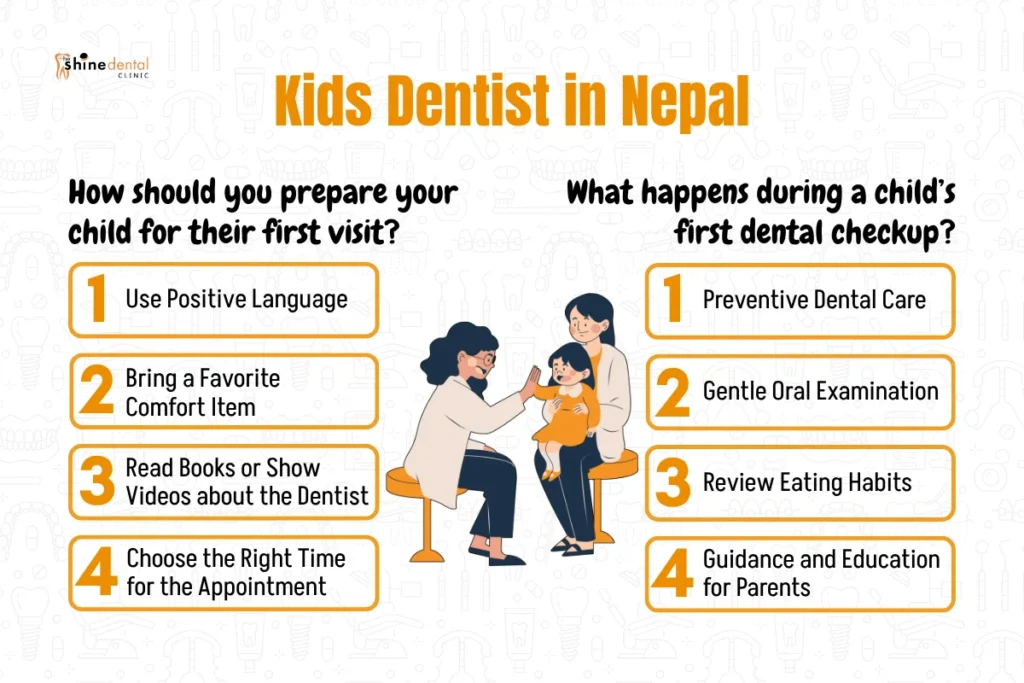
What Happens During a Child’s First Dental Checkup?
Many parents worry that their child’s first dental appointment will be stressful. In most cases, the first visit is gentle and focused on prevention. For a detailed, step-by-step look at how a first visit typically unfolds, our guide on what to expect during your child’s first dental visit walks through the whole process. Our dentists and hygienists are trained specifically in working with children, so the pace of the visit is set by your child’s comfort, not the clock.
A kids dentist may:
- Examine teeth and gums
- Check jaw and bite development
- Discuss brushing habits
- Review eating habits
- Explain cavity prevention
- Answer parents’ questions
For very young children, the appointment may simply involve introducing them to the dental environment and creating a positive experience.
How Parents Can Prepare Their Child for a Dental Visit
Preparing your child for their first dental appointment can make the experience more enjoyable and less stressful. Small steps taken at home often help children feel relaxed and confident during their visit.
Use Positive Language
When talking about the dentist, focus on making the experience sound positive and encouraging.
Instead of creating fear, parents should:
- Explain that the dentist helps keep teeth clean, healthy, and strong, using simple language that children can easily understand.
- Avoid using frightening words such as “pain,” “needle,” “hurt,” or “drill,” as these terms can create unnecessary anxiety before the appointment.
- Read children’s books or watch educational videos about visiting the dentist, helping your child become familiar with what to expect in a fun and reassuring way.
- Role-play a pretend dental visit at home, allowing your child to practice opening their mouth and becoming comfortable with the idea of a dental examination.
- Speak positively about your own dental experiences, since children often imitate their parents’ attitudes and emotions.
Start Oral Care Early
Good oral hygiene should begin long before your child’s first dental appointment. For a full walkthrough of this, see our guide on how to clean your baby’s teeth properly.
Parents can encourage healthy habits by:
- Cleaning a baby’s gums with a soft, clean cloth before the first tooth appears to reduce bacteria and establish an early oral care routine.
- Using a small, soft-bristled toothbrush as soon as the first tooth erupts, gently cleaning teeth twice each day. Not sure which type to pick? Our comparison of soft vs hard bristle toothbrushes and our best baby toothbrush guide can help.
- Choosing age-appropriate toothpaste and using the recommended amount, based on your child’s age and the advice of your dentist.
- Helping young children brush their teeth until they have the coordination to brush effectively on their own, which often takes several years.
- Making brushing a fun family activity by using songs, reward charts, or colorful toothbrushes to encourage consistency.
Dental Care Tips for Parents in Nepal
Parents play the most important role in protecting their child’s smile between dental visits. Establishing healthy habits early can significantly reduce the risk of cavities and other oral health problems, the CDC notes that by age nine, half of children have already had a cavity in a baby or permanent tooth, which is exactly the kind of outcome consistent home care and regular checkups can help prevent.
Encourage Twice-Daily Brushing
Daily brushing remains one of the most effective ways to maintain healthy teeth. Parents should supervise brushing sessions to ensure children clean every tooth properly and brush for at least two minutes. Along with that, brushes should be replaced every three to four months or as soon as the bristles become worn or damaged, our guide on when to replace your child’s toothbrush explains the signs to watch for.
Teaching children to gently brush along the gumline as well as the chewing surfaces of their teeth is very important, and later introducing flossing once two teeth begin touching each other also helps remove food particles and plaque between their teeth.
Limit Sugary Foods and Drinks
A balanced diet supports healthy teeth just as much as good brushing habits. Parents can reduce cavity risk by offering the child fresh fruits, vegetables, and dairy products instead of sugary processed foods whenever possible.
Encouraging children to drink plenty of water throughout the day, avoiding sugary drinks, and limiting frequent snacking on sticky sweets can all reduce cavity-causing bacteria.
Schedule Regular Dental Checkups
Routine dental visits help children maintain healthy smiles throughout every stage of development. Regular appointments allow dentists to detect small dental problems before they become painful or require more complex treatments. It also helps to monitor a child’s oral development and provide personalized recommendations as their teeth continue to grow, which is covered in more depth in our complete guide to baby teeth and early dental care.
Performing professional cleanings that remove plaque and tartar which cannot always be eliminated through brushing alone, providing preventive treatments and guidance that helps reduce the likelihood of future dental emergencies, and building a long-term relationship with children makes future dental visits more comfortable and less stressful.
Frequently Asked Questions About Kids Dentists in Nepal
These are some of the questions we hear most often from parents. You can browse our full FAQs page for more.
At what age should my child visit a dentist in Nepal?
Children should ideally visit a dentist when their first tooth appears or by their first birthday.
At what age should my child visit a dentist in Nepal?
Children should ideally visit a dentist when their first tooth appears or by their first birthday.
At what age should my child visit a dentist in Nepal?
Children should ideally visit a dentist when their first tooth appears or by their first birthday.
Are baby teeth important if they fall out later?
Yes. Baby teeth support chewing, speech development, and proper spacing for permanent teeth.
What if my child is afraid of the dentist?
Starting dental visits early, using positive language, and choosing a child-friendly dentist can help reduce fear.
Conclusion: Start Your Child’s Dental Journey Early
A healthy smile begins with early care. Visiting a kids dentist in Nepal at the right age helps prevent dental problems, teaches children good oral hygiene habits, and creates a foundation for lifelong dental health.
Parents do not need to wait until their child experiences pain or a dental emergency. Regular checkups, healthy habits, and professional guidance can help children maintain strong and healthy smiles as they grow.
If your child has their first tooth, shows signs of dental problems, or you simply want guidance about oral health, scheduling a dental consultation at The Shine Dental Clinic is a valuable step toward protecting their future smile.